
Samsung Patents a Way to Use Your Selfie Camera to Fix Rear Photo Colors
Your phone's front camera is usually idle when you're taking photos with the rear lens. Samsung wants to put it to work, using it to read the light in the room and automatically fix the colors in your main shot.
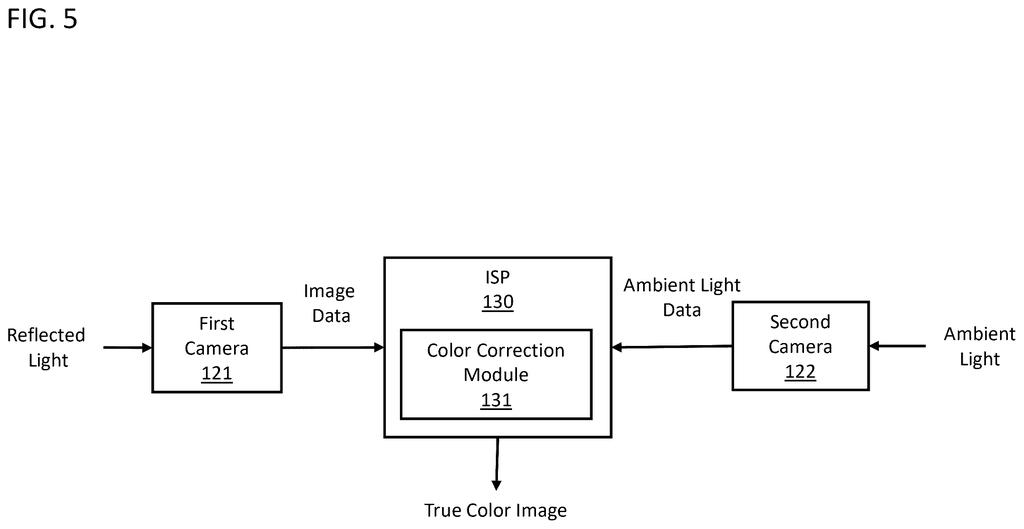
How Samsung's two cameras team up on white balance
A photographer holds up their phone to shoot a dish at a restaurant, and the photo comes out with an orange cast from the warm overhead bulbs. That color problem, known as bad white balance, is one of the most common reasons otherwise good phone photos look off.
Samsung's newly filed patent takes a clever approach: while your rear camera is capturing the subject, the front camera (the one you'd use for selfies) is simultaneously looking in the opposite direction, measuring the color and warmth of the ambient light in the scene. The phone's processor then uses that reading to correct the colors in the rear photo before you ever see it.
The front sensor in this design is intentionally lower resolution than the rear one. It doesn't need to capture fine detail. Its only job is to sample the light, quickly and so your main photo lands with accurate, natural-looking colors.
… calculate a color temperature based on the second image about ambient light that illuminates the first object; and perform color correction on the first image based on the calculated color temperature to obtain a color-corrected first image …
Translation: It figures out the lighting from one camera and uses it to fix the colors in the other camera's photo.
How the front sensor feeds color temperature to the rear shot
The patent describes an image signal processor (the chip inside your phone that handles all the math on raw camera data) coordinating two cameras that face opposite directions.
The first camera (rear-facing, high resolution) captures the subject you're actually photographing. The second camera (front-facing, lower resolution) captures whatever is behind you, which is typically the ambient light source illuminating your scene. From that second image, the processor calculates a color temperature (a number that describes whether the light is warm and yellow, or cool and blue) and uses it to correct the rear photo.
The claim is explicit that the front sensor has a lower resolution than the rear sensor by design. That matters because:
- A dedicated ambient-light reading doesn't need high pixel counts
- A lower-resolution sensor costs less and uses less power
- The processing math stays fast enough to apply the fix before you see the image
This is different from how phones typically handle white balance today, which relies on software analyzing the scene the rear camera is already shooting. Samsung's approach separates the lighting measurement from the subject capture, using a sensor that has an unobstructed view of the light source rather than inferring it from the subject itself.
What this means for everyday smartphone photography
White balance errors are subtle but they make photos look wrong in ways people feel even if they can't name them. Skin tones go sallow under fluorescent lights, food looks unappetizing under warm restaurant bulbs, and snow turns gray in shade. Getting this right has historically required manual settings or after-the-fact editing, neither of which most people do.
If this approach works as described, it would shift when the color fix happens: from a post-processing step you might do in an app to something the phone handles automatically at capture time. For you, that means fewer photos you need to edit and more that just look right straight out of the camera app. The front camera, ordinarily unused during rear-camera shooting, becomes a passive light meter running in the background.
Samsung's 143rd filing we've tracked in our camera sensor work since May builds on earlier applications like the time-of-day color fix and the alternating-voltage noise cut.
Using the front camera as a light meter is clever on paper: it reads the room directly, without your subject blocking the view, giving a cleaner sample of ambient color than analyzing the rear image alone.
The cost is that the front camera and the rear camera are pointing in opposite directions, so the moment you shoot around a corner, through a doorway, or toward a bright window, the two sensors are reading entirely different light environments. The design works best when the light is even and consistent, which is exactly when cameras already do fine on their own.
The lower-resolution front sensor is a fair call, since judging light color does not require sharp pixels. Whether that savings justifies the complexity of coordinating two cameras in tricky real-world scenes is the question this patent leaves open.
There are more where this came from
We read every patent application Big Tech publishes and send you the ones worth knowing. Plain English, free, every week.
The drawings
10 drawing sheets from US 2026/0303985 A1 · click any drawing to enlarge


Want this weekly breakdown for a company we don't cover? Patentlyze Pro →
Be the first to weigh in