
Qualcomm Patents a Display That Adjusts Zoom Speed Based on How Far Away Your Eyes Are
Every zoom animation on your phone plays at the same speed, whether your face is six inches from the screen or three feet away. Qualcomm thinks that's the wrong default.
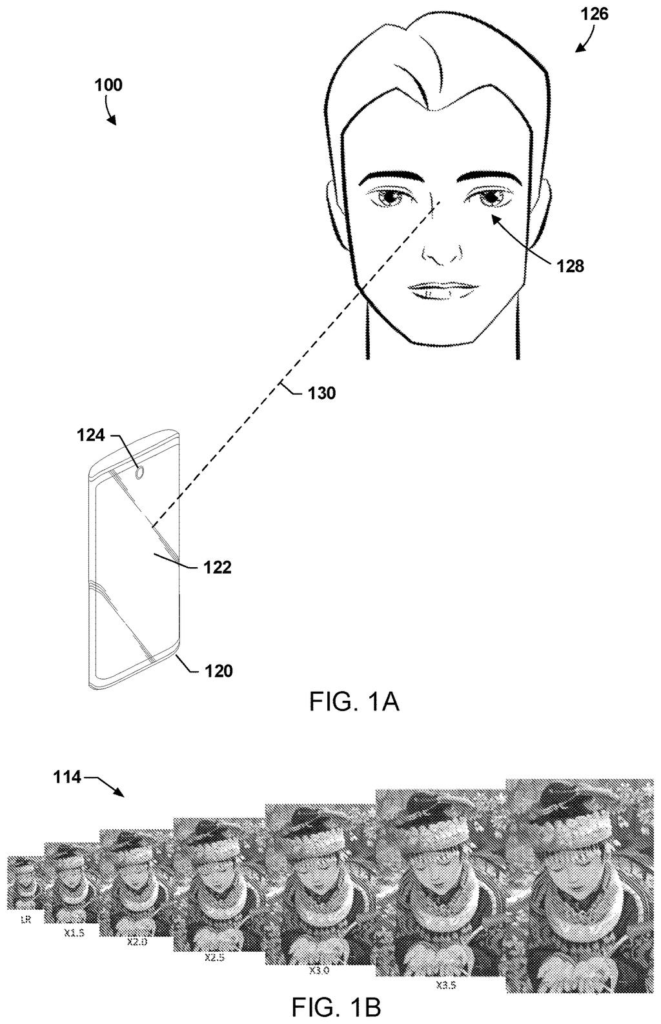
What Qualcomm's eye-distance zoom control actually does
Every time your phone zooms into a map or a photo, the animation plays at a fixed speed, no matter where you're sitting or holding the device. Qualcomm's new patent says that speed should change depending on how far your eyes actually are from the screen.
The idea is simple: a fast zoom feels different depending on how close you are. Up close, it can feel abrupt or disorienting. From farther away, the same animation might feel sluggish. By tracking the distance between your face and the display, the device would tune the zoom speed to feel right for your current position.
This kind of adjustment happens automatically, in the background, without you needing to change any settings. It's aimed at any screen-based device, including phones, tablets, and possibly laptops.
determining a distance between the display of the computing device and eyes of a user; and adjusting a speed of a zoom animation presented on the display based on the determined distance between the display and the eyes of the user.
Translation: The device measures how far your eyes are from the screen and changes how fast things zoom in or out.
How the system measures distance and changes animation timing
The patent describes a method with two steps: first, measure the distance between the user's eyes and the display; second, use that measurement to set the speed of any zoom animation shown on screen.
Distance measurement is the core input. The patent doesn't specify exactly which sensor does the job (front-facing cameras and depth sensors are common candidates), but the key output is a number: how many inches or centimeters separate your eyes from the display at any given moment.
Animation speed adjustment then kicks in. Rather than playing every zoom at the same preset rate, the system scales the timing based on that distance. A user holding a phone close to their face might get a slower, more gradual zoom; someone holding the device at arm's length might get a faster one.
The patent covers this as a general method, applicable to any computing device with a display. The claim is intentionally broad: any zoom animation, any display, any mechanism that determines eye-to-display distance.
Various embodiments include systems and methods for managing an animation speed of a zoom animation presented on a display of a computing device.
Translation: The technology controls how quickly zoom animations play on a phone or computer screen.
What this means for phone and tablet display comfort
For most people, zoom animations are a background detail, but they are surprisingly tied to comfort. Fast zooms at close range can trigger mild disorientation, particularly for users who are sensitive to motion on screens. Slowing those animations contextually, based on actual viewing distance, addresses the issue without forcing users to dig into accessibility settings.
For Qualcomm, this patent fits the company's work on what chipmakers call "perceptual" display processing: adapting what the screen does based on how a person is actually interacting with it. Whether this ever ships in a consumer device depends on whether the sensor infrastructure to support it is already present, and on phones with front-facing depth sensors, it largely is.
Qualcomm's 60th filing we've tracked in our cell phone coverage since May joins earlier work like one that skips unchanged screen areas and one that mutes idle audio recording.
The problem this addresses is real but small. Motion-sensitive users do experience discomfort from fast zoom animations at close range, and the fix that currently exists (a blanket slow-motion accessibility toggle) is a blunt instrument. A distance-aware system is a more precise answer to that problem.
The question is whether the problem is large enough to justify the engineering path. Measuring eye distance accurately and continuously, then feeding that into animation timing without introducing lag or jitter, is non-trivial. The patent doesn't describe that engineering path in detail, just the end result.
For a patent, this sits in routine territory. The core idea is straightforward, and the claim is broad enough that it may face scrutiny over prior art in the adaptive display space. It's a tidy solution to a minor annoyance, and nothing more than that.
There are more where this came from
We read every patent application Big Tech publishes and send you the ones worth knowing. Plain English, free, every week.
The drawings
7 drawing sheets from US 2026/0288317 A1 · click any drawing to enlarge


Want this weekly breakdown for a company we don't cover? Patentlyze Pro →
Be the first to weigh in