
Google Patents a Recommendation System That Predicts When Your Interests Will Shift
Most recommendation engines react to what you clicked last. Google's new patent describes a system that tries to predict what you'll be interested in next, and holds the suggestion until the moment you're most likely to want it.
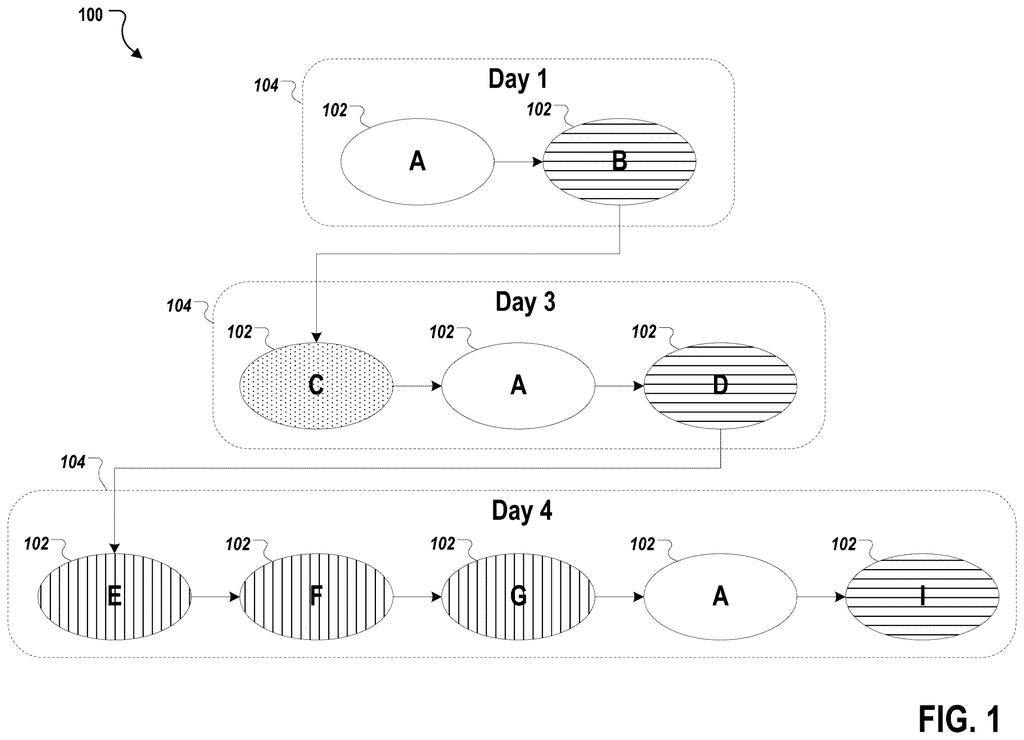
How Google times content to your next obsession
A person spends two weeks reading everything about a new video game release. Then the reviews dry up, the hype fades, and they drift toward watching speedrun videos or game-modding tutorials. That shift follows a recognizable pattern, and most apps miss it entirely.
Google's patent describes a system designed to spot those shifts before they happen. It studies how large groups of users have moved between topics over time, maps out the typical routes and timing, and uses those patterns to predict where your attention is heading next. The key word is "when." The system doesn't just decide what to recommend, it waits for the right window to surface it.
In practice, that could mean your Google Discover feed or YouTube homepage holds back a recommendation until the moment you're statistically likely to be receptive, rather than flooding you with suggestions the second an algorithm decides they're relevant.
determining a current entity of interest based on interaction data associated with a period of time; determining a next entity of interest and a transition timeframe based on the current entity, the period of time, and a plurality of interest movement patterns …
Translation: It figures out what you like now and when you will move on to something else based on past user habits.
How interest-movement patterns drive the timing engine
The patent introduces the concept of interest movement patterns, which are records built from millions of real user histories showing how attention tends to travel from one topic to another, and over what timeframe.
Here's how the method works step by step:
- Identify the current entity of interest: The system looks at what topics or content categories you've engaged with during a defined window of time, say the past two weeks.
- Look up matching movement patterns: It then searches a library of historical patterns to find cases where users who were interested in that same topic later moved on to something else, and how long that transition typically took.
- Predict the next entity and transition timeframe: Based on that match, it forecasts what topic is likely to capture your attention next, and when that shift is expected to happen.
- Deliver the recommendation at the right moment: A content item is selected that bridges your current and predicted future interests, then held for delivery during the predicted transition window.
The timing element is the meaningful part. Rather than optimizing only for relevance, the system treats timing as an independent variable worth controlling. The transition timeframe is derived from real behavioral data, not a fixed delay.
What this means for YouTube and Google Discover feeds
For everyday users, a system like this could make recommendation feeds feel less repetitive and more like they're actually tracking your shifting tastes rather than recycling last week's choices. The frustration of getting recommendations for something you've already moved past is one of the most common complaints about streaming and news apps.
For Google, the stakes are practical: YouTube, Google Discover, and Google Search all depend on recommendation quality to hold attention and drive ad revenue. A system that can anticipate interest migration, rather than just react to it, keeps users engaged during the brief window between finishing one interest and fully committing to the next. That window is exactly when people are most open to discovery.
Google's 18th filing in our AI recommendation coverage since May connects to earlier applications like one reshaping ads for any page and one hiding your full profile.
Recommendation systems have gotten good at reading what you want right now, but they have almost no sense of how long that interest will last or what naturally comes next. Anyone buried in cooking videos two weeks after a single recipe search knows how badly that blind spot compounds over time, and the frustration carries a real cost: wasted attention, eroded trust, and users who stop engaging.
The approach here, drawing on millions of people's behavioral histories to estimate when interest shifts and where it tends to go, matches the actual scale of the problem. Predicting individual timing from population-wide patterns is a reasonable use of the data Google sits on.
Whether the predictions land accurately enough in practice to change how people experience recommendations is a question this document cannot answer. But the problem it targets is costly enough that even a partial solution would matter.
There are more where this came from
We read every patent application Big Tech publishes and send you the ones worth knowing. Plain English, free, every week.
The drawings
5 drawing sheets from US 2026/0301043 A1 · click any drawing to enlarge


Want this weekly breakdown for a company we don't cover? Patentlyze Pro →
Be the first to weigh in