
Samsung Patents an AI That Builds a Personalized Recap When You Resume a Paused Show
You put a movie on pause three days ago and have no idea what was happening when you left off. Samsung has filed a patent for an AI system that tracks what you watched, reads how you were engaging with it, and then decides whether to show you a custom recap the moment you hit play again.
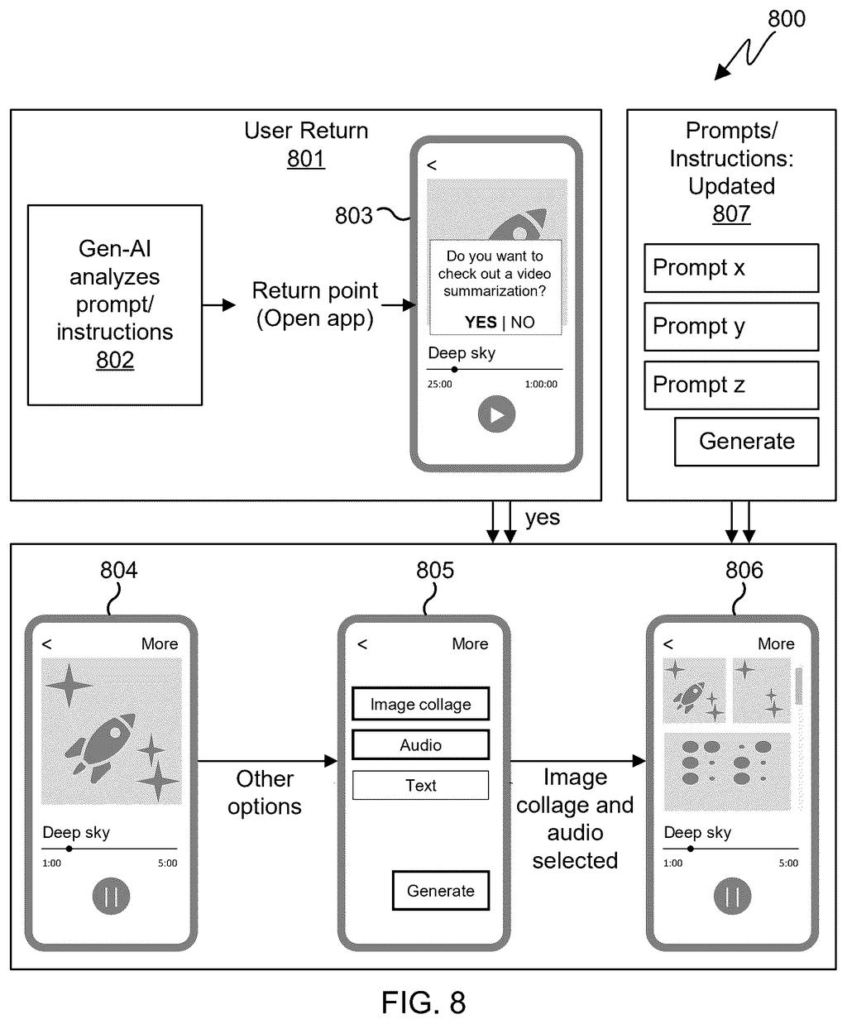
What Samsung's auto-recap system actually does for viewers
A viewer pauses a thriller halfway through, then picks it back up five days later with no memory of who did what to whom. That blank-slate feeling is exactly the problem Samsung is trying to solve.
The patent describes a system that tracks your viewing session as it happens, noting things like which scenes you rewound, where you skipped, and what type of content you were watching. When you step away for long enough, it hands all that data to a generative AI, which drafts a personalized summary tailored to what you specifically watched, not a generic episode description.
When you return, the system figures out whether to show you that recap at all, and in what format, based on how long you were gone, what device you are on, and your past preferences. Short pause on your phone? Maybe nothing. Three-day gap on a tablet? Full story recap with character names.
… determining at least one generative artificial intelligence prompt for prediction, by a generative artificial intelligence model, of the personalized content summarization of the aggregate portion of the content consumed by the user; …
Translation: It builds AI prompts to generate your custom recap.
How the AI scores and ranks your viewing habits to write the recap
The system works in two phases: a monitoring phase during playback, and a delivery phase when you come back.
During playback, it logs user content consumption attributes (a bundle of signals about how you are watching), including:
- Stage changes, shifts in the narrative structure of what you watched, like moving from setup to climax
- Content key points, characters, plot beats, and genre-specific moments the system identifies as important
- User interactions, rewinds, skips, pauses, and other things you actively did during playback
- Device status, what screen you are on and whether it suits a video recap, a text summary, or something else
When your pause exceeds a set time threshold, the system runs a two-axis prioritization pass over those signals. It ranks them by timing (when during your session the signal occurred) and by type (what kind of signal it was). Content key points and your own interactions score higher than device status on both axes, meaning the AI prompt it constructs will lean on story and behavior data over hardware context.
That prioritized signal set is then fed into a generative AI model (meaning a large language model-style system that writes the summary from scratch rather than pulling a pre-written blurb) to produce the personalized recap. On return, a separate decision layer determines whether to surface the recap, how long it should be, and how much detail to include.
When the user pauses the consumption of the content for a time period exceeding a threshold, generative artificial intelligence prompts for summarization of the aggregate consumed portion of the content are determined based on the user content consumption attributes, …
Translation: If you pause long enough, the system prepares an AI summary based on your viewing habits.
What this means for streaming apps and binge-watching habits
For viewers, this is the "previously on" segment made personal. Instead of a generic studio-produced recap, you would theoretically get a summary tuned to what you actually saw, including the scenes you rewound and the characters you seemed to pay attention to. That is a meaningful difference if you watched only part of an episode or skipped around.
For streaming platforms, the broader implication is that Samsung's bet on AI-driven content personalization could push rivals to build similar watch-state tracking into their own apps. The system sits at the device layer rather than the streaming service layer, which means it could theoretically work across different apps rather than inside just one.
Samsung's 23rd filing we've tracked since June in our AI assistants that remember you watch builds on one linking VR to real devices and one on spotting new conversation topics.
Claim 1 is doing a lot of work here. It covers the entire pipeline: monitoring, prioritization, prompt generation, and return-to-play delivery, all in a single method claim. That breadth is double-edged. It gives Samsung wide theoretical coverage over any system that watches your behavior during video playback and uses it to prompt a generative AI for a recap when you return. But broad claims also attract more scrutiny during examination, and the prior art field for "resume summaries" in streaming apps is already crowded.
The prioritization logic is the most specific part of the claim, and the most defensible. Explicitly ranking content key points and user interactions above device status in both timing and type dimensions gives the claim a concrete mechanical hook that separates it from a generic "summarize what the user watched" approach.
Whether the broader claim survives as filed is an open question. What is less in question is that the problem is real: anyone who has abandoned a prestige drama mid-season knows the friction of returning to it.
There are more where this came from
We read every patent application Big Tech publishes and send you the ones worth knowing. Plain English, free, every week.
The drawings
13 drawing sheets from US 2026/0292313 A1 · click any drawing to enlarge


Want this weekly breakdown for a company we don't cover? Patentlyze Pro →
Be the first to weigh in