
Sony Patents a Cloud System for Real-Time Collaboration in Video Game Development
Building a video game involves dozens of people editing the same code at the same time, which can quickly turn into a mess. Sony has filed a patent describing a cloud-based system where every developer on a project sees everyone else's edits the moment they happen.
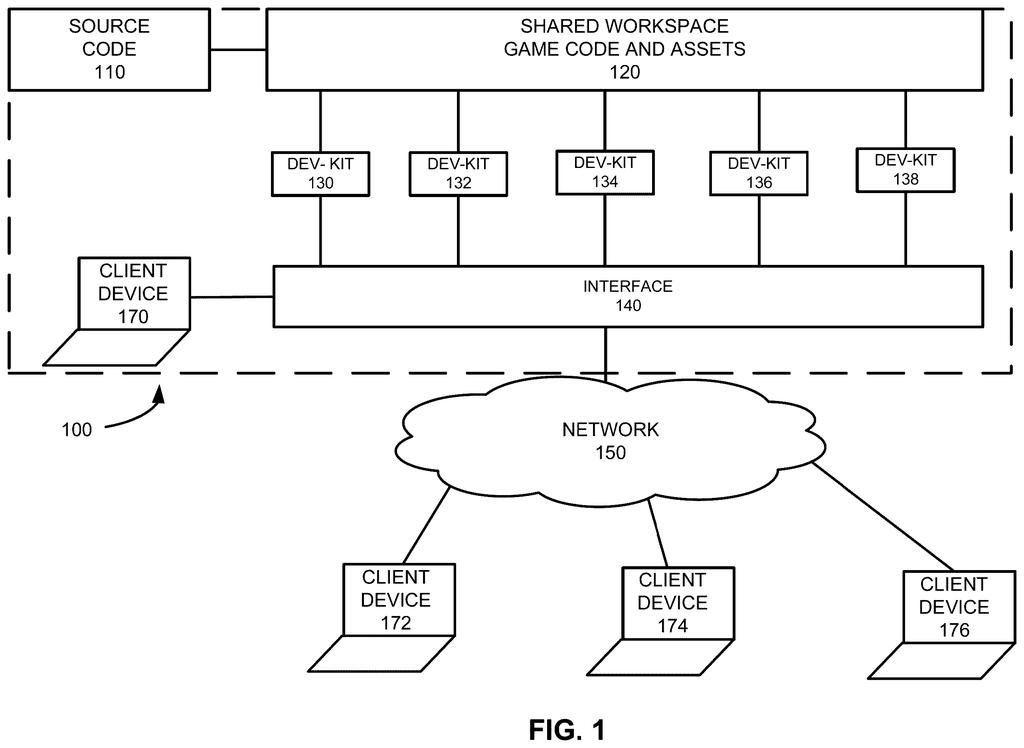
How Sony wants game studios to share code in real time
Three developers sit at their computers in different cities, all working on the same video game at the same time. Right now, keeping everyone's changes in sync requires complicated version-control rituals, and one bad edit can block the whole team.
Sony's patent describes a data center that holds the game's code and art assets in a central "shared workspace." Each developer connects to that workspace through a virtual development kit, which is a simulated version of a PlayStation console running in the cloud rather than as physical hardware sitting on a desk. When one developer fixes a bug or adds a new feature, every other developer's view updates to reflect that change automatically, so the team is always looking at the same version.
There's also a cloned workspace feature for riskier work. If you need to debug a tricky block of code, you can quarantine it in a separate copy of the workspace. That way your debugging experiments don't slow down or break what the rest of the team is doing.
… wherein when the game code is edited by a first client device using a first development kit in the plurality of development kits, the edited game code is accessible by a second client device using a second development kit in the plurality of development kits.
Translation: Multiple developers can see and work on the same code changes at the same time.
How the shared workspace and cloned sandbox fit together
The system has two main modes, both hosted in a data center rather than on local machines.
Shared workspace mode is the default collaboration layer. The data center stores the game's source code and assets, then copies them into a shared workspace. Multiple virtual development kits (VDKs) connect to that workspace simultaneously. A VDK is a software-emulated version of a game console (in Sony's case, a PlayStation) that developers use to build and test games; running them in the cloud means no physical hardware needs to be shipped to every team member. When developer A edits a script using VDK-1, developer B on VDK-2 can immediately see and work with that edited code.
Cloned workspace mode handles debugging. When a block of code needs heavy testing, that block gets copied ("sequestered") into its own isolated clone of the workspace. The debugging work happens there without touching the live shared workspace, so the rest of the team's work continues uninterrupted.
The first claim covers the core method:
- Store the game's source code in the data center
- Spin up a shared workspace and copy the code into it
- Attach multiple virtual development kits to that workspace
- Give client devices an interface to connect to those kits
- Ensure edits made on one kit are immediately visible on all others
… blocks of code being edited can be sequestered in a cloned workspace. This separation can help to prevent the debugging process on the blocks of code from slowing other development.
Translation: Active testing is isolated so it does not slow down other parts of the project.
What this could mean for large game development teams
Large game studios today rely on tools like Git (a version-control system) that require developers to periodically "commit" and "merge" their changes, a process that can produce conflicts and delays. A system where all edits are visible in real time, with no merge step, would reduce that friction significantly, especially for teams spread across time zones.
The cloned workspace feature matters too. Debugging is notoriously unpredictable; a developer chasing a crash can spend hours running the same code repeatedly in different states. Keeping that process isolated from the main workspace means Sony's interest in cloud-based game development doesn't just affect collaboration speed but also protects daily productivity for everyone not involved in the debug session.
Sony's 568th filing in our Sony coverage since May follows reprogramming sensors in software and dual-AI photo cutouts.
Claim 1 covers any data center that stores game code, copies it into a shared workspace, hooks up multiple virtual development kits, and lets every developer see each other's edits in real time. That scope is wide. It says nothing about Sony's own servers or tools, which means the claim follows the method wherever it appears, not just inside Sony's own products.
In practice, that breadth means any cloud platform offering real-time multi-developer editing on game projects could fall within reach of this claim if it is granted.
The more precise and defensible piece is the cloned workspace mechanic, where code under active debugging gets split off so it does not slow everyone else down. That detail is specific enough to be difficult to replicate without copying it directly, and it is likely where this patent carries its real practical weight.
There are more where this came from
We read every patent application Big Tech publishes and send you the ones worth knowing. Plain English, free, every week.
The drawings
11 drawing sheets from US 2026/0299895 A1 · click any drawing to enlarge


Want this weekly breakdown for a company we don't cover? Patentlyze Pro →
Be the first to weigh in