
Sony Patents a Way to Reprogram Smart Device Sensors in Software
Normally, what a sensor can do is fixed at the factory. Sony is patenting a way to change that in software, so the same piece of hardware can be taught new tricks after it ships.
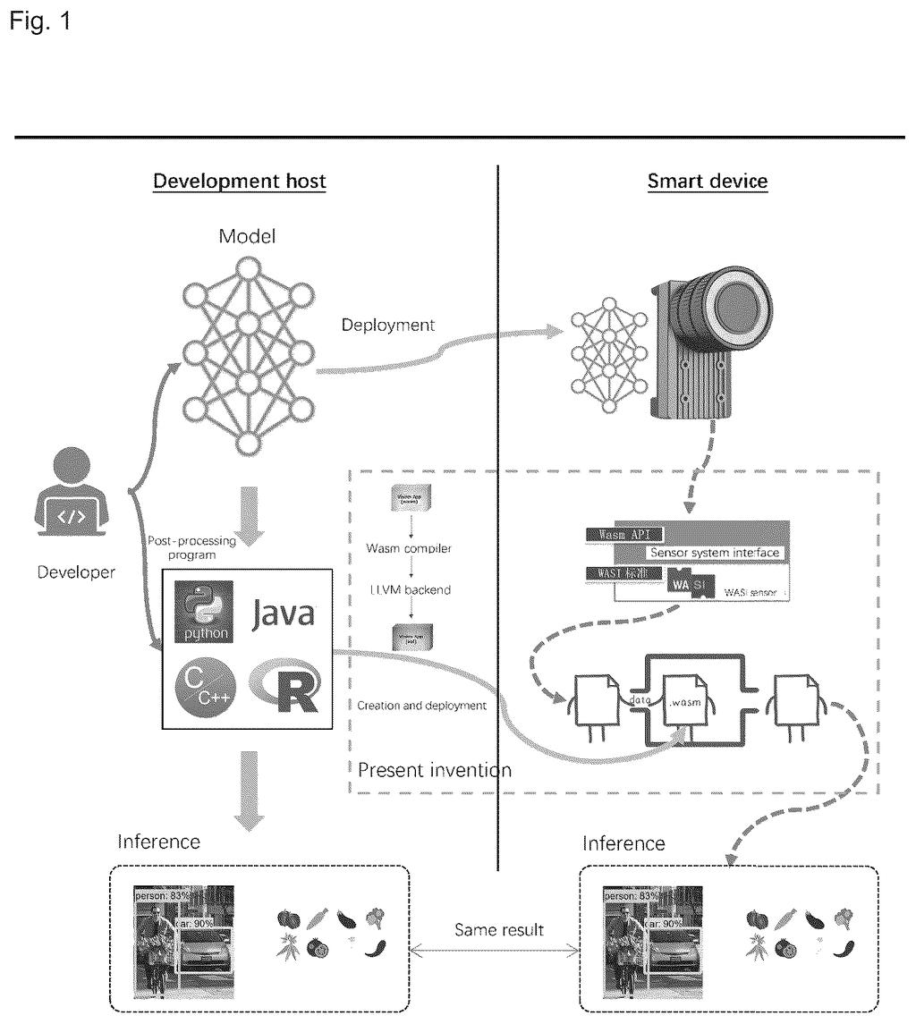
What Sony's sensor-customization method actually does
Every time a smart camera or IoT device reads the world around it, the sensor's behavior is essentially locked in. The chip does what it was programmed to do at the factory, and that's that. If you want different behavior, you're usually looking at a hardware swap.
Sony's patent describes a method for changing that. The idea is to pair a sensor with a small AI model that processes what the sensor reads, then add a customizable software layer on top. That software layer is packaged in a format called WebAssembly (Wasm), which is a compact, portable program that can run safely on many types of devices, much like a tiny app. Update the app, and you change what the sensor does, no new hardware needed.
The approach gives manufacturers (and potentially developers) a defined doorway into the sensor's output, so they can swap in a new processing program without touching the underlying hardware or operating system. Think of it as giving a security camera the ability to learn a new skill by downloading an update, rather than being replaced entirely.
… compiling the post-processing program into a Wasm program and deploying the Wasm program in the smart device …
Translation: Turning custom software into WebAssembly so it can run securely on gadgets.
How the Wasm layer talks to the sensor
The patent describes a four-step method for making a sensor's behavior configurable through software.
- AI model deployment: A mathematical model (a trained neural network or similar AI) is placed on the smart device. This model processes the raw data the sensor produces before anything else happens.
- Post-processing program: A separate piece of software, tailored to that specific AI model, handles further cleanup or interpretation of the model's output. This is where the customization lives.
- Wasm compilation: That post-processing program is compiled into a WebAssembly (Wasm) binary, a compact, sandboxed format (meaning it runs in isolation and can't easily break other parts of the system) originally developed for web browsers but increasingly used in embedded and edge devices.
- WASI interface: The device exposes a standardized access layer called WASI (WebAssembly System Interface), a defined set of rules for how a Wasm program can talk to hardware like sensors. The Wasm program uses this doorway to read from and control the sensor.
The result is that the same sensor hardware can be given a different job by swapping the Wasm program, as long as the new program fits through the same WASI interface. The AI model provides consistent output for the Wasm layer to work with, and the Wasm sandbox keeps the custom code from destabilizing the rest of the device.
… providing, in the smart device, an interface defined based on WASI specifications, via which the Wasm program can access and operate the sensor …
Translation: Setting up a standardized system menu so the code can talk to the hardware.
What this means for smart cameras and IoT gadgets
For device makers, this kind of architecture could cut hardware refresh cycles. A factory sensor that was originally set up to detect motion could, in theory, be updated over the air to detect a different kind of event, provided the underlying AI model and new Wasm program are compatible. That's a meaningful cost and logistics difference in industrial IoT, smart home hardware, or embedded cameras.
For end users, the upside is longevity. Devices could stay useful longer because their behavior isn't frozen at purchase. The downside risk, which the patent addresses through sandboxing, is that opening a doorway into sensor hardware also creates a surface that needs to be locked down carefully. Whether Sony's WASI-based interface delivers on that security promise is a practical question that extends beyond what a patent filing can answer.
Sony's 17th filing in our sensor patent coverage since June follows one on filtering distorted readings and one on checking surroundings before transmitting, extending the thread we've tracked.
Claim 1 covers any method that puts three things together on a smart device: a trained mathematical model for a sensor, a post-processing program compiled into a sandboxed software format called Wasm, and a standardized interface that lets that program reach the sensor's data. The claim names no specific sensor, no specific device category, and no specific type of AI model. That means cameras, microphones, air quality sensors, and anything else with a sensor could fall inside it.
If granted as written, that scope would block a wide range of products from using this exact combination without a license, including edge devices updated remotely with new sensor behaviors.
The practical bet behind the claim is that swappable, sandboxed software layers will become the standard way companies push new sensor capabilities to hardware already in people's hands, and owning that method broadly matters.
There are more where this came from
We read every patent application Big Tech publishes and send you the ones worth knowing. Plain English, free, every week.
The drawings
4 drawing sheets from US 2026/0299914 A1 · click any drawing to enlarge


Want this weekly breakdown for a company we don't cover? Patentlyze Pro →
Be the first to weigh in