
Sony Patents an AI Assistant That Answers Game Developers' Questions in Plain English
Building a video game means digging through mountains of documentation, code snippets, and internal guides. Sony is patenting a way to let developers just ask a question in plain English and get a direct, tailored answer back.
What Sony's AI game-dev assistant actually does
Ever tried to find one document in a folder full of hundreds of folders? Game developers face a version of that every day, except the folders contain engine code, art assets, physics rules, and technical specs, all at once.
Sony's patent describes an AI assistant built specifically for game development. A developer types a question or request in plain English, something like "how do I make an enemy character react to sound," and the system searches a library of game resources, picks the most relevant one, and then writes a plain-language summary explaining exactly how to use it for that specific task. No hunting, no reading walls of documentation.
The goal is to cut the time developers spend searching for information and spend more time actually building. Think of it like having a knowledgeable colleague who has read every internal guide and can give you a direct answer in seconds.
receiving a natural language indication of a video game development task for a video game developer via a user device …
Translation: The system listens to a creator describe what they need in normal everyday speech.
How the model picks and summarizes the right resource
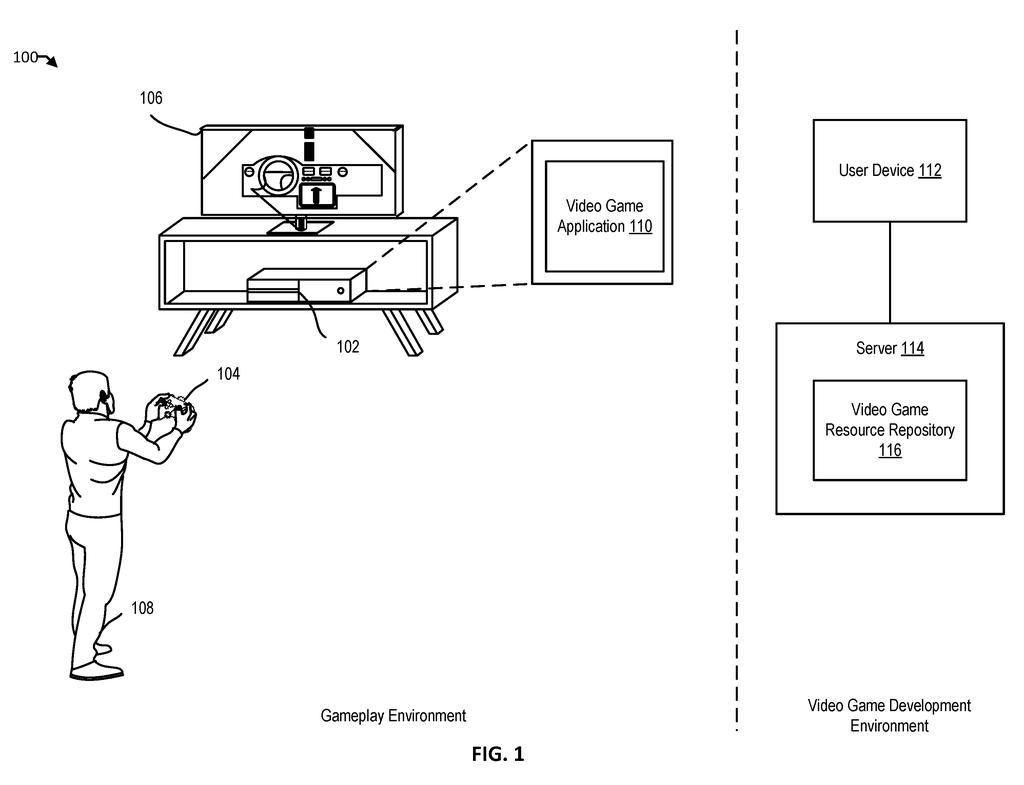
The system works in three steps. A developer sends a natural language query (meaning a plain typed question, not a search keyword or code command) through a connected device. That query goes to a machine learning model that has access to a video game resource repository, a structured library of assets, documentation, and tools associated with a specific game project.
The model does two things in sequence:
- It identifies which resource in the library best matches what the developer is asking for, taking into account whether that resource is currently available.
- It generates a natural language summarization, a written explanation customized to the developer's question, describing how to actually use that resource.
The summarization is then sent back to the developer's device. The patent does not describe a simple keyword search; the model is expected to interpret intent, match it to library contents, and produce an explanation tailored to the specific task, not just a link to a file.
The title mentions reducing latency, suggesting the system is designed to minimize the back-and-forth time developers currently spend hunting for answers across documentation or internal wikis.
… determining, via a machine learning model, a video game resource of the plurality of video game resources to be used for performing the video game development task …
Translation: An artificial intelligence looks through available assets to find the right tool for the job.
What this means for game studios and developers
For anyone who has worked on a software project, the time lost searching for the right document or asking a colleague where a particular file lives adds up fast. In game development, where projects can involve hundreds of contributors and enormous libraries of custom assets, that overhead is significant. A tool that interprets plain-English requests and returns a targeted summary could meaningfully speed up day-to-day work.
Sony's track record in game-development tooling patents suggests this fits a broader effort to modernize how studios operate internally. Whether this surfaces as a feature inside PlayStation's developer tools or a third-party SDK remains an open question, but the target audience is clearly professional studios, not players.
Sony's AI assistant & agent ninth filing we've tracked since May follows an accessibility co-pilot and self-rewriting software priorities.
Sony is describing software, not hardware, which matters because it means the distance between this patent and a working tool is shorter than usual. The system needs three things already well within reach: a library of game-building reference material, a way to understand plain-language requests, and a way to summarize relevant answers back to the developer.
The main work left is organizational. Someone has to assemble and maintain that library of game resources, and someone has to build the interface developers would actually sit in front of. Both are real projects, but neither requires inventing anything new.
The problem being solved is specific enough to be credible: developers lose hours searching documentation they already technically have access to. A tool that closes that gap could reasonably ship as an internal aid for PlayStation game teams, and the document gives no reason to think it needs to stay that narrow.
There are more where this came from
We read every patent application Big Tech publishes and send you the ones worth knowing. Plain English, free, every week.
The drawings
9 drawing sheets from US 2026/0295430 A1 · click any drawing to enlarge


Want this weekly breakdown for a company we don't cover? Patentlyze Pro →
Be the first to weigh in