
Samsung Patents a System That Picks Which Battery Powers Your Device
Most devices treat all their batteries as one. Samsung is filing patents for hardware that reads each battery's condition individually and routes power through whichever one is best suited for the moment.
What Samsung's multi-battery routing actually does
Today, when a device has more than one battery, it typically treats them as a single pool of energy, drawing from them in a fixed or simple alternating pattern with no real awareness of which cell is healthiest or most efficient right now. Samsung wants to change that.
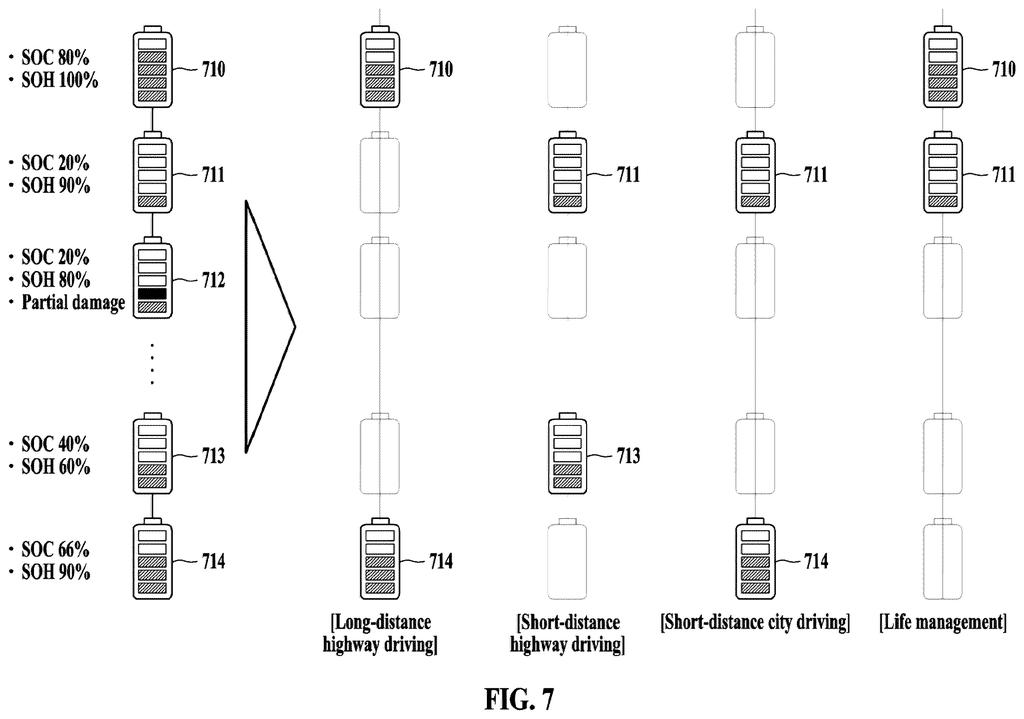
This patent describes a device that monitors each battery separately, checking things like charge level and condition, then decides which battery or combination of batteries should be active based on what the device needs at that moment. The selection isn't random: the system uses that real-time status data alongside information about the current power demand to make a deliberate choice.
The result is that your device wouldn't just drain batteries in order. It would route power intelligently, potentially keeping you going longer between charges or reducing wear on any single cell.
determining state information of each of a plurality of batteries based on sensing data associated with each of the plurality of batteries …
Translation: The device checks the health and charge levels of all its internal batteries using sensors.
How the device reads each battery and picks a target
The patent covers a method with four main steps:
- Sense each battery individually: The device collects sensing data from every battery in the system, reading things like voltage, temperature, and charge level for each one separately.
- Determine state information: It processes that raw data into a meaningful status for each battery, essentially answering 'how healthy and available is this cell right now?'
- Obtain power demand information: The system also reads what the device currently needs: how much power, for what kind of load, and under what conditions.
- Select and configure: Using both the battery states and the demand information together, it picks one or more 'target batteries' and physically configures the power source around that selection.
The phrase 'configuring the power source' is key. This isn't just software telling the device which battery to prefer; it implies the hardware can actually reconfigure which cells are connected and how, which is why the patent title mentions 'reconfiguration of battery connection.'
The abstract is intentionally broad, which is standard for a claim meant to cover the method at a high level. The specific sensing hardware, decision logic, and switching circuitry would live in the dependent claims and figures.
… selects at least one target battery from among the batteries based on each of the determined state information and the obtained information …
Translation: It chooses the best battery to use right now by looking at sensor data and power needs.
What this means for multi-battery phones and gadgets
For consumers, the promise is straightforward: a device that actively manages multiple batteries could last longer and age more gracefully. If one cell is warmer or more depleted, the system skips it rather than stressing it further, which can extend the overall lifespan of the battery pack.
This is especially relevant as foldable phones, tablets with dual-cell packs, and wearables with auxiliary batteries become more common. Samsung makes all of those categories. A patent like this, if it reaches production hardware, would give their power management a more active role than the passive cell-balancing circuits most devices use today.
Samsung's 41st filing in the battery and power work we've tracked since May adds to a run that includes a wireless charge-and-share system and robots guided to their charger.
The patent describes software logic for choosing which battery to use based on each battery's condition, but the title gives away the harder requirement: the phone's internals would need physical switches to actually reroute power between cells. That switching hardware has to be designed and built into the device before any of this software can do anything.
Samsung already puts multiple battery cells into its foldable phones, so the general concept is grounded in real products. But there is a meaningful gap between cells that simply share a load and cells that can be actively connected or disconnected on the fly based on health readings.
This filing stakes out the idea at a broad level without describing how to build the switching hardware or the charging system around it. Getting from here to a real product would require engineering that this document does not address, which puts it firmly in the early-concept category for now.
There are more where this came from
We read every patent application Big Tech publishes and send you the ones worth knowing. Plain English, free, every week.
The drawings
9 drawing sheets from US 2026/0296261 A1 · click any drawing to enlarge


Want this weekly breakdown for a company we don't cover? Patentlyze Pro →
Be the first to weigh in