
Waymo Patents a Two-Sensor System for Reading Traffic Signs in Any Weather
Missing a stop sign because the camera was blinded by glare is the kind of failure that ends rides and headlines. Waymo's latest patent describes a system that cross-checks every traffic sign against both a regular camera and a radar sensor simultaneously, so the car doesn't have to trust either one alone.
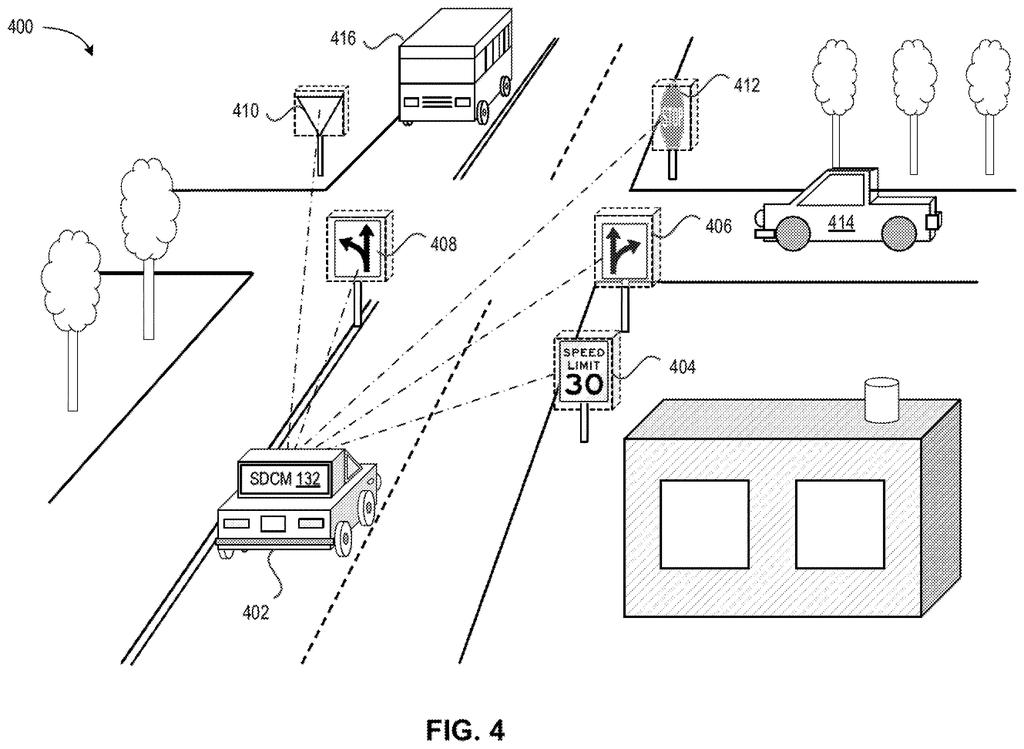
What Waymo's camera-radar sign reader actually does
Every time a Waymo robotaxi rolls through an intersection, its computers are making split-second calls about what signs say and whether to obey them. One camera struggling with rain, bright sunlight, or a partially covered sign can mean a wrong decision.
This patent describes a way to pull together two very different data sources, a regular camera and a radar sensor, and let two separate AI systems each digest one type of data. Their outputs are then merged into a single picture of what signs are present and what they say. The car acts on that merged picture, not on either sensor alone.
The result is a system where the car can still read a speed-limit sign accurately even when the camera image is washed out, as long as the radar data fills in the gap. For you as a passenger, that means fewer moments where the car hesitates or makes a wrong call at a sign.
… fuse the plurality of camera features with the plurality of radar features across the plurality of times to obtain a fused tensor; and process, using a neural network (NN), the fused tensor to obtain semantic content of one or more traffic signs …
Translation: It combines camera and radar data over time into a single mathematical object that an AI reads to understand traffic signs.
How Waymo fuses camera and radar data over time
The system runs two separate neural networks (AI models that learn to recognize patterns) in parallel. One network processes images from a standard camera, pulling out visual features like shape, color, and text. The second network processes radar images, which are maps of how radio waves bounce back from objects, giving a picture that works in fog, rain, and low light where cameras struggle.
Both networks do their analysis across multiple moments in time, not just a single snapshot. The system stacks up the camera features and radar features from several consecutive frames, then performs what the patent calls a fusion step, combining all of that into a single data structure called a fused tensor (think of it as a layered grid holding every relevant observation at once).
A third neural network then processes that fused tensor to extract semantic content, meaning not just "there is an object" but "that object is a 35 mph speed-limit sign." That specific label is what the driving control system actually uses to decide how fast to go or whether to stop.
- Camera network: reads visual detail, text, color
- Radar network: reads shape and distance through poor visibility
- Fusion + classifier network: combines both to produce a sign label the car acts on
… obtaining, using a sensing system of a vehicle a first set of perspective camera images of an environment and a second set of radar images of the environment.
Translation: The vehicle captures simultaneous visual photos and radar scans of its surroundings.
What better sign-reading means for riders in Waymo cars
For anyone riding in a Waymo vehicle, the practical payoff is a car that is less likely to miss or misread a sign when conditions are bad. Current self-driving systems that rely mainly on cameras have well-documented trouble in heavy rain or direct glare; radar alone can detect an object but can't read what it says. Combining them at the AI level, rather than just toggling between sensors, is a meaningful step toward consistent behavior.
Waymo's string of sensor-fusion filings shows where the company is placing its bets as it pushes into more cities and weather conditions. A system that performs reliably across conditions is a prerequisite for scaling a commercial robotaxi service beyond the sun-drenched testing grounds where many early miles were logged.
Google's 60th filing we've tracked since May in the self-driving sensing race builds on earlier applications like one predicting future sensor views and one modeling all nearby drivers.
This patent is specifically about reading traffic signs, not every perception challenge a self-driving car faces. That's a narrower scope than the headline implies, but sign misreads are a real failure mode with real consequences.
The most likely moment a rider would notice this working is a rainy night when the car correctly identifies a reduced-speed school zone sign and slows smoothly, rather than hesitating or missing it entirely. That quiet, undramatic reliability is what determines whether people trust a robotaxi enough to keep using it.
The detail that does the most work is stacking observations across multiple frames rather than betting everything on a single image. A partially blocked sign in one moment may be fully visible the next, and the system draws on both to reach a confident read.
There are more where this came from
We read every patent application Big Tech publishes and send you the ones worth knowing. Plain English, free, every week.
The drawings
9 drawing sheets from US 2026/0299088 A1 · click any drawing to enlarge


Want this weekly breakdown for a company we don't cover? Patentlyze Pro →
Be the first to weigh in