
Waymo Patents a System That Steers Autonomous Cars Away From Icy Roads
Icy roads are one of the hardest problems for self-driving cars to handle. Waymo has filed a patent for a system that doesn't just notice ice, it actively steers around it.
How Waymo's cars read slippery roads in real time
Every time a Waymo car rolls over a slick patch, its sensors are comparing what just happened to what should have happened on a normal, dry road. That gap tells the car something is off, and the system figures out whether it's dealing with a small icy spot or a road that's generally dangerous from end to end.
Once it knows how slippery things are, the car can pick the path on the road that offers the most grip, adjust how hard it brakes, and share what it found with other vehicles and with Waymo's remote operations team. Think of it as a real-time weather report built from the car's own behavior, not just a sensor reading.
The patent covers the whole loop: detect the condition, classify how widespread it is, choose the safest route through it, and tell the fleet. That last part is the one with the biggest potential upside, because one car learning about a slippery bridge can warn every other car behind it.
… determining, by the one or more processors in response to the evaluating, a path of highest friction along the roadway; and in response to the determining, the one or more processors causing the vehicle to take the path of highest friction.
Translation: The car figures out where the road has the best grip and deliberately steers itself toward that spot.
How the system finds the highest-friction path on a wet road
The system works by comparing detected sensor data against a model of expected behavior on the same stretch of road under normal conditions. If the car's actual traction, speed, or steering response deviates from what the model predicts, that deviation is a signal that road conditions have changed.
From that signal, the patent describes two levels of classification. The first is a localized hazard like a single icy patch, something the car can steer around. The second is a general road condition where the whole surface is compromised, requiring a different braking strategy and slower speeds overall. That distinction matters because the correct response to each is different.
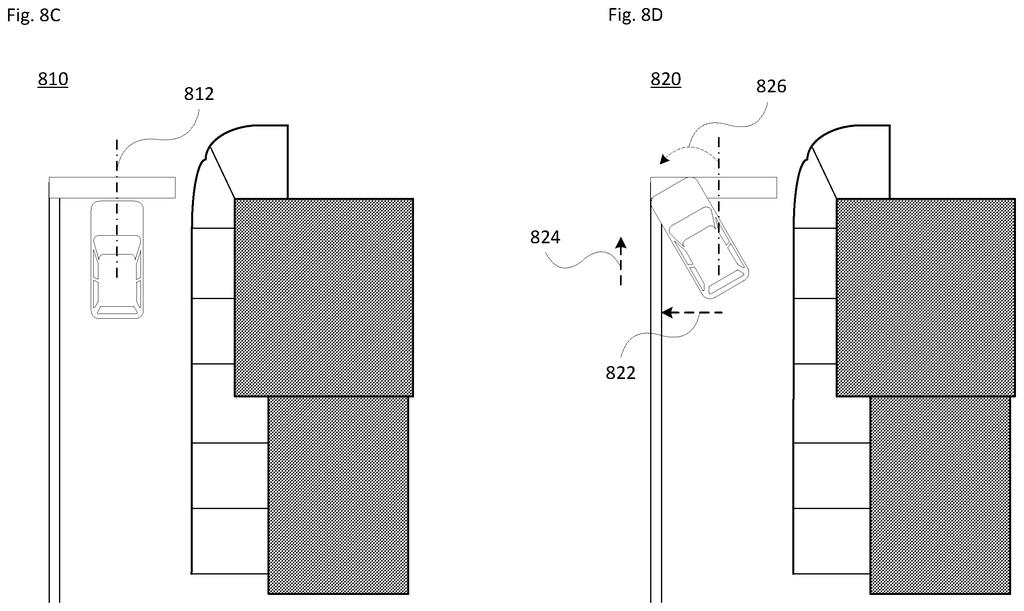
Once the car knows what it's dealing with, the system identifies the path of highest friction along the roadway, essentially the lane position or trajectory that offers the most grip, and causes the vehicle to follow it. Braking behavior is tuned to match the assessed grip level.
- Detected conditions are shared with nearby vehicles in the fleet.
- Data is also sent to Waymo's remote assistance teams for broader route planning.
- The system evaluates both the autonomous vehicle's own maneuvers and those of other nearby human-driven vehicles as inputs.
The on-board computer system may share road condition information with nearby vehicles and with remote assistance, so that it may be employed with broader fleet planning operations.
Translation: The vehicle broadcasts icy patches to other nearby cars and central headquarters to help the whole fleet.
What this means for self-driving cars in bad weather
For self-driving cars, weather has always been the awkward asterisk. Most autonomous vehicle demos happen in good conditions, and icy or wet roads remain a known weak spot. A system that can classify how bad conditions are, not just that conditions are bad, and then act on that classification at the level of individual steering decisions, is a meaningful step toward cars that can handle a full year of real driving.
The fleet-sharing piece is where this could have the most practical impact for riders. If one Waymo car in San Francisco identifies black ice on a bridge at 2 a.m., every other Waymo car heading that way could get a warning before it arrives. That's a faster feedback loop than any road authority can match.
Google's 57th filing we've tracked in self-driving sensing race since May builds on earlier applications like pre-planned gear shifts and filtering LIDAR data.
The core tradeoff in this design is that the car is learning about road conditions partly from its own behavior, which means it has to experience reduced traction before it can classify it. That's a real cost. A human driver who hears a weather forecast, feels the temperature drop, or sees road-treatment trucks can adjust before any slipping happens. This system, as described, is reactive rather than predictive.
The fleet-sharing architecture partially offsets that cost. If car number one discovers the ice and broadcasts it, cars two through fifty arrive already informed. That's a genuine advantage over a single human driver, and it's the part of the patent that holds the most long-term value.
The braking-strategy selection piece is more incremental. Adjusting braking force based on inferred friction is something anti-lock braking systems have done for decades. Waymo is wrapping that familiar logic inside an autonomous-vehicle decision loop, which is necessary but not surprising. Waymo has been filing around adverse-condition autonomy since at least 2023, and this patent reads as part of that ongoing engineering work rather than a sharp departure from it.
There are more where this came from
We read every patent application Big Tech publishes and send you the ones worth knowing. Plain English, free, every week.
The drawings
34 drawing sheets from US 2026/0288169 A1 · click any drawing to enlarge


Want this weekly breakdown for a company we don't cover? Patentlyze Pro →
Be the first to weigh in