
Sony Patents a Way to Compress Game Video More Aggressively During Cutscenes
When you're watching a cutscene in a game, you're not pressing any buttons, so a small delay in the video doesn't bother you at all. Sony's new patent turns that quiet moment into an opportunity to send your game stream more efficiently.
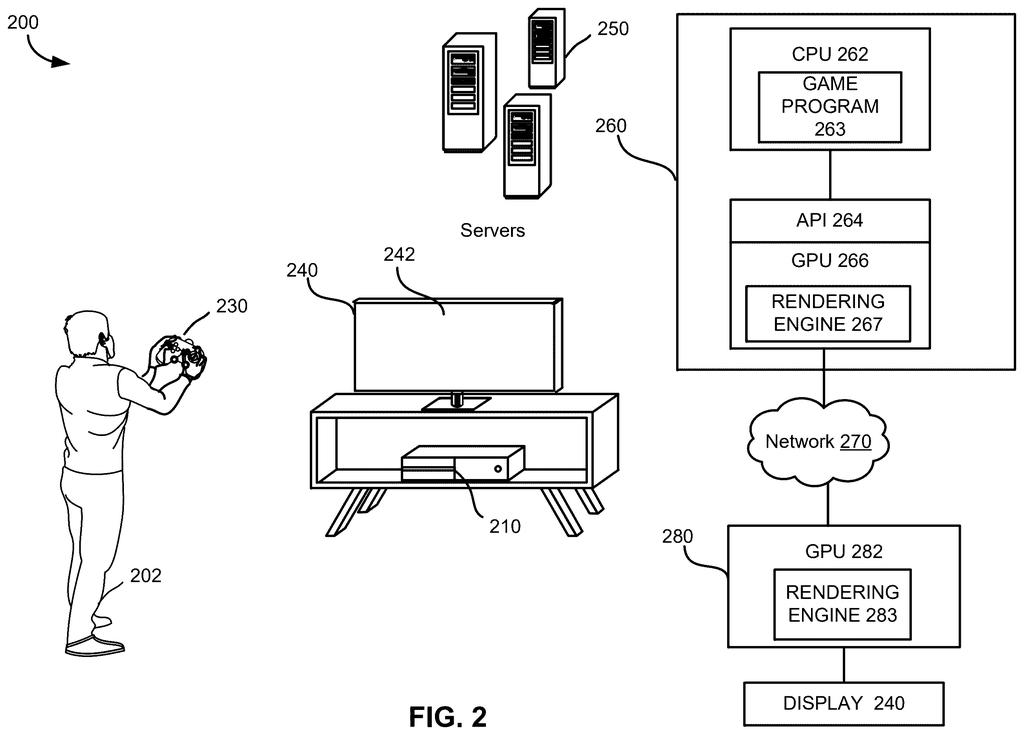
How Sony's cutscene compression trick saves bandwidth
A cutscene plays, your controller sits idle, and the game's servers keep pumping video to your screen at full speed. That works fine, but it uses more data than it needs to, because the stream is still optimized for instant response even though nobody needs instant response right now.
Sony's patent describes a system that notices when a cutscene begins and, at that moment, switches the video compression into a higher-efficiency mode. The tradeoff is a small increase in delay, but since you're just watching, not playing, you'd never feel it. When the cutscene ends and your controls come back, the system switches back to the normal low-delay mode.
Think of it like a delivery driver slowing down on a quiet back road to save fuel, then picking up speed when they hit the highway again. The system is always reading the road.
determining an opportunity to compromise a first characteristic to improve a second characteristic; in response to the opportunity, changing a first parameter to compromise the first characteristic and improve the second characteristic; …
Translation: The system finds moments where it can sacrifice one performance metric to boost another.
How the server detects cutscenes and adjusts frame encoding
At the heart of this patent is a concept called B-frames (bidirectional frames). When video is compressed, not every frame has to store a complete picture. Some frames store only the changes relative to the frames around them, both before and after. These are B-frames, and they're very efficient, but they require the decoder to look ahead before it can display them, which adds a small delay.
In a normal interactive game stream, that delay is a problem: it makes your controls feel sluggish. So most cloud game systems keep B-frame counts low, sacrificing some compression efficiency to stay responsive.
Sony's system proposes a smarter allocation:
- The server detects an opportunity, such as the start of a noninteractive sequence or cutscene.
- It increases the number of B-frames in the encoded video, reducing bandwidth use.
- When the interactive portion of the game resumes, it reverts the parameter, restoring low-latency mode.
The claim is general enough to cover other parameter pairs beyond B-frames, any situation where two characteristics are in tension and one can be temporarily sacrificed. But the B-frame and latency-versus-bandwidth example is the core, practical idea.
A first characteristic, latency, can be compromised by the increase in b-frames, but latency might not be as important during a cutscene. A second characteristic, bandwidth utilization, can be reduced and thereby improved by the use of the increased number of b-frames.
Translation: Adding video frames during cinematic scenes increases input lag, but drastically reduces the internet bandwidth required.
What this means for cloud gaming quality and data costs
Bandwidth is a real cost for cloud gaming services: they're sending high-quality video to potentially millions of players simultaneously. Any technique that reduces data use during stretches where players aren't interacting could translate into lower infrastructure costs or better video quality within the same data budget. For players on metered connections, it could mean games that eat through data more slowly.
The deeper value is that the system is automatic. It doesn't ask developers to manually flag every cutscene in their game. If the detection is reliable, this kind of adaptive encoding could run in the background across any title on a cloud gaming platform, making the whole service more efficient without any visible change to the experience.
Sony's 586th filing in our Sony coverage since May continues a push on smarter game delivery, building on work like faster streaming via stand-ins and graphics tied to player actions.
Cloud gaming services compress video constantly, and every inefficiency in that process either costs money on the server side or degrades the picture quality players receive. The waste this addresses is straightforward: during cutscenes, when a player is watching rather than acting, the service keeps compressing video as if split-second response time still matters, which it does not.
The fix is proportionate to a real but bounded problem. Cutscenes occupy a small fraction of most gaming sessions, so the savings here are meaningful at scale without being transformative on their own.
What the patent reflects is disciplined attention to a service where margins are tight and quality perception is everything. Streaming games to players is harder than streaming movies, and finding pockets where the two can briefly converge is careful, cumulative work that adds up.
There are more where this came from
We read every patent application Big Tech publishes and send you the ones worth knowing. Plain English, free, every week.
The drawings
8 drawing sheets from US 2026/0295399 A1 · click any drawing to enlarge


Want this weekly breakdown for a company we don't cover? Patentlyze Pro →
Be the first to weigh in