
Tesla Patents a Touch-Sensitive Skin Molded to Fit Robot Hands
Tesla has filed a recipe for giving robot hands a sense of touch: print a sensor flat, then heat it into the shape of a finger or palm.
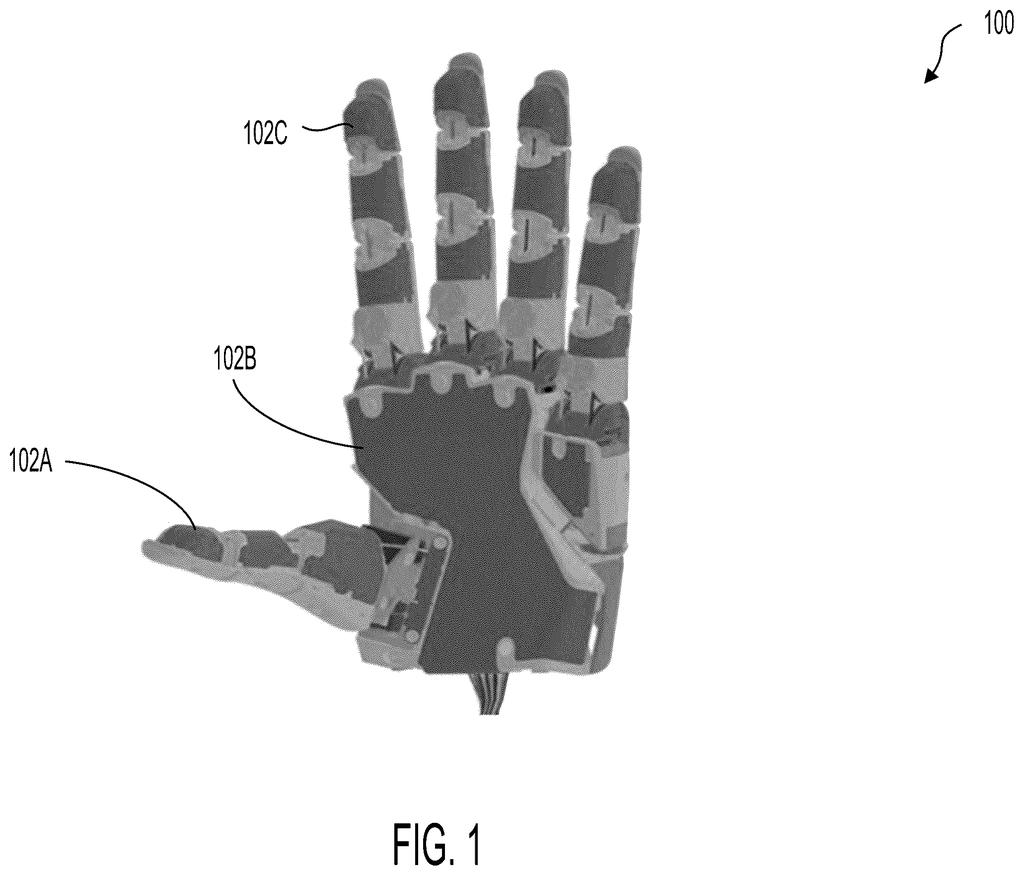
What Tesla's molded robot-skin sensor does
Imagine trying to pick up an egg while wearing thick oven mitts. You'd have almost no idea how hard you were squeezing. That's roughly the problem for a robot hand that can grip but can't really feel.
Tesla's patent application describes a touch-sensing skin that is built flat and then molded into the shape of a robot's thumb, finger or palm. Two thin plastic sheets carry printed lines of conductive material, with a compressible layer sandwiched between them. When something presses on the skin, the layers squeeze closer together, and the electronics pick up the change as an electrical signal.
The goal is a sensor that follows curves instead of sitting stiffly on a flat plate. The filing also lists several ways to print the wiring, so a factory could pick the method that suits each shape.
… coupling a separator layer between the first substrate material including the set of first conductive regions and a second substrate material having a set of second conductive regions to create a stack …
Translation: Layers of flexible wiring are sandwiched together with a special middle layer to build the sensor.
How the layered sensor gets baked into a curve
The filing covers a way to build a tactile sensor (a sensor that detects touch, force and pressure) in layers, then shape it in 3D. Each layer is a thin, bendable plastic sheet (thermoplastic polyurethane, PET or polyimide) patterned with conductive regions. A separator layer sits between two sheets, and where the top and bottom regions overlap, they form a sensing point, which the filing calls a pixel.
The separator sets how the sensor reads touch. An insulating (dielectric) separator makes a capacitive sensor: pressing shrinks the gap and shifts the stored charge. A piezoresistive separator (one whose resistance changes under pressure) makes a resistive sensor. A flexible circuit board carries the signals to readout electronics.
The claims cover two build orders:
- Stack first: print or etch the wiring on flat sheets, bond them with the separator between, then thermoform the stack (heat it until the plastic softens, then press it into a mold).
- Shape first: mold one sheet into the final shape, then add wiring, separator and the second sheet on the curve.
The filing lists several ways to lay the wiring: screen printing conductive ink, laser-cut channels filled with conductive paste, laser-activated metal plating, pad printing with a curve-hugging silicone stamp, and nozzle dispensing like a 3D printer. The finished sensor can sit on a hard or soft backing under a protective layer.
The 3D tactile sensors can conform to curved geometries and can be used for measuring surface force, touch, and pressure.
Translation: These sensors can bend around curved robot hands to measure grip strength and touch.
What this means for Tesla's humanoid robot hands
If a robot is going to handle real objects, it helps to know when it is touching something and how hard. The filing names robot fingertips, palms and end-effectors (the working tips of robotic arms), and it describes a touch-sensing skin that could wrap a humanoid robot or an autonomous vehicle. Flat, rigid sensors can't follow those curves, and the filing says existing soft sensors lack mechanical stability.
For you, the effect would be indirect: robots that handle things more gently and notice contact. The filing's other emphasis is manufacturing. The title promises scalable methods, and the steps it leans on (printing, laser cutting, thermoforming) are familiar factory processes. That points to an interest in making these sensors in volume.
Tesla's third filing in our robotics coverage since June follows one to speed up robot AI and one for a self-monitoring washer pump.
As a recipe, this one sits close to the factory floor. Screen printing, thermoforming and laser cutting are established processes, and the main path in the claims is simple: print flat, bond, heat, mold.
What has to exist first is everything around the sensor. The filing gives no numbers for sensitivity, resolution or durability, so nobody can say yet how well a molded skin feels a light touch or survives thousands of grips. A robot also needs electronics and software that turn those signals into decisions about how tightly to hold something.
The shortest route to a product is the flat-sheet-then-mold version on a robot hand, since printing on a flat sheet is the easier step. Shaping the part first and then plating or printing onto the curve takes more specialized equipment. It's a practical hardware filing and a useful step, with the proof of performance still to come.
Get our take in your Top Stories
Liked this breakdown? Add Patentlyze as a preferred source on Google, and our plain-English take shows up more often in your Top Stories the next time Tesla patent news breaks.
There are more where this came from
We read every patent application Big Tech publishes and send you the ones worth knowing. Plain English, free, every week.
The drawings
15 drawing sheets from US 2026/0310299 A1 · click any drawing to enlarge


Want this weekly breakdown for a company we don't cover? Patentlyze Pro →
Be the first to weigh in