
Apple Patent Puts a Miniature 3D Stadium Beside the Game, Including Players Outside the TV Shot
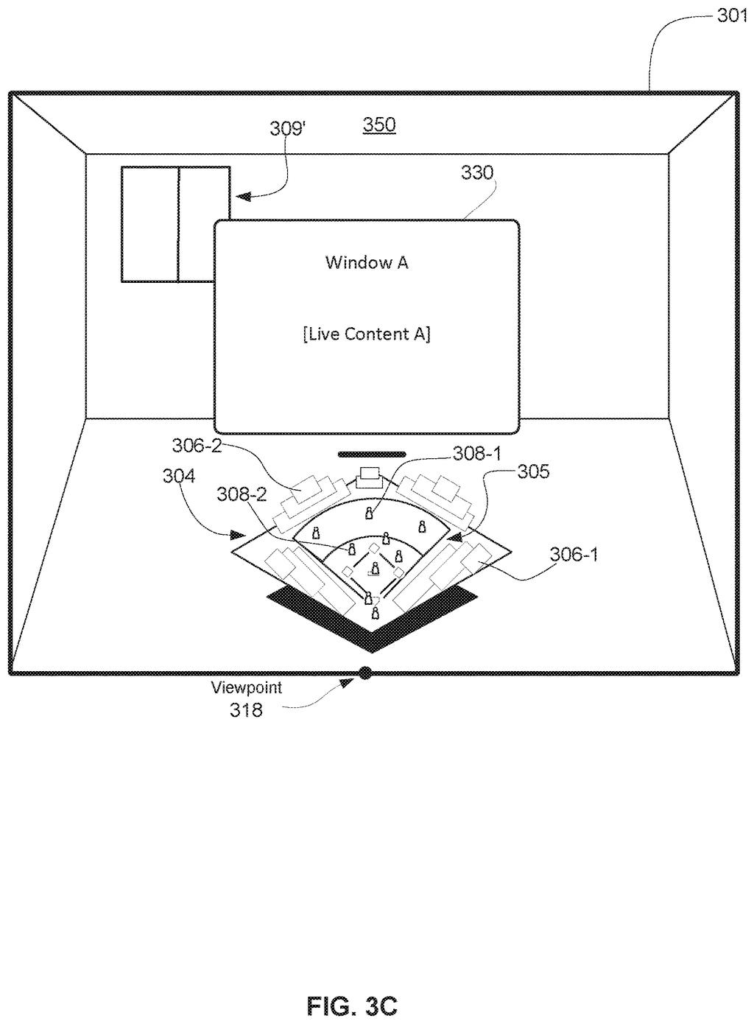
Apple's filing describes a miniature stadium that floats next to your game window and shows the outfielders and dugouts the broadcast camera skips. You can spin it and zoom it without touching the video.
What Apple's 3D stadium beside the game does
Ever watched a baseball game and wondered what the outfielders were doing while the TV camera stayed locked on the pitcher? A new Apple patent application tries to answer that for people watching in a headset.
While the game plays in a virtual screen in front of you, a small 3D model of the stadium and the players can appear beside it. It includes players and parts of the field the broadcast isn't showing at that moment. You can drag the model around, make it bigger, or turn it to look from another side, and the video on the screen doesn't budge.
The model also follows the game. Rewind the broadcast and the little players move back with it. Watch a replay and the model can show the same play from a different angle than the TV does.
presenting, via the one or more displays, a three-dimensional environment including a virtual playback user interface that is configured to display content …
Translation: The system shows a virtual screen playing regular video inside a 3D space.
How the 3D model stays in sync with the game
The claimed setup puts two things in front of you at once. One is a virtual playback window showing the ordinary flat video of an event. The other is a 3D representation of that event, which can include the venue, the participants, or both. At least some of what the model shows, such as a player or a section of the field, is not visible in the video at that moment.
The key idea is independent control. When you give an input asking to change how the 3D model looks, the device updates the model only, and the video window stays as it was. The filing describes several versions of this:
- Moving the model around the room without moving the video window
- Scaling the model bigger or smaller without zooming the video
- Switching viewpoints among preset spots, such as an overhead view, or even a player's or a seat's perspective
The model also stays in step with playback. As the game moves forward, the model updates. If you scrub (drag the timeline back or forward), the model jumps to match. During a replay, it can show the participants from a different viewing point than the replay camera uses.
The data behind the model comes from the content provider. One version uses joint-based data, meaning a digital skeleton that tracks how each player's body moves. The description also mentions building the model from images captured by the stadium's cameras.
… portions of the venue and/or a subset of the participants in the event that are not currently displayed/visible in the camera view of the broadcast/stream of the content item are included in the three-dimensional representation.
Translation: The 3D model reveals parts of the stadium and players that the TV cameras completely missed.
Why live sports could be Apple's headset hook
If you watch sports in a headset, a flat video window wastes the space around you. This filing fills that space with something the TV broadcast can't give you: a view of the whole field, from any side, at any size. The description also adds live stats, celebration effects when your favorite team scores, and shared sessions where a friend's avatar can mark up the same model.
The filing says the extra content cuts down on the taps and searching needed to find stats and player details. For Apple, live events are an easy way to show a headset owner why they'd want one on their face for three hours. Any product like this would depend on broadcasters sending the extra data along with each game.
Apple's 82nd filing we've tracked on our AR glasses watchlist since May builds on ideas like touch-zone arms and flipping windows between surfaces.
On the device side, this looks like a software feature. The filing needs a headset that can already float a video window in your room and track your hands, and the gestures it describes (pinch, drag, spread your hands apart to zoom) are ones headset owners already know.
The hard part sits outside Apple. The 3D model is built from data the broadcaster sends with the game, such as player positions and body tracking, so a league or network has to capture and deliver that data for every game. The shortest route to a real feature is one sport, one partner and one season, which makes it as much a business deal as an engineering job.
As a design, it is sensible and clearly thought through, especially the rule that the model and the video never interfere with each other. I'd call it a plausible next step for live sports on a headset, with its timing set by the broadcasters.
Get our take in your Top Stories
Liked this breakdown? Add Patentlyze as a preferred source on Google, and our plain-English take shows up more often in your Top Stories the next time Apple patent news breaks.
There are more where this came from
We read every patent application Big Tech publishes and send you the ones worth knowing. Plain English, free, every week.
The drawings
58 drawing sheets from US 2026/0313190 A1 · click any drawing to enlarge


Want this weekly breakdown for a company we don't cover? Patentlyze Pro →
Be the first to weigh in