
Zoox Filing Has Robotaxis Listen for Police Orders and Tell Riders What to Do
Driverless cars have no driver to hear a police officer's loudspeaker, so Zoox's patent application has the car listen for you and pass along what was said.
What Zoox's police-command patent actually does
You're riding in a driverless car, the cabin is hushed, and outside a police officer is shouting through a loudspeaker. You can't hear a word of it, and there's no driver up front to listen for you.
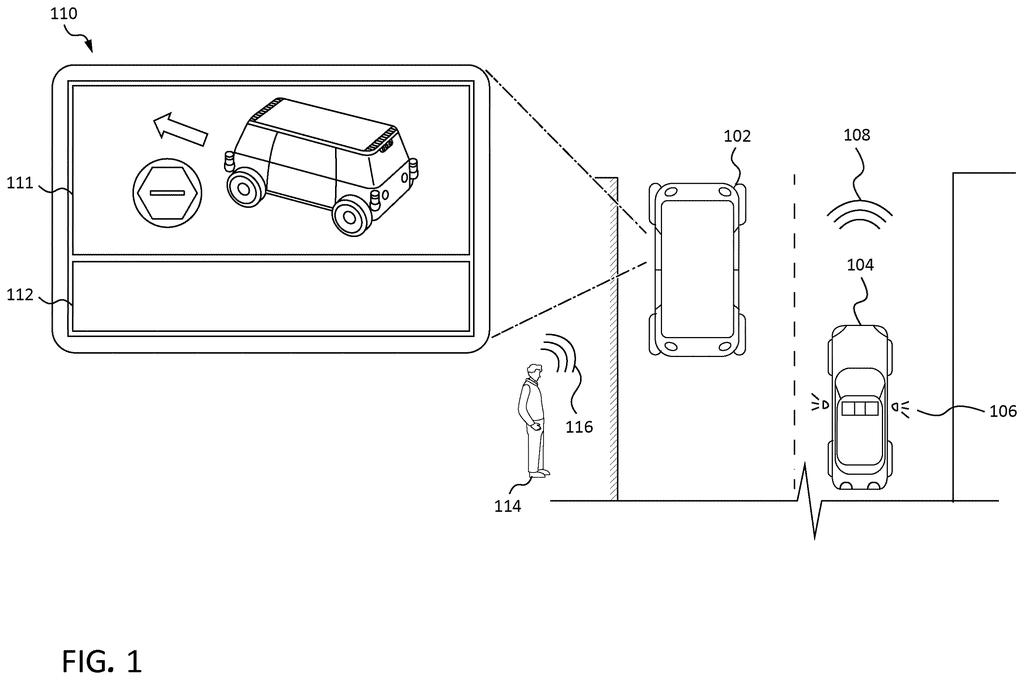
Zoox's patent application tries to fill that gap. The car's outside microphones pick up the audio, and the system first checks that the voice belongs to someone with authority, such as an officer or first responder. Then it works out whether there's an order for the car or its riders. If there is, your screen can show an icon, a transcript, a short summary, or even a map of an area to avoid.
It isn't only for people inside. Someone waiting for a pickup could get a message on their phone saying the car has been stopped by police. The filing also says the idea could help passengers who are deaf or hard of hearing.
… analyzing the audio to determine a command directed towards the vehicle or a passenger of the vehicle, the command comprising an instruction for a passenger of the vehicle to follow; and causing control of the vehicle based at least in part on the command.
Translation: The car figures out what the police want the passengers to do and then reacts accordingly.
How the car checks who is giving the order
The car records sound from its surroundings with microphones placed around the body (the filing shows eight, and mentions a 12-microphone version). Software cleans up the audio, for example by cutting background noise, and then checks who is talking.
Checking the speaker. The car works out where a sound came from using direction of arrival (comparing when the same sound reaches different microphones to find its direction). It then matches that against cameras, lidar and radar to find the person or vehicle responsible. A source counts as authorized if it shows signs such as flashing emergency lights, a siren, or a matching wireless signal. A pedestrian shouting from the sidewalk would not qualify, and if a source can't be verified the car can issue a warning.
Reading the order. Speech-to-text and natural language processing (software that turns speech into words, then works out what is being asked) pull out the command. Gestures such as a pointed arm can back it up. A human remote operator can also listen to the clip and correct the car's interpretation.
What the car can do next, according to the claims and description:
- Show an icon, text, or a map of an area to avoid on an in-car screen
- Send an alert to the phone of someone waiting for pickup
- Project light onto the ground to mark a walkable area or a zone to avoid
- Lock or unlock doors, play audio, or drive to a drop-off location
… external audio signals may be interpreted and converted into clear visual indicium that can be understood by individuals associated with the vehicle, such as passengers inside the vehicle or individuals awaiting pickup.
Translation: Outside sounds are turned into easy to read messages for people inside or waiting for the car.
Why this matters for riders in a driverless car
If you ride in a driverless car, nobody up front can hear an officer waving traffic away or ordering everyone to clear an area. This patent application is about closing that gap: the car hears the order, confirms it came from someone with real authority, and tells you in a form you can read. That also helps passengers who are deaf or hard of hearing, which the filing calls out directly.
There's a trust problem the filing takes seriously too. A car that obeys any voice can be fooled, so the design checks the speaker first and warns you when it can't. A human remote operator can double check the car's reading of an order. Whether all of that works on a noisy street, with different accents and fast speech, is something a patent can't tell us.
Amazon's 32nd filing we've tracked in self-driving sensor coverage since May builds on earlier Zoox work like a rain-clearing spinning window and mapping every driving decision.
The filing's title promises a display, yet the claims shown here are about action. Claim 21 describes a driverless car that hears audio outside, confirms with its sensors that the speaker is an authorized entity, finds a command telling a passenger what to do, and then changes how the car behaves.
That is a fairly specific chain, since every link has to be present. Claim 27 is much looser: a microphone on a vehicle, a command pulled from the audio, and the vehicle acting on it. It never mentions authorization or driverless operation, so if granted it would reach any car that acts on what it overhears.
The speaker check is what makes the narrow version sensible, and it is missing from the broadest claim. Expect the final scope to sit somewhere between the two. The underlying problem, a car with no driver that can't hear the police, is a real one.
Get our take in your Top Stories
Liked this breakdown? Add Patentlyze as a preferred source on Google, and our plain-English take shows up more often in your Top Stories the next time Amazon patent news breaks.
There are more where this came from
We read every patent application Big Tech publishes and send you the ones worth knowing. Plain English, free, every week.
The drawings
7 drawing sheets from US 2026/0307483 A1 · click any drawing to enlarge


Want this weekly breakdown for a company we don't cover? Patentlyze Pro →
Be the first to weigh in