
Microsoft Files Patent for Voice Matching That Works on Old and New Phone Audio
Your voice looks different to a computer on a decades-old landline than on a modern smartphone app, and this Microsoft filing teaches a model to bridge that gap.
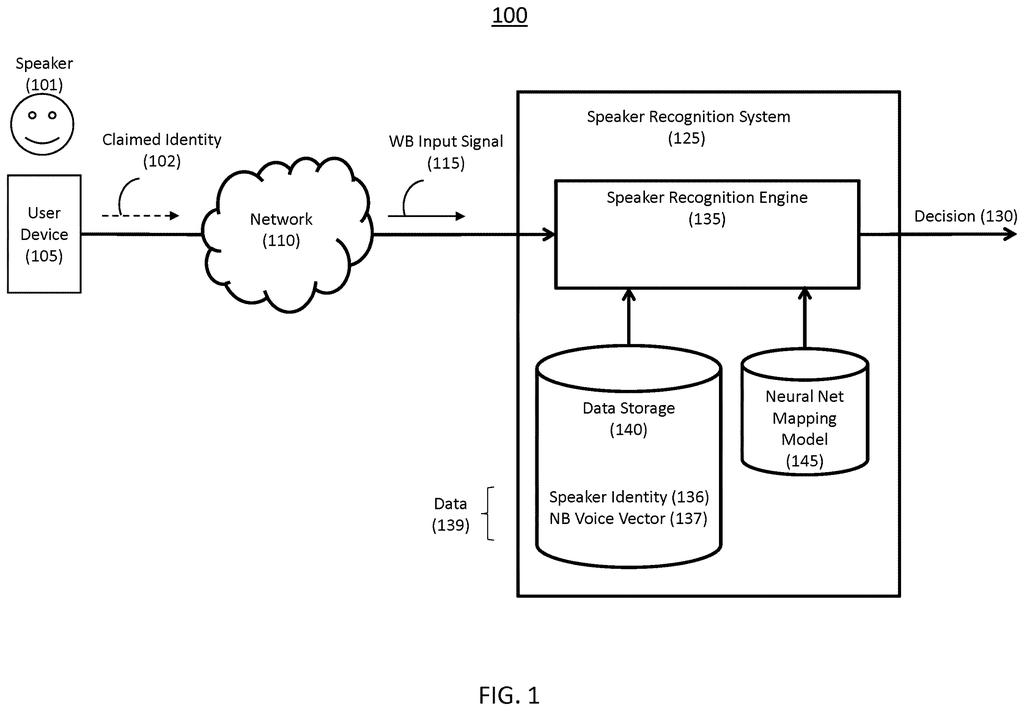
What Microsoft's voiceprint patent actually does
Every time you speak to a voice-ID system to prove who you are, it compares your voice to a stored sample called a voiceprint. That works well when both were recorded the same way. It gets messy when you signed up years ago on a landline, then call back from a smartphone app with much clearer audio.
The usual fix today is to downgrade the new, clearer audio so it matches the old, thinner recording. That throws away detail that could help tell you apart from an impostor. Microsoft's filing goes the other way. A trained AI model converts the old voiceprint into a close guess at what it would have looked like if it had been recorded in higher quality.
The system then compares the two on equal footing and produces a score for how likely it is that they came from the same person.
… transforming, using a trained neural net mapping model, at least one of the input voice vector or one of the enrolled voice vectors such that the input voice vector and the enrolled voice vector correspond to a same sampling frequency following the transformation …
Translation: An artificial intelligence model adjusts the audio data so samples from different recording qualities can be compared.
How the model converts a landline voiceprint
The system stores a voiceprint for each enrolled person: a list of roughly 200 to 600 numbers (called a voice vector) that a neural network pulls out of a recording of their voice. When someone speaks later, the system turns the new audio into a voice vector the same way and compares the two.
The catch is the sampling frequency, meaning how many times per second the audio is measured. Old landline recordings use 8 kHz (called narrowband), while modern mobile and internet calls use 16 kHz (wideband). The patent adds a mapping model, a neural network trained to convert a vector from one quality level into its likely counterpart at the other. According to the claims, it can convert either the stored vector or the new one, in either direction.
To train it, the filing describes taking wideband recordings from many speakers, making a downsampled narrowband copy of each, and extracting a voice vector from both versions. The model then learns, through regression (fitting numbers so they predict other numbers), to turn each narrowband vector into its wideband twin with as little error as possible.
After conversion, the system scores the pair, for example with cosine scoring (a measure of how closely two lists of numbers point the same way). If the score clears a tunable threshold, the speaker is verified or identified. A higher threshold favors security, and a lower one favors convenience.
… comparing the first voice vector to the mapped voice vector to yield a score that indicates a probability that the first voice vector and the second voice vector originated from a same person …
Translation: The system calculates the odds that both voice recordings belong to the exact same individual.
Why call-center voice checks could get sharper
If you set up voice ID on a phone line years ago and now use an app, a system like this could mean fewer wrongly rejected calls and fewer extra security questions. The filing says the goal is to recover the accuracy that wideband audio offers, which the common fix of downgrading the new audio throws away.
For companies that run contact centers reachable by landline, mobile, web and app, the appeal is practical. The description says the conversion can run once in batch over stored voiceprints, building a database that a standard wideband system can use. The score threshold still sets the balance between blocking impostors and annoying real customers.
Microsoft's 530th filing in our Microsoft coverage since May adds to a security thread that includes aging device identity and image-based phishing detection.
The main claim is short. A speaker recognition system takes a voice vector, pulls up stored vectors for known people, uses a trained neural network to make the two match in sampling frequency, scores the pair, and names the speaker.
Nothing in that claim mentions 8 kHz, 16 kHz, phone lines or call centers. Those details show up only in the narrower claims below it. The wording reaches any pairing of audio quality, in either direction, as long as a trained neural network does the converting.
If granted, that breadth would cover a whole approach to voice ID. Systems that convert stored voiceprints with a trained model would match its wording. Lowering the audio quality, the common fix today, would sit outside it, because the claim requires that learned conversion step.
Get our take in your Top Stories
Liked this breakdown? Add Patentlyze as a preferred source on Google, and our plain-English take shows up more often in your Top Stories the next time Microsoft patent news breaks.
There are more where this came from
We read every patent application Big Tech publishes and send you the ones worth knowing. Plain English, free, every week.
The drawings
3 drawing sheets from US 2026/0321267 A1 · click any drawing to enlarge


Want this weekly breakdown for a company we don't cover? Patentlyze Pro →
Be the first to weigh in