
Google Patents a Lock Mode That Verifies Who Picked Up Your Old Phone
Selling or giving away a phone always involves a leap of faith: did it actually reach the right person? Google has filed a patent for a system that puts the device itself in charge of answering that question.
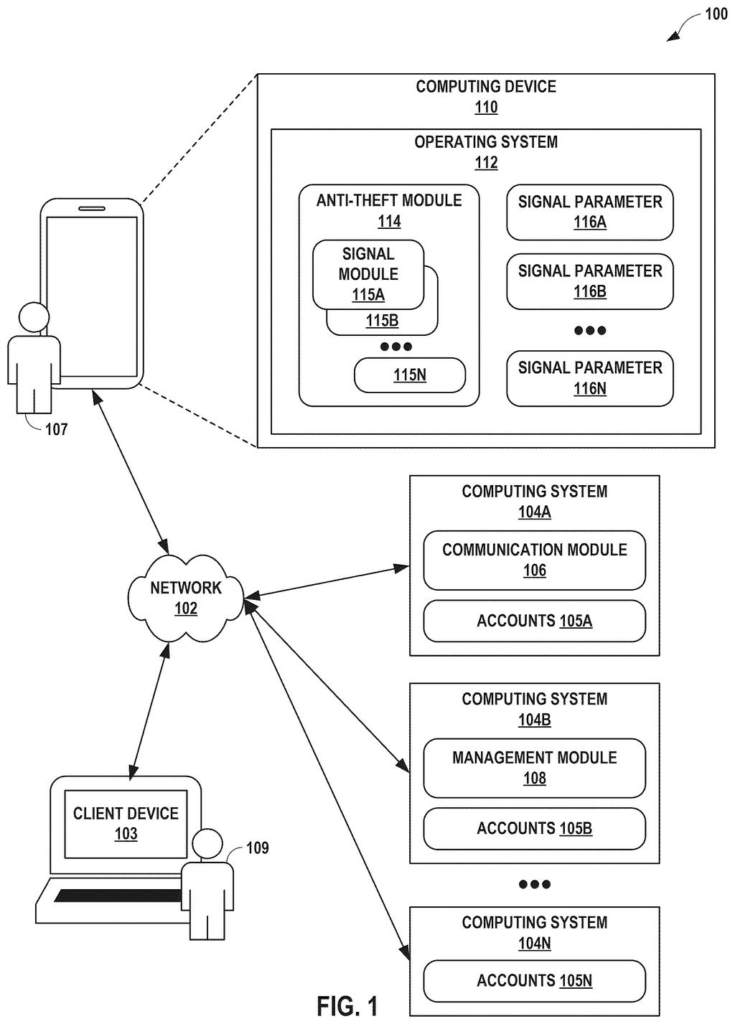
How Google's transfer lock decides who gets in
You're selling your old Android phone to someone across town. You pack it up, hand it off, and then have no way to know whether it ended up with the buyer you intended or got lifted somewhere along the way.
Google's patent describes a "protected mode" that kicks in the moment you hand over your device. In this mode, the phone is effectively locked down: most normal functions are disabled. When someone picks it up and presses the button to wake the screen, the phone checks whether the signals around it, location, network, or other environmental clues the original owner pre-approved, match what you set before handing it over. If they do, the lock lifts and the new owner is in. If they don't, the phone stays locked.
Think of it as a handshake the phone does on your behalf. You set the conditions; the device enforces them. No extra app, no phone call to verify, the hardware handles it.
… activating, by the computing device and during a normal mode of operation, the protected mode, wherein the computing device disables one or more functions that are enabled during the normal mode of operation while the protected mode is activated …
Translation: The phone shuts down certain features when you turn on its special security mode.
How the signal comparison unlocks the protected mode
The patent describes a two-phase system built around what Google calls a protected mode. Here's how the handoff works:
- The transferor (you, the seller) sets signal parameters before handing over the device. These are conditions the phone will later check, such as GPS coordinates, nearby Wi-Fi network identifiers, or cellular tower data, essentially a fingerprint of where and how the legitimate buyer should receive the phone.
- The phone enters protected mode automatically during normal operation before the transfer. While locked, functions that work in normal use are disabled, making the device much less useful to anyone who shouldn't have it.
- When someone tries to wake the phone, the system doesn't just ask for a PIN. It samples signals from the device's environment and compares them against the parameters you stored. That comparison is the deciding vote.
- If the signals match, protected mode deactivates and the new owner gets a working device. If they don't match, the phone stays locked, effectively bricking itself against theft.
The claim is written as a pure software method, meaning it could in principle run on existing hardware using sensors and radios already built into modern phones. The transferor sets the unlock conditions through the device; no third-party server is strictly required by the described method, though the patent doesn't rule one out either.
… responsive to receiving the user input, determine, based on a comparison between one or more signals associated with the computing device and the one or more signal parameters, whether the computing device is in possession of the transferee …
Translation: It checks signals when someone tries to wake the phone to see if it is the right person.
What this means for secondhand phone buyers and sellers
For anyone who buys or sells phones secondhand, this addresses a real gap. Existing tools like Find My Device or activation lock help after a theft is discovered, but they don't actively protect a device during the moment of handoff, which is often when things go wrong.
If this feature shipped, it would add a layer of protection that works even if the thief turns off the internet immediately after grabbing the phone, because the verification happens locally on the device. For buyers, it could also serve as proof the seller genuinely released the device rather than planning to remote-lock it later. The real-world value depends entirely on which signals Google chooses to use and how hard those signals are to spoof.
Google's 808th filing in our Google coverage since May adds to a pattern that includes a speaker-tracking audio tool and Waymo's next-frame prediction system.
The idea described here runs entirely on software and signals that already live inside every modern phone: location, nearby Wi-Fi networks, cellular connection. Nothing in this document requires new hardware, a new chip, or a factory change. The shortest path to a real product is essentially a software update.
The genuine challenge is the setup moment. The system asks the person selling or giving away their phone to configure conditions in advance, before handing it over. If that step is buried in a settings menu, most people will skip it entirely, and the protection never activates.
Google could fold this into the existing screen people see when they wipe a phone before selling it, making the configuration feel like a natural part of that process rather than a separate task. That design choice, more than any technical hurdle, determines whether this protection actually reaches people.
There are more where this came from
We read every patent application Big Tech publishes and send you the ones worth knowing. Plain English, free, every week.
The drawings
5 drawing sheets from US 2026/0300561 A1 · click any drawing to enlarge


Want this weekly breakdown for a company we don't cover? Patentlyze Pro →
Be the first to weigh in