
Mobileye · Filed Nov 12, 2025 · Published Oct 15, 2026

Intel's Self-Driving Division Files Patent to Fix Gaps Between Digital Map Sections

Self-driving maps are built in pieces, and the edges of those pieces do not always line up. Mobileye describes a way to pull them together like stretching a sheet of rubber, with built-in resistance so the rest of the map does not tear out of shape.
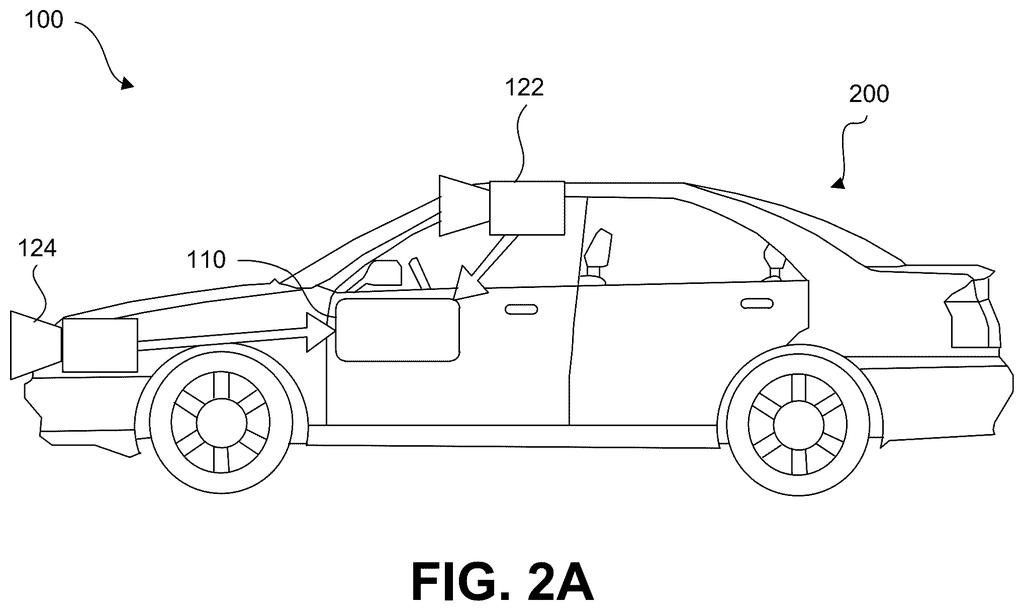
An autonomous car uses forward-facing cameras and an onboard computer to guide itself down the road. Drawing from patent filing US 2026/0318692 A1.
An autonomous car uses forward-facing cameras and an onboard computer to guide itself down the road.
See all 55 drawings from this filing ↓
Publication number US 2026/0318692 A1 US20260318692A1
Applicant MOBILEYE VISION TECHNOLOGIES LTD.
Filing date Nov 12, 2025
Publication date Oct 15, 2026
Inventors Dori SHAPIRA, Jonathan Jacob LEDERMAN, Igor TUBIS
US classification 701/450
Examiner NGUYEN, THUY-VI THI (Art Unit 3656)
Status when we published Waiting for an examiner (Jul 14, 2026)
Parent application is a National Stage Entry of PCTIB2024055719 (filed 2024-06-11)
Document 30 claims

What Mobileye's map-stitching patent fixes

Cars that drive themselves lean on maps built from the recordings of other cars, and those maps are made in pieces, one region at a time. Each piece comes from different drives, so a lane line or a sign near the edge of one piece can sit a little off from the same lane line in the next piece. Lay the pieces side by side and you get a seam where the road jogs sideways.

Mobileye's filing describes a way to close that seam. It pins small control points to features such as a lane marking in each piece, links the matching pair, and then pulls the two toward each other. A built-in resistance keeps the pulling gentle, so a nudge near the seam does not drag the rest of the map out of shape.

The result is one continuous map where roads on both sides of the border line up.

From the filing · CLAIM 1
… use at least one resistance value to warp a location of the first control point from an original position to a warped position based on the association between the first control point and the second control point.

Translation: It applies a resistance metric to stretch map points into alignment.

How map control points get pulled into line

The patent starts with a navigational map made of segments, each covering a different geographic region. In one version, each segment is built from drive information collected by a group of vehicles that traveled the road in that region. Control points (small anchor markers) are attached to features in each segment, and they can be laid out in a grid.

When the system decides that a feature in one segment and a feature in the next are the same real-world thing, it links their control points. It then moves a control point from its original position to a warped position, which can line it up with its partner. A resistance value (a number that sets how stiff the map is) controls how hard the map pushes back, using two simulated forces:

  • Neighbor resistance: a pull between a control point and nearby points in the same segment. It grows as the points get farther apart, which keeps spacing sensible.
  • Home resistance: a pull back toward the point's original position. It grows the farther the point is moved, which limits how much any one point can shift.

There is one exception. The neighbor pull can be skipped when two control points belong to different road segments, such as a road above, below, or beside another. That lets stacked roads bend independently. The updated map, with the feature at its new position, is then stored. The claims also cover a method for navigating a vehicle and the map itself.

From the filing · THE ABSTRACT
Systems and methods for generating a navigational map are disclosed. In one implementation, a system includes a processor configured to access a navigational map including at least a first map segment representing a first geographical region and a second map segment representing a second geographical region; …

Translation: The system handles data from separate regional map segments.

Why seams in a map matter to a car

If a self-driving car checks itself against a map, a jog in the road at the edge of a map piece could throw it off. Smoothing those seams matters most on long drives that cross from one mapped region into the next. The filing says each piece is built from recordings by vehicles that drove that region, so each piece can carry its own small errors, and matching them up is a recurring chore for anyone running a crowdsourced map.

For you, the payoff would be invisible when it works: no odd lane position at a regional border. The patent covers a method for navigating a host vehicle and the map itself, so the fix lives in the data the car relies on. It is a maintenance idea, and its value depends on how well the system picks matching features.

Intel files its eighth patent we've tracked in the self-driving sensing race since September, adding to work like its autonomous pullover safety filing and Mobileye's lane paint quality map.

Editorial take

Stitching maps means bending them, and bending has a price. Each nudge moves a road away from where the original drives recorded it, so a seam closed in one place can introduce a small error in another. The resistance settings are the dial for that trade: stiff settings keep roads true to their recordings and leave seams, while loose settings close seams and let roads drift.

The weak spot is a wrong match. If the system decides two features are the same lane line when they are not, it will pull real roads toward the wrong target, and the claims describe no safeguard against that. The overpass exception shows the authors saw a related trap, since a road should not be dragged along with the one above it.

On balance the price looks worth paying. A small, limited distortion beats a visible jog in the road, and this is routine map housekeeping with a sensible design.

Get our take in your Top Stories

Liked this breakdown? Add Patentlyze as a preferred source on Google, and our plain-English take shows up more often in your Top Stories the next time Intel patent news breaks.

There are more where this came from

We read every patent application Big Tech publishes and send you the ones worth knowing. Plain English, free, every week.

The drawings

55 drawing sheets from US 2026/0318692 A1 · click any drawing to enlarge

Driverless vehicle computer system, drawing sheet 1 from US 2026/0318692 A1
Sheet 1 Driverless vehicle computer system
Autonomous vehicle camera placement, drawing sheet 2 from US 2026/0318692 A1
Sheet 2 Autonomous vehicle camera placement
Overhead view of camera layout, drawing sheet 3 from US 2026/0318692 A1
Sheet 3 Overhead view of camera layout
Dual windshield camera setup, drawing sheet 4 from US 2026/0318692 A1
Sheet 4 Dual windshield camera setup
Three camera fields of view, drawing sheet 5 from US 2026/0318692 A1
Sheet 5 Three camera fields of view
Triple windshield camera layout, drawing sheet 6 from US 2026/0318692 A1
Sheet 6 Triple windshield camera layout
Vehicle steering and braking controls, drawing sheet 7 from US 2026/0318692 A1
Sheet 7 Vehicle steering and braking controls
Dashboard screen and rearview mirror, drawing sheet 8 from US 2026/0318692 A1
Sheet 8 Dashboard screen and rearview mirror
Show the other 47 sheets
Intel’s Self-Driving Division Files Patent to Fix Gaps Between Digital Map Sections patent drawing, sheet 9
Sheet 9
Intel’s Self-Driving Division Files Patent to Fix Gaps Between Digital Map Sections patent drawing, sheet 10
Sheet 10
Intel’s Self-Driving Division Files Patent to Fix Gaps Between Digital Map Sections patent drawing, sheet 11
Sheet 11
Intel’s Self-Driving Division Files Patent to Fix Gaps Between Digital Map Sections patent drawing, sheet 12
Sheet 12
Intel’s Self-Driving Division Files Patent to Fix Gaps Between Digital Map Sections patent drawing, sheet 13
Sheet 13
Intel’s Self-Driving Division Files Patent to Fix Gaps Between Digital Map Sections patent drawing, sheet 14
Sheet 14
Intel’s Self-Driving Division Files Patent to Fix Gaps Between Digital Map Sections patent drawing, sheet 15
Sheet 15
Intel’s Self-Driving Division Files Patent to Fix Gaps Between Digital Map Sections patent drawing, sheet 16
Sheet 16
Intel’s Self-Driving Division Files Patent to Fix Gaps Between Digital Map Sections patent drawing, sheet 17
Sheet 17
Intel’s Self-Driving Division Files Patent to Fix Gaps Between Digital Map Sections patent drawing, sheet 18
Sheet 18
Intel’s Self-Driving Division Files Patent to Fix Gaps Between Digital Map Sections patent drawing, sheet 19
Sheet 19
Intel’s Self-Driving Division Files Patent to Fix Gaps Between Digital Map Sections patent drawing, sheet 20
Sheet 20
Intel’s Self-Driving Division Files Patent to Fix Gaps Between Digital Map Sections patent drawing, sheet 21
Sheet 21
Intel’s Self-Driving Division Files Patent to Fix Gaps Between Digital Map Sections patent drawing, sheet 22
Sheet 22
Intel’s Self-Driving Division Files Patent to Fix Gaps Between Digital Map Sections patent drawing, sheet 23
Sheet 23
Intel’s Self-Driving Division Files Patent to Fix Gaps Between Digital Map Sections patent drawing, sheet 24
Sheet 24
Intel’s Self-Driving Division Files Patent to Fix Gaps Between Digital Map Sections patent drawing, sheet 25
Sheet 25
Intel’s Self-Driving Division Files Patent to Fix Gaps Between Digital Map Sections patent drawing, sheet 26
Sheet 26
Intel’s Self-Driving Division Files Patent to Fix Gaps Between Digital Map Sections patent drawing, sheet 27
Sheet 27
Intel’s Self-Driving Division Files Patent to Fix Gaps Between Digital Map Sections patent drawing, sheet 28
Sheet 28
Intel’s Self-Driving Division Files Patent to Fix Gaps Between Digital Map Sections patent drawing, sheet 29
Sheet 29
Intel’s Self-Driving Division Files Patent to Fix Gaps Between Digital Map Sections patent drawing, sheet 30
Sheet 30
Intel’s Self-Driving Division Files Patent to Fix Gaps Between Digital Map Sections patent drawing, sheet 31
Sheet 31
Intel’s Self-Driving Division Files Patent to Fix Gaps Between Digital Map Sections patent drawing, sheet 32
Sheet 32
Intel’s Self-Driving Division Files Patent to Fix Gaps Between Digital Map Sections patent drawing, sheet 33
Sheet 33
Intel’s Self-Driving Division Files Patent to Fix Gaps Between Digital Map Sections patent drawing, sheet 34
Sheet 34
Intel’s Self-Driving Division Files Patent to Fix Gaps Between Digital Map Sections patent drawing, sheet 35
Sheet 35
Intel’s Self-Driving Division Files Patent to Fix Gaps Between Digital Map Sections patent drawing, sheet 36
Sheet 36
Intel’s Self-Driving Division Files Patent to Fix Gaps Between Digital Map Sections patent drawing, sheet 37
Sheet 37
Intel’s Self-Driving Division Files Patent to Fix Gaps Between Digital Map Sections patent drawing, sheet 38
Sheet 38
Intel’s Self-Driving Division Files Patent to Fix Gaps Between Digital Map Sections patent drawing, sheet 39
Sheet 39
Intel’s Self-Driving Division Files Patent to Fix Gaps Between Digital Map Sections patent drawing, sheet 40
Sheet 40
Intel’s Self-Driving Division Files Patent to Fix Gaps Between Digital Map Sections patent drawing, sheet 41
Sheet 41
Intel’s Self-Driving Division Files Patent to Fix Gaps Between Digital Map Sections patent drawing, sheet 42
Sheet 42
Intel’s Self-Driving Division Files Patent to Fix Gaps Between Digital Map Sections patent drawing, sheet 43
Sheet 43
Intel’s Self-Driving Division Files Patent to Fix Gaps Between Digital Map Sections patent drawing, sheet 44
Sheet 44
Intel’s Self-Driving Division Files Patent to Fix Gaps Between Digital Map Sections patent drawing, sheet 45
Sheet 45
Intel’s Self-Driving Division Files Patent to Fix Gaps Between Digital Map Sections patent drawing, sheet 46
Sheet 46
Intel’s Self-Driving Division Files Patent to Fix Gaps Between Digital Map Sections patent drawing, sheet 47
Sheet 47
Intel’s Self-Driving Division Files Patent to Fix Gaps Between Digital Map Sections patent drawing, sheet 48
Sheet 48
Intel’s Self-Driving Division Files Patent to Fix Gaps Between Digital Map Sections patent drawing, sheet 49
Sheet 49
Intel’s Self-Driving Division Files Patent to Fix Gaps Between Digital Map Sections patent drawing, sheet 50
Sheet 50
Intel’s Self-Driving Division Files Patent to Fix Gaps Between Digital Map Sections patent drawing, sheet 51
Sheet 51
Intel’s Self-Driving Division Files Patent to Fix Gaps Between Digital Map Sections patent drawing, sheet 52
Sheet 52
Intel’s Self-Driving Division Files Patent to Fix Gaps Between Digital Map Sections patent drawing, sheet 53
Sheet 53
Intel’s Self-Driving Division Files Patent to Fix Gaps Between Digital Map Sections patent drawing, sheet 54
Sheet 54
Intel’s Self-Driving Division Files Patent to Fix Gaps Between Digital Map Sections patent drawing, sheet 55
Sheet 55
Browse all the drawings 55 drawing sheets
Patent filing page

Source. Full patent text and figures from the official USPTO publication PDF.
Reader comments

Be the first to weigh in

Start the discussion

Real name or a handle, either is fine. Comments are read by a person before they appear, so allow a little time. Keep it about the filing.