
Mobileye Files Patent for Cars That Judge How Dark It Is Using Their Cameras
Mobileye describes a car that works out how bright it is outside by reading its camera's own settings alongside the picture, then adjusts headlights and screens to match.
What Mobileye's camera light-meter patent does
A car rolls toward a tunnel on a bright afternoon. The entrance ahead looks like a black hole, while the sky behind it glares. In that moment the car has to decide whether your headlights should be on and whether your dashboard screen is still readable.
Mobileye's patent application describes a way to make that call using the cameras the car already carries. The system looks at the picture, and it also checks the camera's own settings, such as how long it collected light for each shot. A camera adjusts itself to the light around it, so the picture alone doesn't say how bright the scene really was. The settings fill in the gap.
From that reading, the car can switch its headlights or change how part of your screen looks.
receive at least one image captured by at least one camera of a host vehicle from the environment of the host vehicle; obtain at least one value of at least one imaging parameter associated with the at least one camera of the host vehicle …
Translation: The car takes a picture and checks the camera settings used to take it.
How camera settings reveal the light level
The system takes an image from a camera on the vehicle and also reads one or more of that camera's settings. Examples are exposure time (how long it collects light for each shot), f-number and aperture size (how wide the lens opens), or focal length. It then analyzes part of the image to estimate a light intensity level around the vehicle, using those settings to interpret how bright the picture really is.
Choosing which part of the image to read matters. The claims describe picking it with image segmentation (sorting the picture into regions like sky and road), with a trained system (a neural network), or with map information and object tracking. In one version the trained system finds the sky and the road surface, and the road is what gets analyzed. The filing also covers using two images, or two cameras, to get two separate light readings.
Then the vehicle acts. According to the claims, it can change a headlight state or change a display setting for a region of a screen inside the car.
The description adds more detail. One version keeps the headlights on by comparing how much of the scene is bright versus dark. Others use extra context, such as a road passing under an overpass or where the driver is looking, to decide how and where to adjust.
… analyze at least a portion of the at least one image to determine at least one light intensity level in the environment of the host vehicle …
Translation: The system looks at parts of the photo to figure out how bright or dark it is outside.
What better light readings mean for drivers
If this works as described, the payoff shows up in small moments: headlights that react as you enter a tunnel, and a dashboard screen that stays readable when low sun hits your windshield. The filing describes adjusting part of a screen based on where the driver is looking and on the light in the part of the scene that overlaps the display from the driver's point of view.
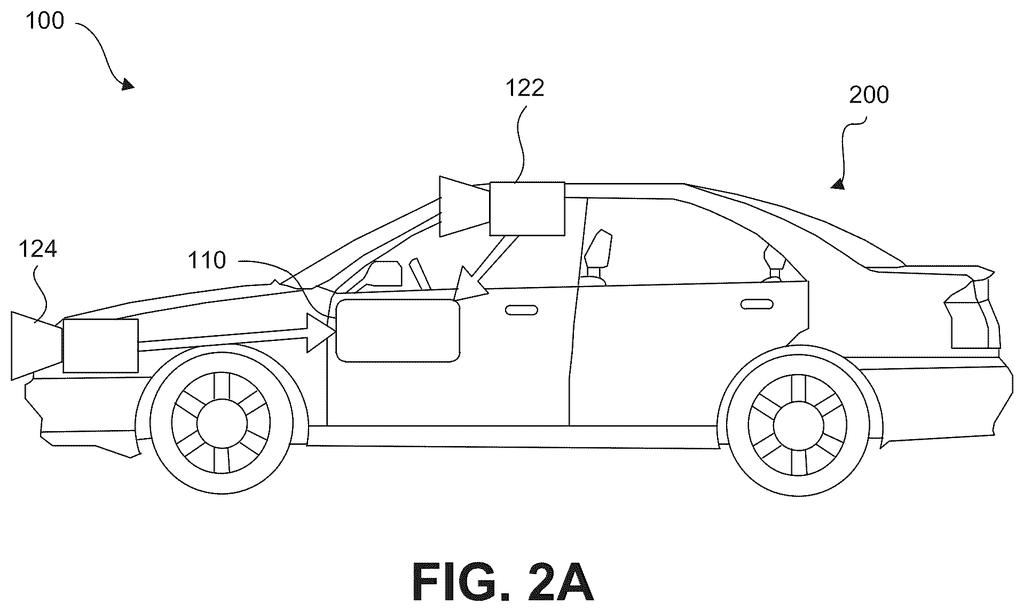
Mobileye builds camera-based driver assistance, and the filing centers on a camera near the rearview mirror, the same kind of camera that spots lanes, signs and traffic lights. Reusing a camera like that for light readings could let a feature ride on hardware a car already has. The filing names Mobileye's EyeQ chips as one processor option, though it says nothing about shipping plans.
Intel's fifth filing we've tracked since September in our self-driving sensing race watch covers a new idea, building on Mobileye's parking camera and a driver-alert dashboard.
Driving into a tunnel or under an overpass shows the problem in seconds: the light changes faster than your eyes or your car's lights can follow. A wrong guess leaves you with headlights off in the gloom or a screen you can't read in glare.
The fix described here is modest in size, and that suits a problem of this size. It adds a better reading of cameras the car already has, and details like analyzing the road surface rather than the sky show the engineers know where light readings go wrong. Bright sky can fool a car about the light the driver actually faces.
Expect routine engineering that smooths over a real but small annoyance. It adds comfort and a thin safety margin, and nobody will buy a car for it.
Get our take in your Top Stories
Liked this breakdown? Add Patentlyze as a preferred source on Google, and our plain-English take shows up more often in your Top Stories the next time Intel patent news breaks.
There are more where this came from
We read every patent application Big Tech publishes and send you the ones worth knowing. Plain English, free, every week.
The drawings
68 drawing sheets from US 2026/0309543 A1 · click any drawing to enlarge


Show the other 52 sheets


Sheets 61 to 68 are in the full USPTO filing.
Want this weekly breakdown for a company we don't cover? Patentlyze Pro →
Be the first to weigh in