
Samsung Files Patent for Phone AI That Inserts the Photographer Into the Shot
Samsung has described a phone camera that photographs the scene and you at the same time, then places you in the shot, filling in any part of you the camera missed. The photographer finally gets into the picture without a timer or a stranger.
What Samsung's selfie-merging camera does
A hiker reaches a mountain overlook with nobody else around. She holds up her phone and snaps the view, and the one thing missing from the photo is her. Samsung is going after that problem, and you have probably run into it on a trip or at a group dinner.
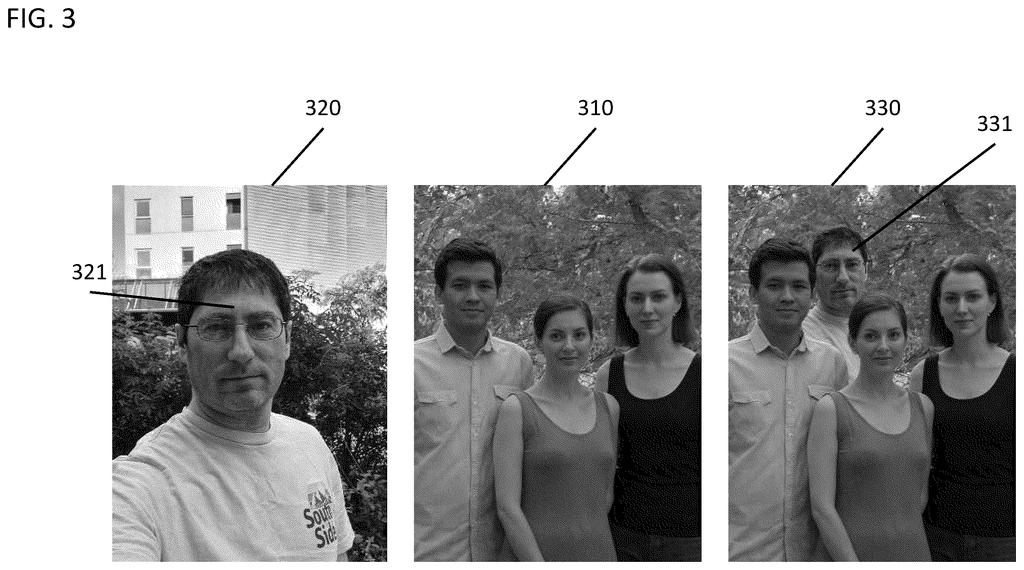
In this patent application, your phone fires its back camera at the scene and its front camera at you at nearly the same moment. An AI model cuts you out of the selfie, then shows you a preview of the scene with a stick-figure or shadow outline marking where you could stand. Tap the spot you like, and the AI drops a finished version of you into the photo.
If your selfie cuts off at the waist, the AI can fill in the rest of your body, using other photos of you already saved on your phone. No timer, no selfie stick, and no stranger to ask.
… detect, using the at least one AI model, a user of the electronic device in the second input image, generate, using the at least one AI model, a user image including the user …
Translation: The artificial intelligence detects the photographer in a second shot and isolates them.
How the AI picks where you stand
The device has two cameras, typically a rear (main) camera and a front-facing (selfie) camera, and it captures from both at the same time or nearly so. An AI model finds you in the selfie frame and cuts you out as a standalone user image.
Next comes the preview image: the rear-camera scene with a placement proposal indicator (a shadow or stick-figure outline of you) sitting at a suggested spot. The suggested spot can be picked based on objects in the scene, so you land among them naturally. The phone can show several previews with different spots, and you choose one by touch or by voice. A final AI step then produces the combined image, with you placed at the chosen position.
If your selfie shows only part of you, the AI can generate the missing parts (the filing calls this a reconstructed image), and it can draw on earlier photos of you stored on the phone.
The description also lists extras: adjusting pose, lighting and scale, picking a facial expression from a menu, and voice commands such as "Move me to the left" or "Change my outfit to casual." For live video previews, it draws only the simple outline and saves the heavy image generation for the final shot. The AI models it names include diffusion models and GANs (generative adversarial networks, where two AI systems compete to produce realistic images).
… generate, using the at least one AI model, a preview image based on the first input image, wherein the preview image includes a portion of the first input image and a placement proposal indicator that is disposed at a proposed position within the preview image …
Translation: It creates a preview showing a marker where the photographer will be inserted into the main scene.
What this means for solo travelers' photos
The practical payoff is for anyone who is usually the one holding the phone: solo travelers, parents, whoever gets stuck as the group photographer. The rear camera is normally the better camera, and this approach would give you its picture quality with you in it, instead of a lower-quality front-camera selfie with a cramped background.
This is a patent application, and the filing names no product, so there is no promise of a feature on any phone. It does show how phone makers are treating the camera as an editing tool as much as a lens. The more the phone builds the final picture, the more the line between a captured moment and a generated one will matter to the people taking the photos.
Samsung's 152nd filing we've tracked since May in our camera sensor work builds on ideas like distance-measuring while cropping and sharpening motion photo covers.
If you have ever traveled alone, you know the choice: ask a stranger, balance the phone on a rock, or leave yourself out. This filing offers a fourth option, and you would notice it right at the moment of taking the photo: a stick figure on your screen showing where you would stand, one tap, done.
The catch is what ends up in the picture. When your selfie cuts off at the waist, the AI invents the rest of you, and the filing even mentions changing your outfit or expression by voice. That makes the result a composite of a moment you were never quite standing in. Some people will love that, and others will feel it crosses a line for travel memories.
The preview step earns credit. Letting you check the placement before the heavy AI work runs gives you control over the result and makes the feature feel dependable.
Get our take in your Top Stories
Liked this breakdown? Add Patentlyze as a preferred source on Google, and our plain-English take shows up more often in your Top Stories the next time Samsung patent news breaks.
There are more where this came from
We read every patent application Big Tech publishes and send you the ones worth knowing. Plain English, free, every week.
The drawings
16 drawing sheets from US 2026/0320745 A1 · click any drawing to enlarge


Show the other 8 sheets


Want this weekly breakdown for a company we don't cover? Patentlyze Pro →
Be the first to weigh in