
Qualcomm Patents a System That Tells You How to Reframe Your Shot
Most people take a photo and hope for the best. Qualcomm is filing patents on camera software that watches your viewfinder in real time and tells you which way to move your phone to get a better shot.
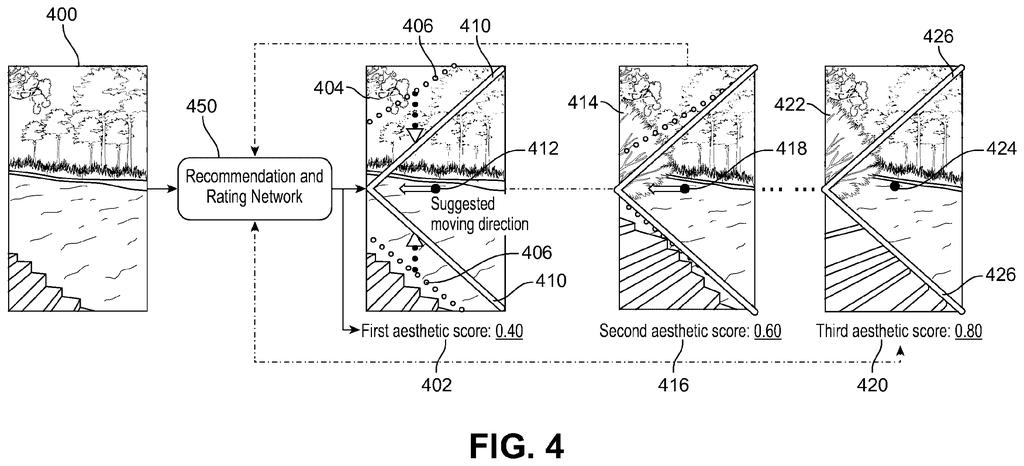
What Qualcomm's camera composition guide actually does
Most cameras today will tell you if a face is out of focus, but they won't tell you your composition is off. Qualcomm wants to change that by giving your camera an eye for photo structure, not just sharpness.
The system analyzes a preview image to find the most visually interesting parts of the frame and figure out how the scene is organized. From there it scores how well your current framing follows classic photo composition rules, like whether a horizon is straight or whether a subject falls on a natural focal point. Then it tells you which direction to nudge your camera to improve the shot.
Think of it as a photography teacher living inside your camera app, one that gives you a real-time nudge rather than a grade after the fact.
… predicting a composition pattern for the first image based on the combined saliency map and extracted features; predicting an aesthetic score for the first image based on the predicted composition pattern; and determining a recommended direction to move the camera based on the predicted composition pattern and the one or more semantic lines.
Translation: The system figures out how good your photo looks and tells you which way to shift the camera.
How the system scores a shot and picks a direction
The patent describes a pipeline that runs on a camera's image processor during or just before capture. Here's how it breaks down:
- Feature extraction: The system scans the incoming image frame and pulls out low-level visual information, things like edges, textures, and color gradients.
- Semantic line detection: It identifies meaningful lines in the scene (horizons, building edges, roads) that typically anchor how a photo feels balanced or off-kilter.
- Saliency mapping: It builds a heat map showing which parts of the frame a human eye would naturally gravitate toward, highlighting subjects and points of visual interest.
- Composition pattern prediction: It combines those two outputs to classify the overall compositional structure of the image, matching it against known photographic patterns like the rule of thirds or diagonal framing.
- Aesthetic scoring: It assigns a numeric score reflecting how well the current frame follows those patterns.
- Direction recommendation: Based on the score and the lines in the scene, it outputs a suggested direction (left, right, up, down) to move the camera for a better composition.
All of this is described as running on-device, which fits Qualcomm's chipset business: the company makes the processors inside most high-end Android phones, so this kind of inference would likely run on their existing neural processing hardware.
… generating, based on the extracted features, a saliency map indicating portions of interest in the first image; combining the saliency map with the extracted features; predicting a composition pattern for the first image based on the combined saliency map and extracted features; …
Translation: It maps out the interesting parts of the frame to understand how the shot is put together.
What this means for everyday smartphone photography
Photography apps already offer grid overlays and level indicators, but those are passive tools that require you to already understand composition. A system that actively recommends a correction closes the gap for people who don't have that training, which is most people with a smartphone.
For Qualcomm, the business logic is straightforward: a growing pile of Qualcomm camera-AI filings points to a push to make their Snapdragon chips more attractive to phone makers by bundling features that competitors can't easily replicate in software alone. If this ships, it would likely appear as a mode inside a camera app scoring and guiding shots in the background.
Qualcomm's ninth filing we've tracked in the AI photo editing race since July builds on earlier work like color tuning by gaze and spot and smear removal.
The gap between this patent and a working camera feature is unusually small. Everything described here, reading a scene for visual interest, detecting lines, and scoring the overall composition, runs as software on processing chips that already ship inside modern phones.
The real obstacle is not technical. It is deciding when and how often to nudge the person holding the camera, because a suggestion that fires at the wrong moment stops feeling helpful and starts feeling like a interruption.
If a phone maker wanted to ship this tomorrow, the shortest path is a camera app update, no new hardware required.
There are more where this came from
We read every patent application Big Tech publishes and send you the ones worth knowing. Plain English, free, every week.
The drawings
8 drawing sheets from US 2026/0292331 A1 · click any drawing to enlarge


Want this weekly breakdown for a company we don't cover? Patentlyze Pro →
Be the first to weigh in