
Samsung Patents a Polarization-Based Focal Plane Array for LiDAR Sensors
Samsung is rethinking how LiDAR sensors send and receive light — by using a clever polarization trick to keep outgoing laser pulses and incoming reflections from interfering with each other on the same chip.
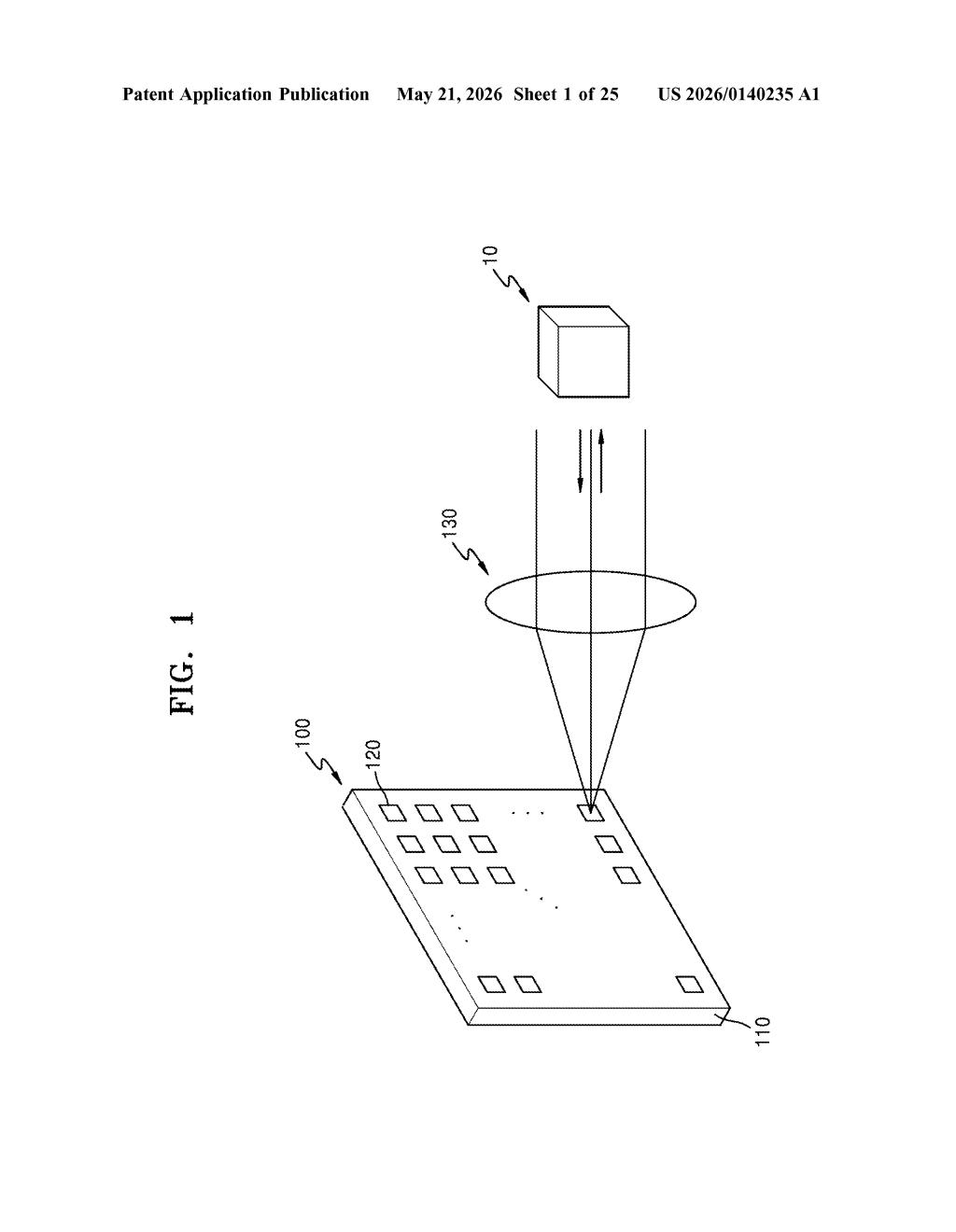
What Samsung's polarization-splitting LiDAR chip actually does
Imagine a LiDAR sensor as a device that shouts with light and listens for the echo. The tricky part is doing both at once — your "shout" can drown out the faint echo coming back. That's a real engineering headache when you're trying to shrink everything onto a tiny chip.
Samsung's patent describes a way to solve that by using the polarization of light — basically, the direction light waves wiggle — as a traffic-routing system. The outgoing laser pulse leaves with one polarization, a special optical layer flips it to a different orientation, and when the reflected light bounces back, it arrives polarized differently still. Each grating coupler on the chip only "listens" to the polarization it's assigned to, so transmit and receive signals stay neatly separated.
The result is a focal plane array — a grid of tiny pixel-like units — where every pixel can both fire and receive without crosstalk. Think of it like noise-canceling headphones, but for light beams on a silicon chip.
How the GP optical device routes light by polarization state
The patent describes a focal plane array (FPA) — a structured grid of pixels, each capable of both transmitting and receiving light — designed for use in a LiDAR (Light Detection and Ranging) sensor. Each pixel contains three key components:
- Transmission grating coupler — a nano-scale diffraction structure etched into a chip that launches a laser beam outward with a defined polarization direction.
- Reception grating coupler — a separate grating tuned to accept only a specific polarization of incoming reflected light.
- Geometric phase (GP) optical device — a flat optical element (think: a metasurface or liquid-crystal layer) that rotates the polarization state of light passing through it. It's sometimes called a Pancharatnam–Berry phase lens or half-wave plate equivalent.
Here's the routing logic: the transmit grating fires light with polarization direction 1. The GP device rotates it to direction 2 before it heads toward the target. When the reflected beam returns from the target, it arrives with direction 3. The GP device again rotates it — now to direction 4 — which is the exact polarization the receive grating is configured to accept.
This two-step polarization transformation acts as an optical isolator, cleanly separating the transmit and receive paths without needing bulky beam-splitter hardware. The design is inherently flat and chip-compatible, which is the key engineering win here.
What this means for compact LiDAR in Samsung devices
LiDAR has a packaging problem: high-performance sensors are still physically large and expensive, partly because separating the transmit and receive optical paths traditionally requires prisms, beam-splitters, or mechanically rotating parts. A chip-scale FPA that handles this separation through polarization manipulation — using flat, lithographically patterned GP optics — could push LiDAR much closer to consumer-device form factors.
For Samsung specifically, this matters because the company is an active player in both automotive electronics and mobile sensors. A compact, solid-state LiDAR pixel array built around this polarization-routing scheme would be a credible building block for next-generation depth-sensing modules in phones, AR headsets, or vehicles — anywhere you need precise 3D ranging without a bulky optical bench.
This is genuinely interesting LiDAR engineering, not a vague systems patent. The use of geometric phase optics to handle transmit/receive isolation at the pixel level is an elegant approach to a well-known problem in integrated photonics. Samsung doesn't dominate the public LiDAR conversation the way Waymo or Luminar does, but filings like this suggest they're building real photonic sensor IP quietly.
There are more where this came from
We read every patent application Big Tech publishes and send you the ones worth knowing. Plain English, free, every week.
Want this weekly breakdown for a company we don't cover? Patentlyze Pro →