
Google Files Patent to Connect Your Earbuds Before You Take Them Out
Your earbuds sleep in the case, and waking them up is what makes you wait. Google's filing has the case start the phone introductions while the buds boot.
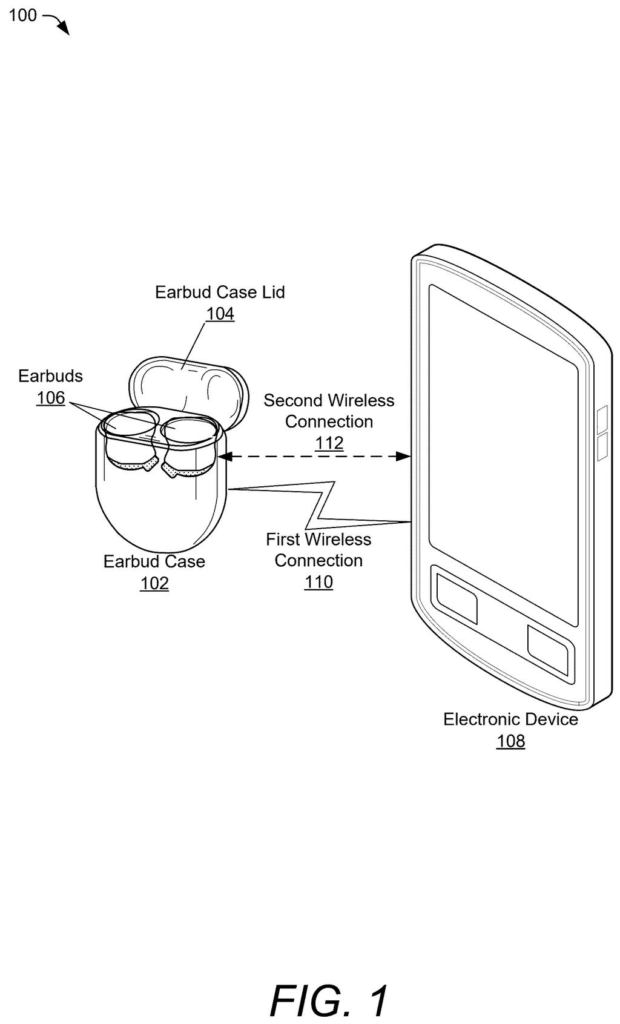
What Google's earbud case does at lid-open
Imagine you flip open your earbud case, pop a bud in your ear, and then wait a second or two for the music to start. The buds were asleep in the case to save battery, and they have to boot up like a tiny computer before they can talk to your phone.
Google's filing has the case do some of that work. The moment you lift the lid, the case wakes the earbuds and, at the same time, introduces them to your phone on their behalf. It shares the buds' ID, agrees on the security details, and then hands those details to the earbuds.
By the time the buds finish booting, your phone is already expecting them. They take over the link, and the wait shrinks because two slow steps now happen side by side instead of one after the other.
… transmitting, from the enclosure device to the audio device and in response to the trigger event, a wake-up signal configured to initiate a boot sequence of the audio device …
Translation: Opening the charging case tells the earbuds to start turning on before you even touch them.
How the case introduces your buds to your phone
The filing describes a charging case that acts as a go-between. A sensor in the case (the description mentions a magnetic hall effect sensor, an optical sensor or a simple switch) notices the lid opening. The case's small processor, which idles in a low-power mode, wakes up and sends a wake-up signal to the earbuds, either through the metal contacts they rest on or a short inductive pulse.
Then two things run side by side:
- The earbuds boot: they power up their circuits and copy their software from storage into working memory.
- The case broadcasts a short Bluetooth Low Energy "I'm here" message carrying the earbuds' ID, such as their MAC address (a hardware identifier), and negotiates the connection with your phone. That includes making a session key (a shared secret that protects the link) using a process called cross-transport key derivation.
The case then passes the connection details to the earbuds, through the contacts or a short-range wireless link. When the buds finish booting, they hear your phone's connection request and accept it using those details. The case can then switch off its own radio so two devices are not answering to the same address.
The filing also describes a check based on Google Account Keys, so the phone can recognize the buds without a PIN, and an alternate setup where the case and buds keep separate addresses but share an identity key.
Executing the connection state negotiation concurrently with the boot sequence facilitates parallel execution and mitigates connection latency.
Translation: Doing connection setup while the earbuds are turning on speeds up the process.
What this means for Google's earbud users
Anyone who has opened a case, put in a bud and waited for the connection knows the delay this targets. Overlapping the slow steps could trim that wait without bigger batteries or faster chips. The filing also says the buds can stay in a deep energy-saving state until the lid opens, which helps battery life.
The text describes using keys tied to your Google Account so your phone can recognize the buds without a PIN. A patent application is not a product, and the text names no specific earbuds, but any case-and-earbud pair that works this way would benefit.
Google's 32nd filing in the cell phone patents we cover since May adds to a run that includes one on finger-over-speaker detection and one on per-app battery savings.
Claim 1 is short and wide. It needs an enclosure with a lid and a sensor, a lid opening as the trigger, a wake-up signal to the audio device, the case negotiating a connection with a phone on the audio device's behalf, and the case handing the results over. That is the whole list.
Look at what the claim leaves out. Running the steps at the same time appears only in claim 2, and the details that make this look like Bluetooth (the earbuds' hardware address, a shared security key, metal contacts between case and buds) sit in later claims. So the broadest wording would cover any lidded earbud case that handles the phone introductions for its buds, however it does so.
The lid requirement is the one clear limit. A case that wakes on a button press or a sliding cover would fall outside the wording of claim 1. Since the earbud cases people know have hinged lids, that limit costs the filing very little.
Get our take in your Top Stories
Liked this breakdown? Add Patentlyze as a preferred source on Google, and our plain-English take shows up more often in your Top Stories the next time Google patent news breaks.
There are more where this came from
We read every patent application Big Tech publishes and send you the ones worth knowing. Plain English, free, every week.
The drawings
5 drawing sheets from US 2026/0333479 A1 · click any drawing to enlarge


Want this weekly breakdown for a company we don't cover? Patentlyze Pro →
Be the first to weigh in