
Samsung Files Patent for a Phone That Films With Several Lenses, Then Fixes Your Zoom Later
Zooming while you film usually means a jerky jump when your phone swaps lenses. Samsung's patent has the phone save footage from several lenses at once, then rebuild a smoother video after you hit stop.
What Samsung's multi-lens video patent does
Every time you pinch to zoom while filming, your phone has to make split-second calls: which lens to use, where to crop, how to hide the jump between lenses. It has no time to think, so you get lurching zooms, visible hiccups when lenses switch, and subjects that drift out of frame.
Samsung's patent has the phone record from several of its cameras at once and save each camera's footage as its own separate track inside one video file. When you stop recording, the phone can go back through all that material with plenty of time and produce a second, polished version of your video.
That second version could have a gentler zoom, cleaner lens switches, or a crop that keeps your dog or your kid centered. The original clip and the extra angles are still there to work from.
… store first video data including a first track and a second track, the first track including at least a part of first image frames acquired through the first camera, and the second track including at least a part of second image frames acquired through the second camera …
Translation: The phone records separate video streams from two different camera lenses at the exact same time.
How the phone stores and re-edits each lens
When you press record, the phone films with at least two of its cameras at once and saves the result as a multi-track video file. A track is one camera's stream of frames, lined up by timestamp. One track can hold what you saw in your preview, and the others hold what the other lenses captured. After recording, the phone builds a second, finished video from any of those tracks.
To keep file sizes down, it can skip frames it won't need. Which ones it keeps depends on your zoom level: usually the lens you're using plus its neighbors in focal length (the wider and more zoomed-in lenses next to it). At very high zoom, it may keep only the telephoto lens.
The repair work happens afterward:
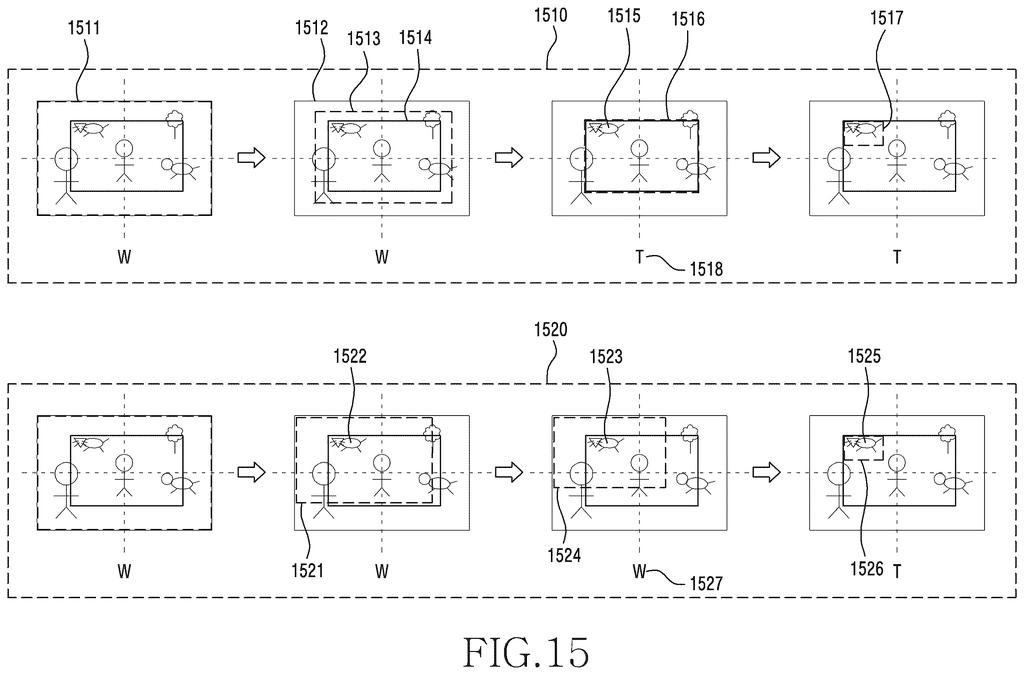
- Zoom smoothing: the phone reviews your zoom history, finds the starting and ending zoom levels, and draws a gentler path between them. Then it picks the best lens for each moment.
- Metadata (notes saved alongside the frames): quick object detection runs while you film and can make mistakes, like calling a cat a dog. A slower, more accurate pass runs later and corrects the notes.
- Subject tracking: you can pick a detected person or pet, and the final video crops to keep it in view.
The filing also describes a headset with seven cameras that picks lenses based on where you look. It also describes a cloud server that can supply extra footage when your subject leaves every lens's view.
… acquire second video data including an image frame acquired from the first track or the second track of the stored first video data.
Translation: You can later extract and use frames from either camera lens track to build your final video.
What this could mean for your phone videos
If you shoot video on a phone with several lenses, this targets the moments that usually look worst: zooming mid-clip, the jump when lenses switch, and a subject sliding out of frame. Because the fix happens after you stop recording, the phone can spend far more effort than it could live, which could give you a cleaner clip without changing how you film.
The tradeoff is storage. Saving several streams takes more room than saving one, which is why the filing trims frames the final video won't need. Keep in mind this is a patent application, and the filing doesn't say whether any Samsung phone will use it.
Samsung's latest application is the 26th we've tracked since July in our AI photo editing race watch, adding to filings like the self-grading edits patent and the missing-frame repair one.
Almost everyone who has filmed with a phone has hit this problem. You zoom, the picture lurches, the phone swaps lenses, and the subject jumps. It's a small annoyance, yet it shows up in nearly every clip where you zoom, so it deserves a fix.
Samsung's answer matches the size of the problem. Saving extra footage costs storage space, and the filing deals with that by trimming frames the final video won't need. Doing the repair after you stop filming gives the phone time that a live recording never has.
The cloud server and headset ideas are bigger than the problem calls for, but they are add-ons the filing describes. The core idea stays simple: shoot first, polish later.
Get our take in your Top Stories
Liked this breakdown? Add Patentlyze as a preferred source on Google, and our plain-English take shows up more often in your Top Stories the next time Samsung patent news breaks.
There are more where this came from
We read every patent application Big Tech publishes and send you the ones worth knowing. Plain English, free, every week.
The drawings
20 drawing sheets from US 2026/0323139 A1 · click any drawing to enlarge


Show the other 12 sheets


Want this weekly breakdown for a company we don't cover? Patentlyze Pro →
Be the first to weigh in