
IBM Files Patent to Boot Employees From Virtual Meetings When the Topic Turns Sensitive
Your permission to sit in a virtual meeting could change mid-conversation. IBM describes software that follows what is being discussed and shuts out anyone whose role doesn't clear them for it.
What IBM's org-chart metaverse patent does
Imagine you're a supplier invited to a virtual meeting with a manufacturer's production team. The first half hour is routine: schedules, part deliveries, who needs what by Friday. Then the talk turns to something sensitive that only certain people at the company are cleared to hear.
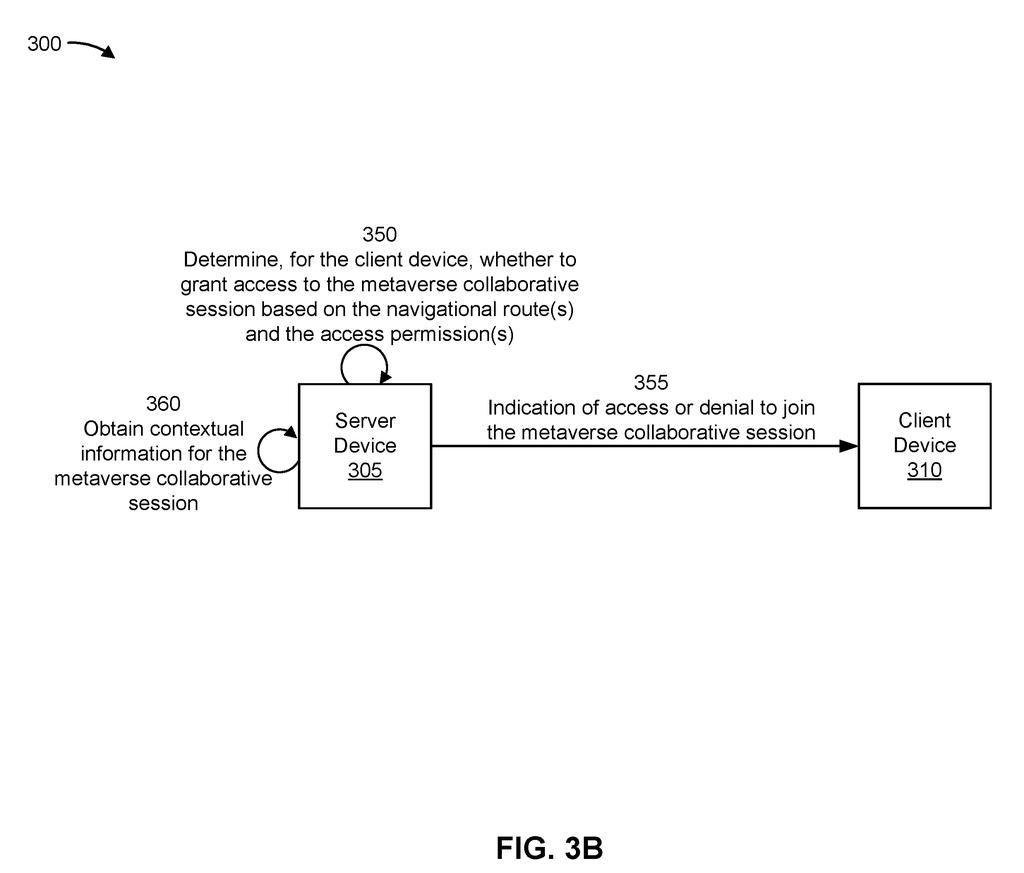
IBM's patent application describes software that notices the shift. It reads the chat or a transcript of the conversation, checks the topic against a map of who is allowed to know what, and can lock the door on anyone who shouldn't be there. It can even remove that person's avatar mid-meeting.
The same map also decides which virtual rooms connect to which, so you can only wander into spaces your role allows. If the company reorganizes, the map gets updated and the permissions follow, instead of someone re-doing them by hand.
… determining, based on the ontology hierarchy information, one or more access control parameters for respective metaverse environments of the multiple metaverse environments, wherein the one or more access control parameters indicate one or more permissible users or permissible information types for the respective metaverse environments; …
Translation: Deciding who is allowed into a virtual room and what topics they can talk about based on a set of rules.
How IBM maps rooms to the company org chart
The patent starts with what it calls an ontology hierarchy: a layered map of a company's activities and how they relate, with broad parent categories on top and narrower child categories below. One example is a top-level "Supply Chain" category with "Manufacturing" and "Logistics" underneath. Each virtual environment (a room or space in a metaverse-style platform) is tied to one category on that map.
From the map, the computer works out three things:
- Routes: which rooms an avatar may travel between, or share files between.
- Access rules: which users and which types of information each room permits. A user with access to a parent category can get into its child categories.
- Aggregation rules: which information from other rooms gets pulled into this one, such as a parent-level session seeing data from child-level sessions.
Then comes the live part. During a session, the system gathers contextual information: who is attending, the agenda, the topic, and sentiment analysis (software that estimates the emotional tone of a conversation). If the context crosses a threshold, such as certain keywords or a sudden jump in negative sentiment, the room can be treated as a different category with stricter rules. Someone who was allowed in at the start can be denied or have their avatar removed.
When the session ends, the original rules can return. If the company restructures, the map is updated and the routes and permissions are recalculated.
Why IBM's meeting-lockout idea matters for work
If you work somewhere that holds meetings in 3D or VR spaces, permissions are usually set once and left alone. This patent describes access that follows the conversation, so a meeting that drifts onto confidential ground can shut out people who shouldn't hear it. It also aims to cut the manual work of reconfiguring permissions every time a company restructures.
There are trade-offs. Reading your chat or transcript to decide what you can access raises obvious privacy questions for employees. IBM names no product, and the filing is about workplace collaboration, not consumer VR. It is also early: an examiner's first review rejected the claims as filed, which is routine and usually followed by amendments.
IBM's 63rd filing we've tracked since May in our AI guardrails race, following one on picking source docs and one on retracting answers, adds another layer to how AI systems police themselves.
Claim 1 is written broadly. It asks for a layered map of an organization, permitted routes between virtual rooms, access rules for each room, and a live update to those rules based on what happens in a session.
The mood-reading and keyword triggers appear only in dependent claims, so the main claim would reach any system that adjusts room access mid-meeting from context like the agenda or attendee list. The system claim drops live context entirely and only needs access tied to a user's role and the org map, with routes that update when the map changes.
Breadth like that is the selling point and the weak spot. We don't know the examiner's reasons for the first rejection, but narrower wording is a fair bet before anything is granted. What survives is a simple idea: virtual meetings should follow the same need-to-know rules as real ones.
Get our take in your Top Stories
Liked this breakdown? Add Patentlyze as a preferred source on Google, and our plain-English take shows up more often in your Top Stories the next time IBM patent news breaks.
There are more where this came from
We read every patent application Big Tech publishes and send you the ones worth knowing. Plain English, free, every week.
The drawings
7 drawing sheets from US 2026/0332601 A1 · click any drawing to enlarge


Want this weekly breakdown for a company we don't cover? Patentlyze Pro →
Be the first to weigh in