
IBM Files Patent to Stop Comment Filters From Flagging Innocent Sentences
A comment filter can flag a friendly sentence because of a single word, and IBM's patent application describes a way to find that word and teach the filter to relax around it. The method hides words one by one to see which one spooked the software.
What IBM's false-alarm fix for filters does
Every day, somewhere online, a perfectly friendly comment gets flagged as abusive because one word in it set off an automated filter. You may have had your own message blocked for no clear reason, or seen a post vanish because of a single word taken out of context.
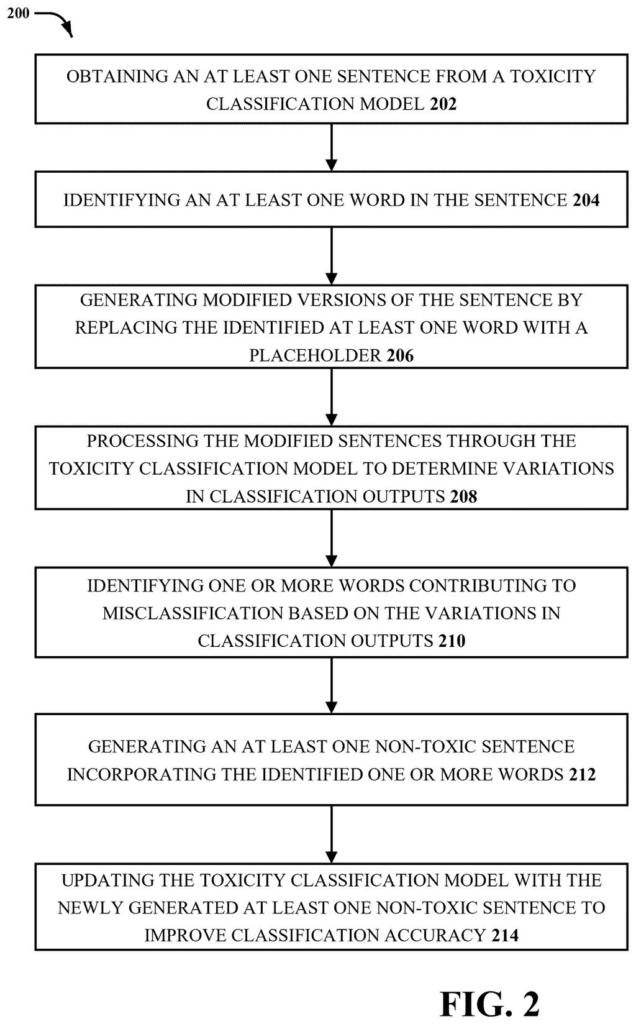
IBM's patent application tries to fix that by finding the word that fooled the filter. The system takes a sentence the filter wrongly flagged, hides one word at a time, and checks how the filter's verdict changes. If hiding a word makes the filter relax, that word is the likely culprit.
Then an AI writes a batch of harmless sentences that use the same word, and the filter is retrained on them. The goal is to teach it that the word alone does not make a comment toxic.
… a modification component that generates modified versions of the sentence by replacing the identified at least one word with a placeholder …
Translation: The system swaps out specific words for placeholders to test how the AI filter reacts.
How IBM finds the words that trip the filter
The starting point is a pile of sentences that a toxicity classifier (software that scores text as toxic or not) got wrong by calling them toxic when they were fine. The system splits each sentence into words and tags each one by grammatical role: noun, proper noun, verb, adjective, adverb or interjection.
Next, it makes copies of the sentence, each with one of those words swapped for a blank placeholder. Every copy goes back through the classifier, and the system compares each new score with the original. The word whose removal causes the biggest drop in the toxic score is marked as the main cause of the false alarm, and words can be ranked this way.
For each of those keywords, a large language model (an AI that writes text) produces many new non-toxic sentences containing the word. Those are run through the classifier, and the ones it still wrongly flags are kept, because they show where the model is weakest. The classifier is then retrained on its original data plus the kept sentences.
In the filing's example, a multilingual model produced about 100 keywords, around 300 generated sentences per keyword (30,000 in all), and roughly 2,500 kept for retraining.
… a determination component that identifies one or more words contributing to misclassification based on the variations in classification outputs …
Translation: It pinpoints which exact terms tricked the filter into making a mistake.
Why comment moderation could flag fewer innocent posts
If you post on a forum, in a game chat or in a comment section, an over-eager filter can hide your message or penalize your account over one word that looked bad out of context. The filing points to dialects and regional speech as a weak spot, where harmless phrases get flagged because of patterns in the training data. Fixing those errors means fewer wrongly removed posts and fewer unfair penalties.
For companies that run moderation tools, the appeal is effort. Instead of paying people to write counterexamples by hand, the system finds the weak spots and produces the training data itself. The filing says it can compare accuracy and false positive rates before and after retraining, and it does not tie the method to any named IBM product.
IBM's 66th filing we've tracked in our AI safety guardrails watch since May builds on earlier work like spotting confusing examples and sorting good and bad answers.
The trade here is simple: the filter learns to relax around certain words, and every bit of relaxing is a chance to miss real abuse. The filing only adds harmless examples, so a word that is sometimes used as an insult could slide through more often. The description mentions checking for side effects but gives no numbers in its text, so the safety of that trade rests on testing we cannot see.
Masking one word at a time also has a blind spot. If two words only look bad together, hiding either one alone may barely change the score, and the method could pass over the real cause.
Still, the price looks small next to the gain. The method is cheap, automatic and aimed at one clear complaint, innocent posts getting flagged. It reads as a sensible, modest upgrade, and a fair bet as long as the retrained filter is checked against real abuse before it ships.
Get our take in your Top Stories
Liked this breakdown? Add Patentlyze as a preferred source on Google, and our plain-English take shows up more often in your Top Stories the next time IBM patent news breaks.
There are more where this came from
We read every patent application Big Tech publishes and send you the ones worth knowing. Plain English, free, every week.
The drawings
4 drawing sheets from US 2026/0330137 A1 · click any drawing to enlarge


Want this weekly breakdown for a company we don't cover? Patentlyze Pro →
Be the first to weigh in