
Google · Filed Mar 19, 2025 · Published Oct 22, 2026

Google Files Patent to Let Your Gadgets Learn New Hand Gestures Without a Training Session

Gesture controls usually come with homework: learn the moves first, then use them. Google's filing describes a radar device that picks up a new move the moment you pair it with a command.
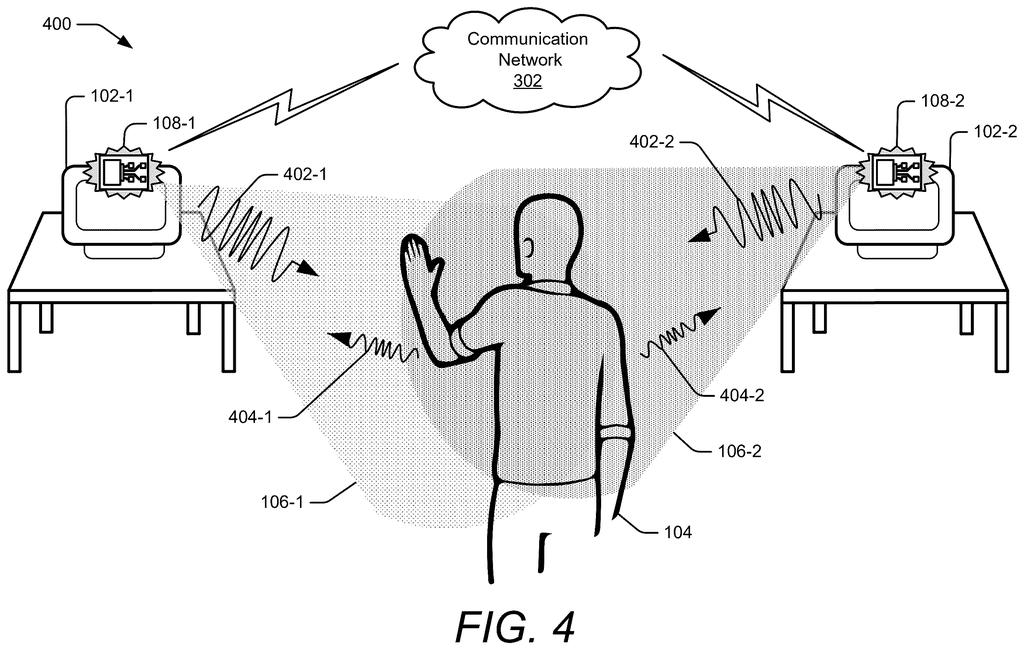
Smart home devices use radar signals to track a person's hand gestures in a room. Drawing from patent filing US 2026/0329386 A1.
Smart home devices use radar signals to track a person's hand gestures in a room.
See all 47 drawings from this filing ↓
Publication number US 2026/0329386 A1 US20260329386A1
Applicant Google LLC
Filing date Mar 19, 2025
Publication date Oct 22, 2026
Inventors Leonardo Giusti, Mei Lu, Lawrence Au, Nicholas Edward Gillian, Jaime Lien, Ivan Poupyrev
US classification 345/156
Examiner EARLES, BRYAN E (Art Unit 2625)
Status when we published Examiner raised objections; the company can respond (Sep 9, 2026)
Parent application is a National Stage Entry of PCTUS2022077442 (filed 2022-09-30)
Document 20 claims

What Google's learn-as-you-go gesture patent does

Today, a device that reads hand gestures usually makes you learn its moves first. You sit through a training session before a swipe in the air does anything. Google's filing says that up-front chore can put people off using gestures at all.

Its fix is to let you teach the device on the fly. Say you make a hand motion the device has never seen and, right around the same time, you give it a command, like turning off the lights. The device works out that the motion was meant for that command, remembers what it looked like, and does the job on its own next time.

The result is a gadget that picks up your personal shortcuts as you go, instead of making you choose from a fixed menu of moves.

From the filing · CLAIM 1
… comparing the radar-signal characteristic associated with the gesture performed by the user to one or more stored radar-signal characteristics, the comparing effective to determine a lack of correlation to one or more known gestures with which the one or more stored radar-signal characteristics are associated …

Translation: The device checks if the hand movement matches any gestures it already knows.

How the radar spots a motion it doesn't know

The device uses a built-in radar system that sends out radio waves and reads how they bounce off your hand. From those reflections it builds a radar-signal characteristic, a kind of fingerprint of the motion that captures its timing and shape. It then compares that fingerprint with the ones it has stored for gestures it already knows.

If nothing matches well enough (the claims describe this as failing to meet a confidence threshold, meaning the match score is too low), the device does not just ignore the motion. Instead, it watches for a new command arriving close in time. In one version, the gesture and the command land within five seconds of each other, with no other gesture attempt or command in between. The device then decides the motion is a new gesture tied to that command and saves its fingerprint. The command can even arrive before the gesture.

The filing also describes some optional extras:

  • The device can check that the motion was intentional rather than background movement, such as a pet walking by.
  • It can tie the new gesture to a registered user, recognized by a second radar fingerprint of their presence, so two people can use different gestures for the same command.
  • It can run a machine-learned model built on convolutional neural networks (a type of AI good at spotting patterns in image-like data) to get better at recognizing the new gesture.
From the filing · THE ABSTRACT
In doing so, the computing system may periodically learn new gestures without requiring dedicated training from the user.

Translation: This lets the device pick up new hand signals naturally without making you practice them first.

Why skipping the training session matters

If you have ever skipped a feature because setting it up felt like work, you know the problem Google is going after. A device that learns your gestures as you go could let you build personal shortcuts, such as your own wave for dimming the lights, without a tutorial. The filing's example hardware is a smart display with radar, similar to a Google Nest Hub.

The filing also describes tying a learned gesture to a specific person, so two people in one home could use different motions for the same command. The examiner's first review rejected the claims as filed, which is routine at this stage and usually followed by amendments, so the final scope may look different.

Google's 19th filing we've tracked since May in our body-reading wearables watchlist follows work like aging sensor lights and an under-eyelid glucose sensor.

Editorial take

The problem is real but modest. Nobody buys a speaker for its gestures, so a feature like this lives or dies on whether people bother with it, and a training session is exactly the chore that makes people skip it. Google's own filing says the up-front time may cause users to avoid gestures altogether.

The fix matches that size. It needs no separate training step and takes the command you were going to give anyway as the label for your motion. That is a sensible trade of small effort for a big drop in friction.

The open question is accuracy. A device that learns from one wave and one command could pair a stray wave with the wrong command, which would be annoying in a busy kitchen. The confidence check and the narrow time window are the filing's answer, and how well they hold up in a real living room is something a patent cannot tell us.

Get our take in your Top Stories

Liked this breakdown? Add Patentlyze as a preferred source on Google, and our plain-English take shows up more often in your Top Stories the next time Google patent news breaks.

There are more where this came from

We read every patent application Big Tech publishes and send you the ones worth knowing. Plain English, free, every week.

The drawings

47 drawing sheets from US 2026/0329386 A1 · click any drawing to enlarge

A home device uses radar to spot unfamiliar people, drawing sheet 1 from US 2026/0329386 A1
Sheet 1 A home device uses radar to spot unfamiliar people
Hardware parts that let smart screens and appliances track motion, drawing sheet 2 from US 2026/0329386 A1
Sheet 2 Hardware parts that let smart screens and appliances track motion
Connected devices tracking you across different rooms of a home, drawing sheet 3 from US 2026/0329386 A1
Sheet 3 Connected devices tracking you across different rooms of a home
Two gadgets coordinate radar waves to sense a person wave, drawing sheet 4 from US 2026/0329386 A1
Sheet 4 Two gadgets coordinate radar waves to sense a person wave
Internal circuits that bounce radio signals off nearby moving hands, drawing sheet 5 from US 2026/0329386 A1
Sheet 5 Internal circuits that bounce radio signals off nearby moving hands
Four ways the system tells family members apart without cameras, drawing sheet 6 from US 2026/0329386 A1
Sheet 6 Four ways the system tells family members apart without cameras
An AI model that identifies people from reflected radio waves, drawing sheet 7 from US 2026/0329386 A1
Sheet 7 An AI model that identifies people from reflected radio waves
Sensor components translating hand motions across space and time, drawing sheet 8 from US 2026/0329386 A1
Sheet 8 Sensor components translating hand motions across space and time
Show the other 39 sheets
An AI stage turning radar frames into compact summaries, drawing sheet 9 from US 2026/0329386 A1
Sheet 9 An AI stage turning radar frames into compact summaries
How the AI tracks radar changes to identify gestures, drawing sheet 10 from US 2026/0329386 A1
Sheet 10 How the AI tracks radar changes to identify gestures
Boosting training data sharply increases gesture recognition accuracy, drawing sheet 11 from US 2026/0329386 A1
Sheet 11 Boosting training data sharply increases gesture recognition accuracy
Radar snapshots of a person tapping in the air, drawing sheet 12 from US 2026/0329386 A1
Sheet 12 Radar snapshots of a person tapping in the air
Comparing radar readings of taps and side swipes over time, drawing sheet 13 from US 2026/0329386 A1
Sheet 13 Comparing radar readings of taps and side swipes over time
Recorded radar patterns of ordinary body motions to ignore, drawing sheet 14 from US 2026/0329386 A1
Sheet 14 Recorded radar patterns of ordinary body motions to ignore
High gesture accuracy despite constant background movement nearby, drawing sheet 15 from US 2026/0329386 A1
Sheet 15 High gesture accuracy despite constant background movement nearby
Training on tricky lookalike movements prevents false triggers, drawing sheet 16 from US 2026/0329386 A1
Sheet 16 Training on tricky lookalike movements prevents false triggers
Testing how reliably the system spots specific hand movements, drawing sheet 17 from US 2026/0329386 A1
Sheet 17 Testing how reliably the system spots specific hand movements
Accuracy across different distances and viewing angles, drawing sheet 18 from US 2026/0329386 A1
Sheet 18 Accuracy across different distances and viewing angles
Using a microphone alongside radar to identify someone, drawing sheet 19 from US 2026/0329386 A1
Sheet 19 Using a microphone alongside radar to identify someone
Switching privacy modes when a guest sits nearby, drawing sheet 20 from US 2026/0329386 A1
Sheet 20 Switching privacy modes when a guest sits nearby
Tracking an unrecognized guest from room to room, drawing sheet 21 from US 2026/0329386 A1
Sheet 21 Tracking an unrecognized guest from room to room
Passing a news readout to another room's device, drawing sheet 22 from US 2026/0329386 A1
Sheet 22 Passing a news readout to another room's device
Smart displays coordinating gesture lessons across different rooms, drawing sheet 23 from US 2026/0329386 A1
Sheet 23 Smart displays coordinating gesture lessons across different rooms
Resolving a clumsy hand wave using context like playing music, drawing sheet 24 from US 2026/0329386 A1
Sheet 24 Resolving a clumsy hand wave using context like playing music
Three ways radar analyzes hand shape and movement, drawing sheet 25 from US 2026/0329386 A1
Sheet 25 Three ways radar analyzes hand shape and movement
Adapting gesture detection to different rooms and habits, drawing sheet 26 from US 2026/0329386 A1
Sheet 26 Adapting gesture detection to different rooms and habits
Predicting which family member is in the room, drawing sheet 27 from US 2026/0329386 A1
Sheet 27 Predicting which family member is in the room
Using room context to tell similar gestures apart, drawing sheet 28 from US 2026/0329386 A1
Sheet 28 Using room context to tell similar gestures apart
Checking a timer started in another room, drawing sheet 29 from US 2026/0329386 A1
Sheet 29 Checking a timer started in another room
Prioritizing an incoming phone call over background apps, drawing sheet 30 from US 2026/0329386 A1
Sheet 30 Prioritizing an incoming phone call over background apps
Tracking daily routines over time to predict actions, drawing sheet 31 from US 2026/0329386 A1
Sheet 31 Tracking daily routines over time to predict actions
Choosing the safer action when a wave is unclear, drawing sheet 32 from US 2026/0329386 A1
Sheet 32 Choosing the safer action when a wave is unclear
How repeated motions teach a smart display your waving style, drawing sheet 33 from US 2026/0329386 A1
Sheet 33 How repeated motions teach a smart display your waving style
Following up with voice commands to clarify an unclear wave, drawing sheet 34 from US 2026/0329386 A1
Sheet 34 Following up with voice commands to clarify an unclear wave
Teaching a device custom hand gestures using speech, drawing sheet 35 from US 2026/0329386 A1
Sheet 35 Teaching a device custom hand gestures using speech
Switching between radar and cameras depending on the room, drawing sheet 36 from US 2026/0329386 A1
Sheet 36 Switching between radar and cameras depending on the room
Watching your gaze to check if you are paying attention, drawing sheet 37 from US 2026/0329386 A1
Sheet 37 Watching your gaze to check if you are paying attention
Tracking a person across multiple radar gadgets in the home, drawing sheet 38 from US 2026/0329386 A1
Sheet 38 Tracking a person across multiple radar gadgets in the home
Using everyday context to resolve an unclear hand motion, drawing sheet 39 from US 2026/0329386 A1
Sheet 39 Using everyday context to resolve an unclear hand motion
Learning unclear hand motions automatically without formal setup, drawing sheet 40 from US 2026/0329386 A1
Sheet 40 Learning unclear hand motions automatically without formal setup
How radar detects hand gestures across the room, drawing sheet 41 from US 2026/0329386 A1
Sheet 41 How radar detects hand gestures across the room
Matching an unclear gesture to a follow-up command, drawing sheet 42 from US 2026/0329386 A1
Sheet 42 Matching an unclear gesture to a follow-up command
Teaching a gadget an entirely new gesture on the fly, drawing sheet 43 from US 2026/0329386 A1
Sheet 43 Teaching a gadget an entirely new gesture on the fly
Picking which sensor gets priority to track your hands, drawing sheet 44 from US 2026/0329386 A1
Sheet 44 Picking which sensor gets priority to track your hands
Choosing the safest command whenever a gesture looks unclear, drawing sheet 45 from US 2026/0329386 A1
Sheet 45 Choosing the safest command whenever a gesture looks unclear
Adjusting settings as someone approaches or turns toward it, drawing sheet 46 from US 2026/0329386 A1
Sheet 46 Adjusting settings as someone approaches or turns toward it
Linking a circular wave directly to the coffee maker, drawing sheet 47 from US 2026/0329386 A1
Sheet 47 Linking a circular wave directly to the coffee maker
Browse all the drawings 47 drawing sheets
Patent filing page

Source. Full patent text and figures from the official USPTO publication PDF.
Reader comments

Be the first to weigh in

Start the discussion

Real name or a handle, either is fine. Comments are read by a person before they appear, so allow a little time. Keep it about the filing.