
Samsung Files Patent to Start Heating Mop Water Before the Robot Gets Home
Your mopping robot already knows when its mop is filthy, so why wait until it gets home to start heating the wash water? Samsung's patent application has the robot call ahead and tell the dock to get going.
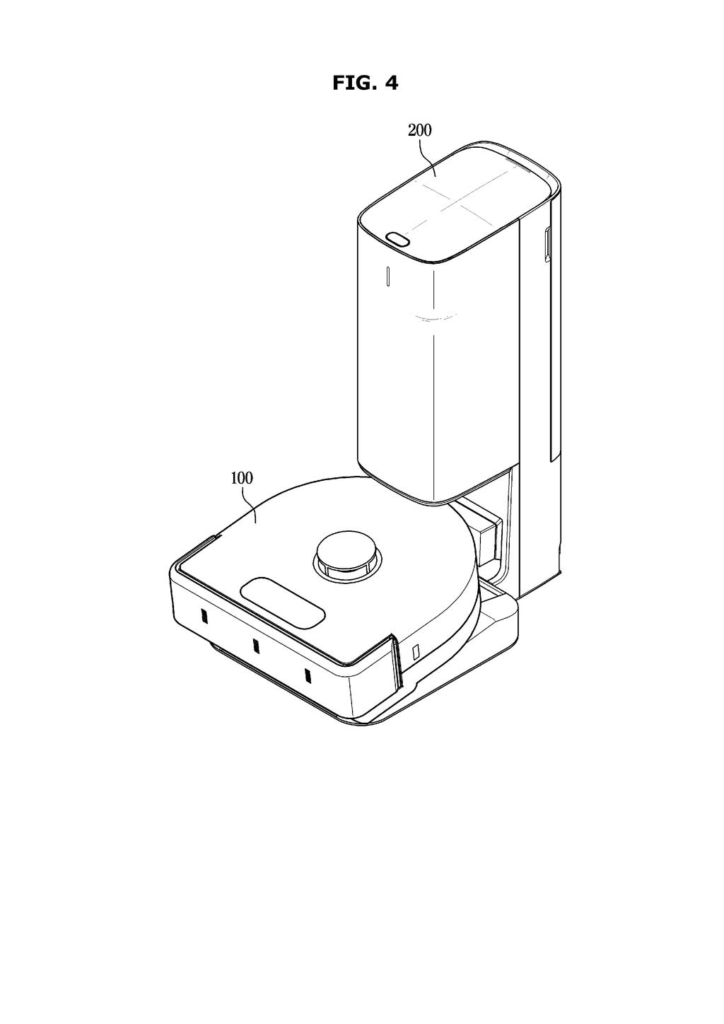
What Samsung's pre-heating mop robot actually does
Ever wrapped up a messy job, then stood around waiting for the kettle to boil before you could clean up? Mopping robots work a bit like that. When the robot rolls back to its dock, the dock only then starts heating the water it uses to wash the mop pad.
Samsung's patent application changes the timing. When the robot decides its mop needs a wash, it sends the dock a message while it is still out on the floor. The dock starts heating water right away, so the water is warm, or already hot, by the time the robot rolls home.
The robot can decide it is time to wash based on how much floor it has covered, how long the pad has been spinning, whether the job is finished, or because you told it to from your phone or a button. The goal is simple: less waiting between a dirty mop and a clean one.
transmit a control signal to a docking station to control the docking station to heat water to be used for washing the mop, and control the cleaning robot to dock the main body to the docking station.
Translation: The vacuum tells its base station to start warming up the wash water before it pulls in to dock.
How the robot tells its dock to heat the water
The robot in the filing is a round mopping robot with wheels, a spinning pad, a detachable mop, and a stored map of the area it cleans. While it works, it keeps checking a washing condition. Any one of these can count: the cleaned area passes a preset size (the description gives 20 square meters as an example), the pad's usage time passes a preset limit (30 minutes in one example), cleaning of the whole area is finished, or a wash command arrives from a phone or a button.
Once the condition is met, the robot sends a control signal over a wireless link (Wi-Fi or Bluetooth, for instance) telling the dock to heat water for the wash. Then it drives back to the dock. Other claims tie the signal to how close the robot is to the dock. Distance comes from sensors such as ultrasonic, radar, infrared or LiDAR (a laser-based distance sensor), and the robot estimates its arrival time from distance and speed.
The filing describes several versions of the heating plan:
- Warm the water to a lower first temperature (30 to 40°C in the example), then finish heating to the wash temperature (45 to 50°C) while the robot nears the dock or once it docks.
- Wait until the robot is close, then heat straight to the wash temperature.
- Only move water from the tank to the heater early, and do the heating after docking.
After docking, the dock fills a washing tub with the hot water and the pad spins against a washing plate. The description also mentions steam sterilizing and drying.
Why shorter mop-wash waits matter at home
The practical payoff is time. If hot water is already waiting when the robot docks, the mop wash can start sooner and finish sooner. For you, that could mean a robot that spends less time parked between a dirty mop and a clean one.
The filing also describes a version where only the water movement starts early and the heating happens at the dock. It says that can save energy when the heater is fast. It is a small timing change to a dock many mopping robots already have, but it is the sort of detail that adds up when a robot cleans your floors every day.
Samsung's 54th filing we've tracked since May in our home robots watchlist builds on earlier work like finding a moved charger and routing a robot convoy.
Claim 1 is short on detail and wide in reach. It asks for a mopping robot with a spinning pad, a stored map, and one behavior: when the mop needs washing mid-job, tell the dock to heat water, then go dock.
The claim names no temperature, no trigger, and no distance. Those details only appear in later claims. So if it were granted, the first claim would cover any robot that sends a heat-up message while it is still cleaning, however it decides a wash is due.
The claim also has clear edges. The heating order has to go out while the robot is moving, and the robot needs the spinning-pad design. A dock that waits for the robot to arrive before heating anything would fall outside it. It is a modest idea, a change in order of operations, and the wide wording is what gives it weight.
Get our take in your Top Stories
Liked this breakdown? Add Patentlyze as a preferred source on Google, and our plain-English take shows up more often in your Top Stories the next time Samsung patent news breaks.
There are more where this came from
We read every patent application Big Tech publishes and send you the ones worth knowing. Plain English, free, every week.
The drawings
8 drawing sheets from US 2026/0329283 A1 · click any drawing to enlarge


Want this weekly breakdown for a company we don't cover? Patentlyze Pro →
Be the first to weigh in