
Samsung Patents a Docking Station That Swaps a Robot Vacuum's Mop Pad Automatically
One of the most annoying chores attached to robot mops is peeling off the wet, dirty cloth yourself. Samsung's new patent describes a dock that handles the entire swap for you, no touching required.
What Samsung's self-swapping mop pad system actually does
Most robot mops still make you do the dirty work: when the cleaning run ends, you pull off the soiled cloth, rinse or toss it, and clip a fresh one back on. It's a small but unpleasant job, and it defeats the point of having a robot in the first place.
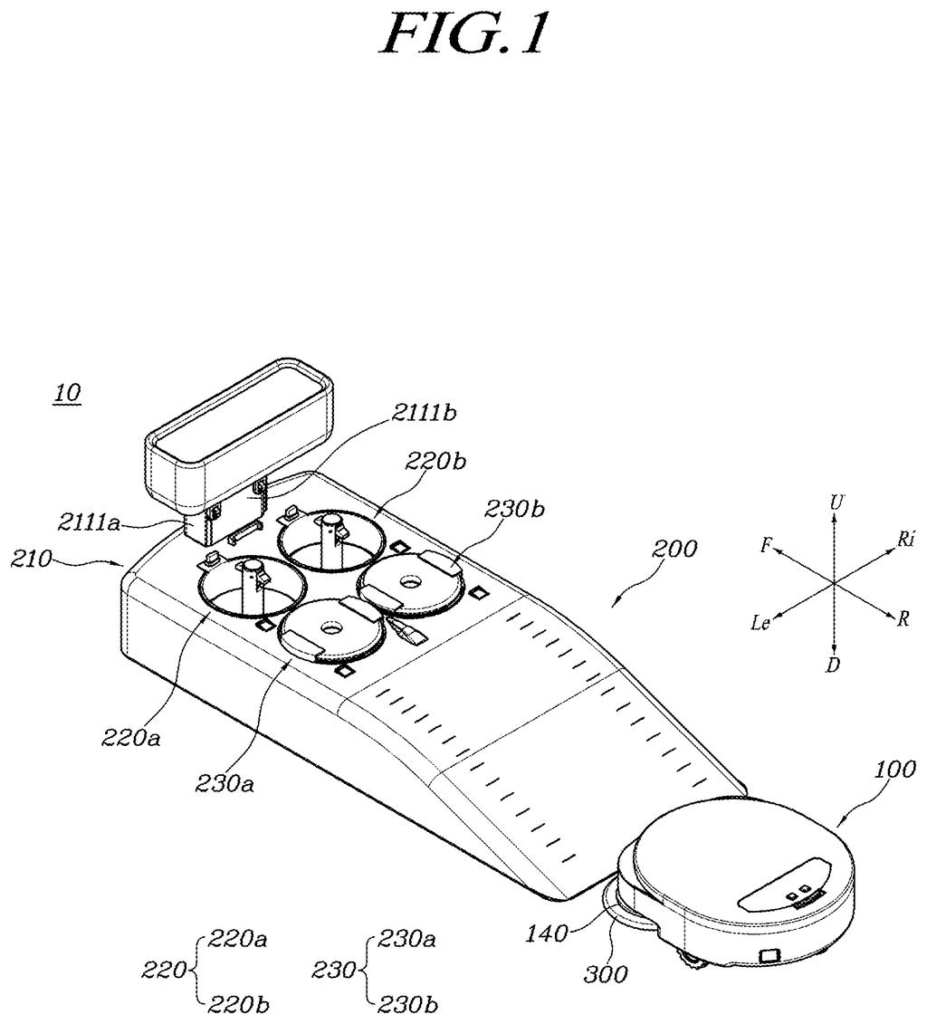
Samsung's patent describes a docking station that takes over that whole process. When your robot drives back to its dock, a built-in mechanism grips and removes the used mop cloth automatically. The robot then rolls forward to a second spot, where a fresh cloth is fed up from a compartment beneath the floor of the dock and attached to the robot's underside.
The robot's mop attachment can move up and down on command, which is how the dock can grab the old cloth and then lock the new one into place without any human hands involved. Once done, the robot is ready to clean again.
… a mopping cloth separator disposed on the docking unit and configured to automatically separate the mounted mopping cloth from the robotic vacuum cleaner while the robotic vacuum cleaner is at a first position along the traveling path; …
Translation: The dock automatically peels off the dirty mop pad when the robot drives to the first spot.
How the dock strips the old cloth and loads a fresh one
The patent covers a cleaning system made up of a robot vacuum and a dedicated docking station. The robot has a mopping cloth part (the arm or bracket that holds the cleaning pad) that can raise and lower on command, a key detail that makes the whole swap possible.
The dock itself is divided into two sections:
- An inclined ramp that guides the robot up into the dock at the right angle.
- A flat platform where the actual cloth exchange happens at two marked positions.
At the first position, a mopping cloth separator grabs or catches the used cloth while the robot lowers its mop arm, effectively peeling the pad off. At the second position, further back on the platform, a mopping cloth coupler feeds a clean cloth upward from below the platform floor while the robot lowers its arm again, pressing the attachment down onto the new cloth so it locks in.
The up-down movement of the robot's own mop arm does the mechanical work of releasing and gripping the cloths. The dock provides the physical separation tool and the fresh-cloth supply magazine. Together they form a closed loop that requires no human contact with the dirty pad.
… so that a mopping cloth is mounted to the mopping cloth part while the robot cleaner is at a second position provided rearward of the first position on the travel path in a state in which the mopping cloth has been detached from the robot cleaner.
Translation: The robot backs up slightly to pick up a fresh mop pad from underneath.
What this means for hands-free robot floor cleaning
The friction point this patent targets is real: surveys of robot vacuum owners consistently show that filter cleaning and mop pad swapping are the top reasons people stop using their robots regularly. A dock that handles the cloth swap removes that last manual step and brings robot mopping closer to true set-and-forget operation.
For Samsung's robot vacuum line, adding automatic cloth exchange at the dock would be a meaningful upgrade over systems that already auto-empty dust but still require the owner to handle wet mop pads. If this makes it into a shipping product, it also raises the bar for competitors who offer docking but not full cloth management.
Samsung's 47th filing we've tracked in our home robot research since May adds to a picture that already includes sound-wave floor sensing and self-aligning charging wheels.
Swapping out a dirty mop pad is the hidden tax on owning a robot cleaner. It requires kneeling on the floor, handling a soiled cloth, and reattaching a clean one before the machine can be useful again, and that happens every single run. For many people, that friction is enough to put the robot back in the closet permanently.
The problem is not minor or edge-case. It sits directly in the path between buying an autonomous cleaner and actually benefiting from one, which makes it about as significant a barrier as a product category can have.
Samsung's approach, building a dock that pulls off the dirty pad and loads a fresh one automatically, is sized correctly to that barrier. Whether the mechanism holds up across months of wet fabric and lint is a fair open question, but the problem it addresses is as real as housekeeping gets.
There are more where this came from
We read every patent application Big Tech publishes and send you the ones worth knowing. Plain English, free, every week.
The drawings
33 drawing sheets from US 2026/0272250 A1 · click any drawing to enlarge


Want this weekly breakdown for a company we don't cover? Patentlyze Pro →