
Samsung Patents a Home Robot That Can Read and Control Your Screens
Samsung is patenting a robot that doesn't just wander around your home — it can look at a TV, phone, or other screen, figure out the best angle to see it clearly, reposition itself if needed, and then actually operate the device. It's a robot acting as your hands, eyes, and remote control all in one.
What Samsung's screen-controlling robot actually does
Imagine you're away from home and you want someone to turn off the TV you accidentally left on — but there's no one there. Samsung's patent describes a home robot that could handle exactly that kind of task.
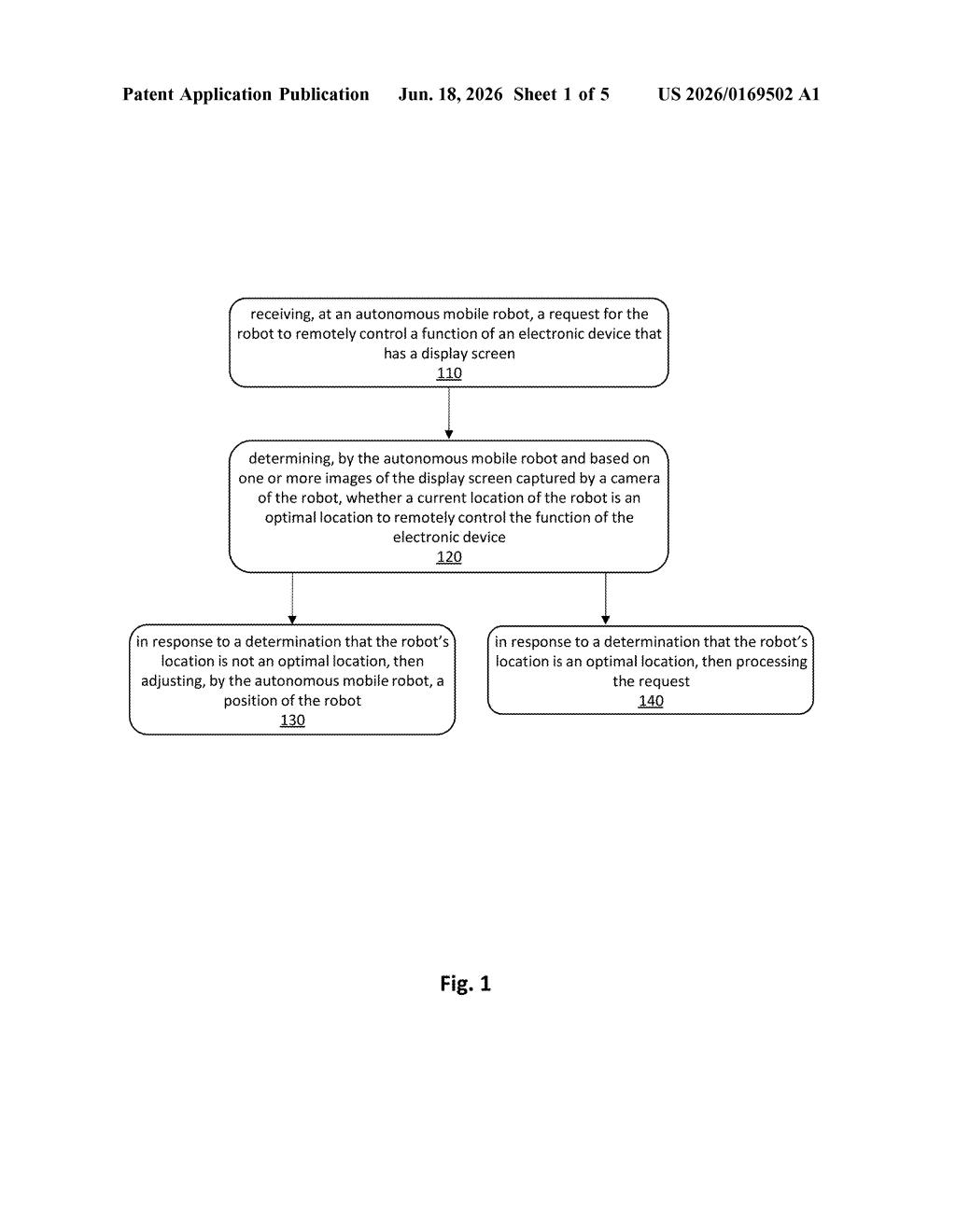
The robot receives a request to control some electronic device with a screen — a TV, a tablet, a smart display. It uses its own camera to look at that screen, then figures out whether it's standing in the right spot to do the job properly. If the angle is bad or it's too far away, it moves itself into a better position before doing anything.
Once it's in the optimal location, it processes whatever task it was asked to do. Think of it as a robot assistant that takes the initiative to get into position before pressing the metaphorical button — rather than fumbling from wherever it happens to be standing.
How the robot finds the right spot before it acts
The patent describes a method for an autonomous mobile robot — a self-navigating home robot — to take remote control of an electronic device that has a display screen.
Here's how the process works step by step:
- The robot receives a request to control a function of a device (changing a channel, tapping a button on a touchscreen display, adjusting a setting).
- It uses its onboard camera to capture one or more images of the target device's screen.
- It analyzes those images to decide whether its current position is optimal — meaning it has a clear, usable view of the screen and is close enough to interact effectively.
- If the position isn't good enough, the robot moves itself to a better location. If the position is already good, it goes ahead and processes the request immediately.
The patent doesn't specify exactly how the robot physically interacts with a device — it may use IR signals, Wi-Fi commands, or visual interface parsing — but the core invention is the autonomous repositioning logic: the idea that the robot decides for itself when it's ready to act, rather than trying from a fixed or random spot.
This makes the robot more reliable as a remote-control agent, because it accounts for real-world variables like furniture blocking lines of sight or the robot being in a different room.
What this means for home robots as universal remotes
Home robots are only useful if they can actually interact with the devices already in your home — and most screens weren't designed to be controlled by a camera-equipped machine wandering around a living room. Samsung's approach of self-correcting positioning is a practical attempt to solve that problem without requiring every device to have a special robot-compatible interface.
For Samsung, this fits neatly into its broader push to make its Galaxy AI and Ballie home robot ecosystem more autonomous. A robot that can see, reposition, and operate a screen is far more useful as a home assistant than one that can only carry out tasks in its immediate, fixed surroundings. If this capability ships, it could turn a home robot into something closer to a universal remote with legs.
This is a genuinely practical idea — not a flashy AI trick, but a sensible fix for a real limitation of home robots. The self-positioning logic is the key insight: a robot that knows when it's not in the right spot is meaningfully more capable than one that just tries from wherever it is. Given Samsung's public investment in Ballie, this patent has a plausible path to an actual product.
There are more where this came from
We read every patent application Big Tech publishes and send you the ones worth knowing. Plain English, free, every week.
Want this weekly breakdown for a company we don't cover? Patentlyze Pro →