
Tesla Files Patent to Cut a Camera Window Into Its Windshield's Inner Layers
A car windshield is a sandwich of glass, plastic and glass, and a camera looking through all three picks up the distortion. Tesla's patent application skips two of those layers by cutting a hole right where the camera looks.
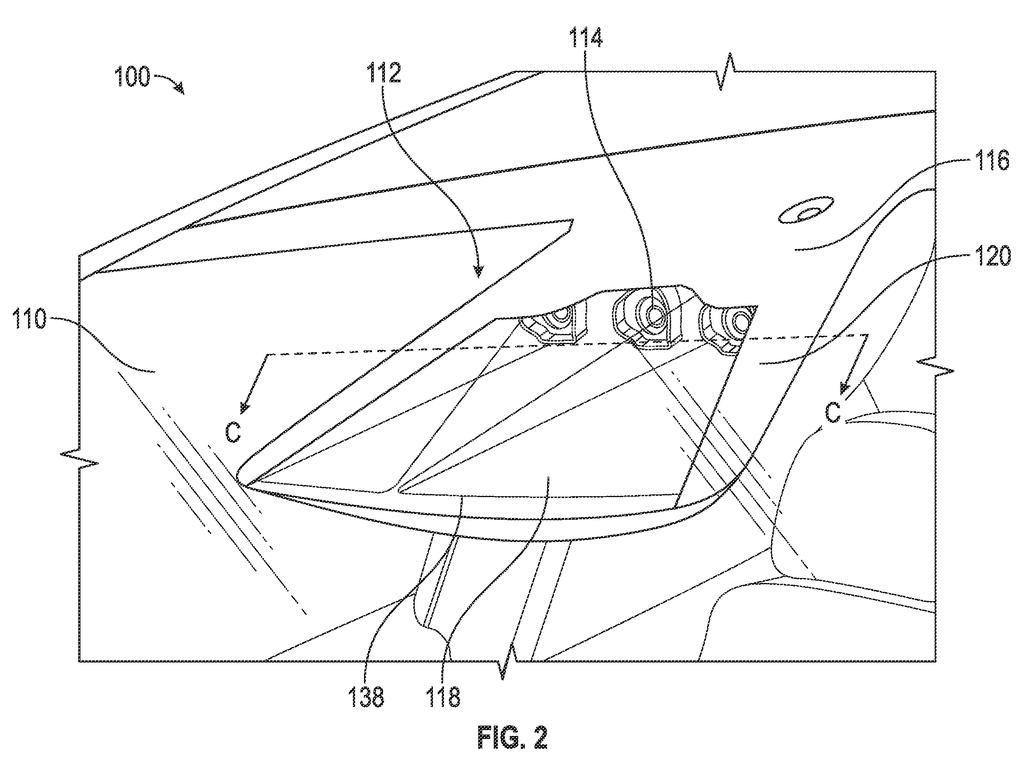
What Tesla's windshield camera cutout does
Imagine trying to take a sharp photo through a thick, slightly wavy sandwich of glass and plastic. That is roughly the situation for a camera mounted behind a car windshield, which is built from two sheets of glass with a plastic layer between them.
Tesla's filing describes a simple fix: cut a hole through the inner glass and the plastic, right where the camera looks, so the camera sees the road through the outer glass only. The camera's bracket is glued to the inner glass around the hole, so it stays out of the camera's view.
A bead of hardened resin seals the edge of the hole, and a thin heating layer on the outer glass can keep it from fogging or freezing. Less stuff between the lens and the road means fewer distortions in what the camera records.
… an opening extending through the inner glass layer and the polymer layer to expose the inner surface of the outer glass layer to a field of view of the camera …
Translation: A cutout in the inner layers lets the camera look through the windshield.
How the hole is cut, sealed and heated
The claims cover a windshield assembly built from an outer glass layer, a polymer layer (the filing names polyvinyl butyral, the clear plastic film that holds laminated glass together), and an inner glass layer. The plastic and the inner glass together form an opening that exposes the inner surface of the outer glass to the camera. A camera bracket is secured to the inner glass around that opening.
The company's reasoning is that extra layers can add distortion and reflections to what a camera records. The opening can be cut out afterward or formed in the inner glass from the start, and it can be trapezoid-shaped to match the camera's field of view (the cone of the scene it can see).
The filing also describes several add-ons:
- Fill layer: a cured resin, such as epoxy, seals the edge of the opening and helps keep the plastic from creeping inward when the sheets are heated and pressed together.
- Heating layer: conductive ink or paste applied to the outer glass inside the opening, to fight fogging and ice. Because it sits only on the outer glass, heat does not warp the plastic.
- Extra film: some windshields include a thin PET film that reduces infrared heat entering the cabin. It can distort images, so it is cut out of the camera's view too.
Example thicknesses include 1.5 to 4 millimeters for the outer glass and 0.7 to 3 millimeters for the inner glass.
Why a cleaner view matters for car cameras
Any car that relies on a camera behind the windshield depends on what that camera can see clearly. Driver assistance features read the picture, so distortion and reflections from the glass can hurt what the software has to work with. Clearing extra layers out of the camera's path gives the same camera a cleaner view, with no new sensor required.
For you, that would mostly be invisible: the windshield would look much like any other. The filing also admits the tradeoff, since a hole in the inner glass could weaken the windshield, and it mentions sizing the cutout to limit lost impact strength. It gives no test results, so how well that balance holds is unanswered.
This is the 13th Tesla patent application we've tracked since May in our camera-only bet watchlist, which already includes ones on reading hills and curbs and fixing camera blur.
A windshield change sits near the shippable end of the scale, because it needs no new chips and no new software. Every material in it (glass, plastic film, resin, conductive ink) is already used in cars.
The hard part is the factory. A glass maker would have to cut or form an exact hole in the inner sheet, keep the plastic from creeping into it while the layers are heated and pressed together, and prove the windshield still holds up in a crash. The filing mentions sizing the hole to limit lost strength but gives no test results.
The shortest route to a car is a new windshield part from a glass supplier, and that is a slow, careful process. The payoff for you would be a camera with a slightly cleaner view, which is hard to notice but matters a lot to the software reading that picture.
Get our take in your Top Stories
Liked this breakdown? Add Patentlyze as a preferred source on Google, and our plain-English take shows up more often in your Top Stories the next time Tesla patent news breaks.
There are more where this came from
We read every patent application Big Tech publishes and send you the ones worth knowing. Plain English, free, every week.
The drawings
7 drawing sheets from US 2026/0336368 A1 · click any drawing to enlarge


Want this weekly breakdown for a company we don't cover? Patentlyze Pro →
Be the first to weigh in