Tesla's Camera-Only Patents, and What They Reveal About Self-Driving
This tracker follows Tesla's camera-only patents, covering intent detection, lane mapping, simulated training data, image-processing chips, and the camera hardware itself. Together, the filings show Tesla building a full vision stack rather than betting on one sensor or algorithm.
7 filings
· tracking since May 2026 · latest Sep 2026 · updates weekly
based on all tracked filings in this watchlist · refreshes every week
All six filings point to one goal: building a car that drives itself using cameras alone, with no radar or other sensors to fall back on. Tesla is working out how to make those cameras reliable, how to train the car's brain, and how to act on what the cameras see.
The filings cluster most heavily around keeping cameras working in tough conditions, like blocking fumes and cutting glare, and around teaching the car to understand what it sees, from reading lane paths to guessing what a nearby driver is about to do.
What’s new in Tesla's camera-only bet
a dated entry each week this watchlist moves · older entries stay archived
Sep 17, 2026 1 filing joined
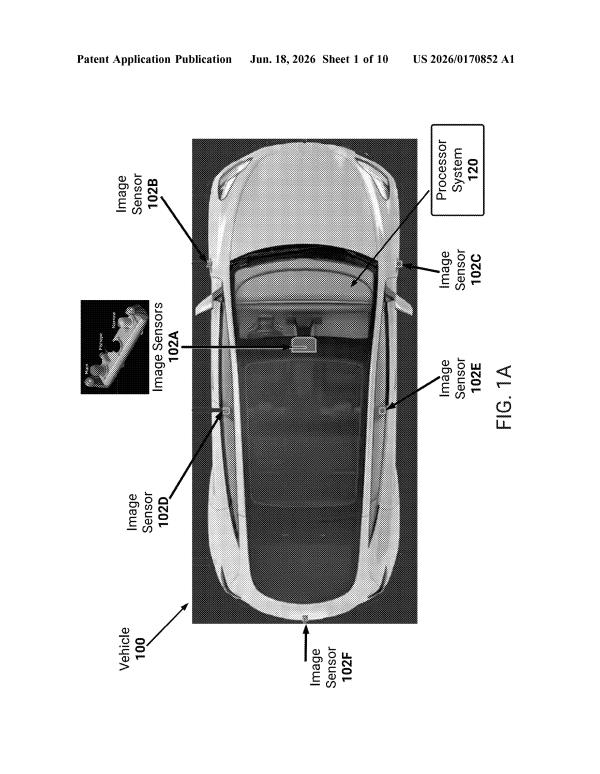
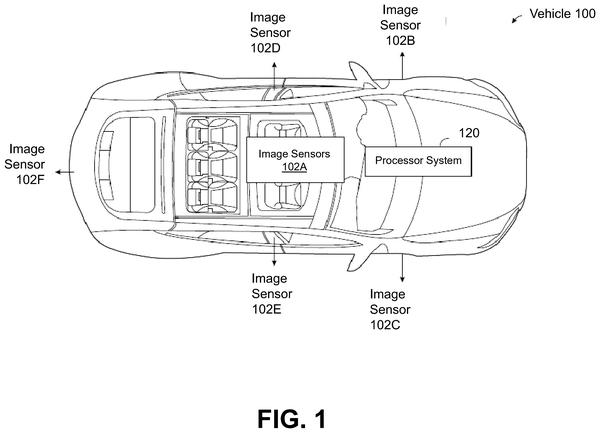
This week's filing focuses on Tesla's self-driving cars using their own cameras to spot blind spots and stay safe. The new application centers on the car checking its own camera feeds to catch what it might otherwise miss.
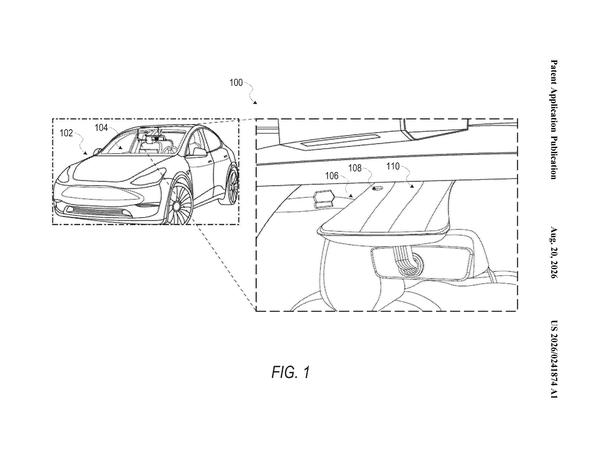
This week's filing focuses on keeping Tesla's cameras clean by using plastic car parts that soak up chemical fumes before they can fog or coat the lenses. The new application points to Tesla working on the physical materials around its cameras, not just the cameras themselves.
For autonomous driving to work in bad weather, the car must know when its own cameras are compromised. This patent adds active monitoring of camera degradation in real time.
Plastic interior components that trap outgassing chemicals prevent the haze buildup that degrades camera image quality, removing a source of sensor degradation that compounds over vehicle lifetime.
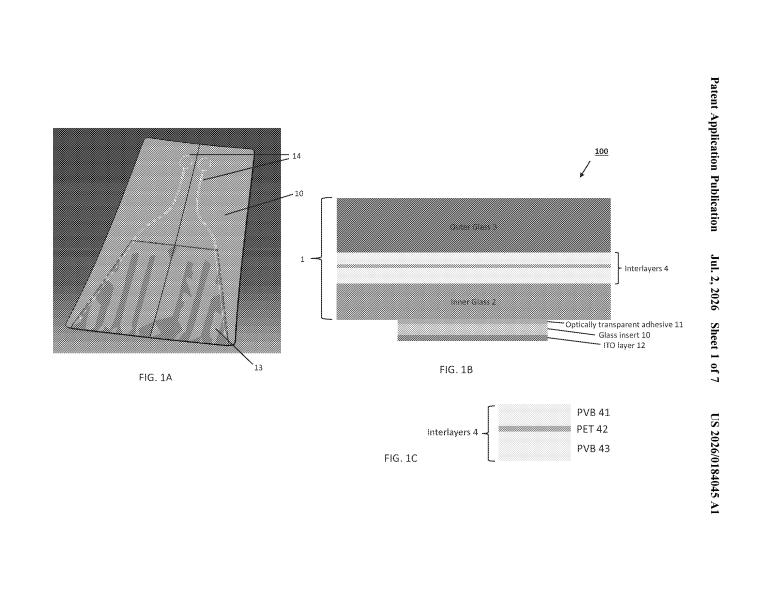
Camera fogging and ice buildup blind the vision system in cold weather. Tesla's heated glass coating keeps the optical path clear without sacrificing image quality for the neural nets that drive perception.
Camera-only navigation requires knowing lane connectivity in real time. This filing shows how Tesla plans to infer where each lane actually leads without relying on pre-mapped road data, a gap that has forced other systems to depend on lidar or radar backups.
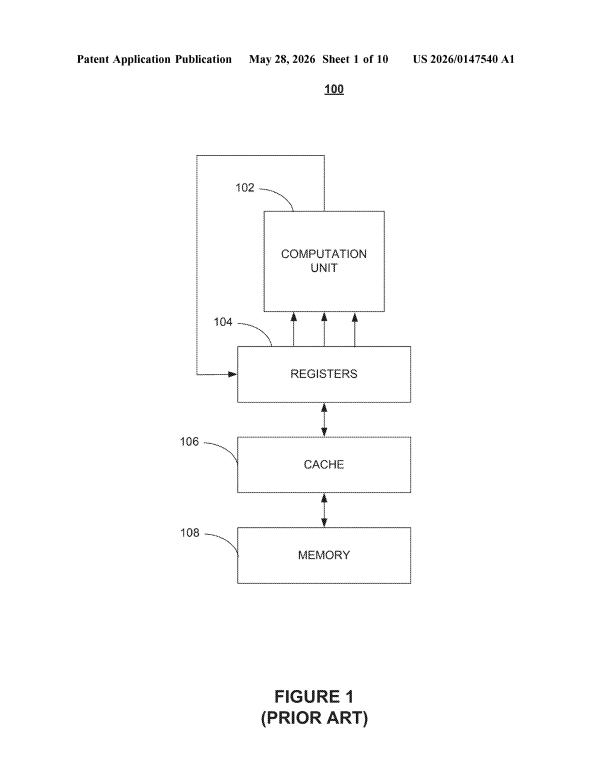
A camera system only works if it can process video frames fast enough to react. This patent describes the specialized processor that runs Tesla's neural networks on live footage without lag, converting raw pixels into driving decisions at real-time speeds.
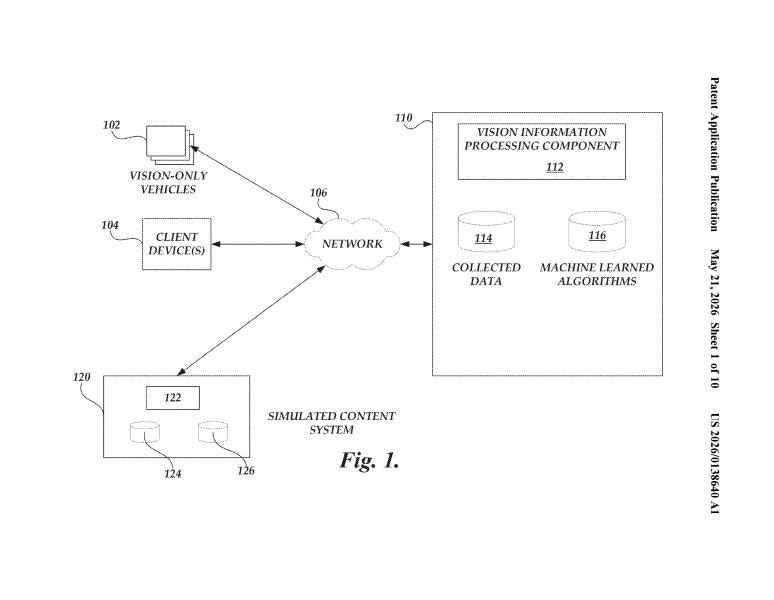
Synthetic imagery fills gaps where real-world camera data runs sparse, letting Tesla train edge cases without waiting for rare conditions to occur naturally on public roads.
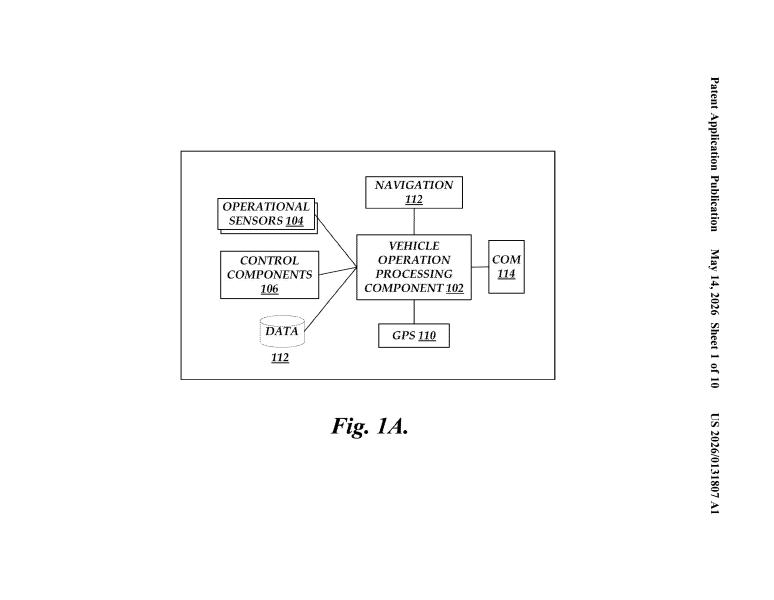
Deciding when to move requires the car to verify occupant intent separately from environmental safety. This filing shows how Tesla's vision system reads human readiness cues alongside road conditions before executing autonomous motion.
Questions readers ask
Does this mean Tesla is ditching radar and lidar completely?
The filings show Tesla building software and hardware that assume only cameras, from intent-reading logic to camera glass designed for glare and heat. That points to a clear engineering direction, but a patent describes research, not a shipped decision, so it does not confirm Tesla has fully abandoned other sensors in every vehicle.
What problem does the lane-reading patent solve?
It focuses on helping a camera-only car figure out where each lane actually goes, including merges and splits, without relying on radar or lidar data. That matters because vision systems need to infer road structure from images alone, and this filing describes one way to do that inference.
Why would Tesla patent its own image-processing chip?
The parallel matrix processor described in this filing is built specifically to speed up the math behind neural network image analysis. Patenting custom chip designs suggests Tesla wants processing power tuned to its own vision models rather than depending entirely on general-purpose hardware from other chipmakers.
Is the simulated-data patent about self-driving cars learning from fake footage?
Yes, in part. The filing describes a training loop that generates and tests scenarios for a vision-only system, which can help cover edge cases that are rare or risky to capture with real cameras. It does not say Tesla has replaced real-world testing, only that it is patenting simulation as a tool.
Want this weekly breakdown for a company we don't cover?
Patentlyze Pro →
The weekly email: the best of Big Tech's filings, in plain English. Free.