
Tesla Patents a Vision System That Builds a Running Map of Still Objects Around Its Cars
Self-driving cars are surprisingly bad at remembering things that don't move. Tesla's latest patent tackles exactly that gap, describing a system that keeps a continuously updated picture of parked cars, barriers, signs, and other stationary objects so the vehicle always knows what's around it, even when those things are temporarily out of the camera's view.
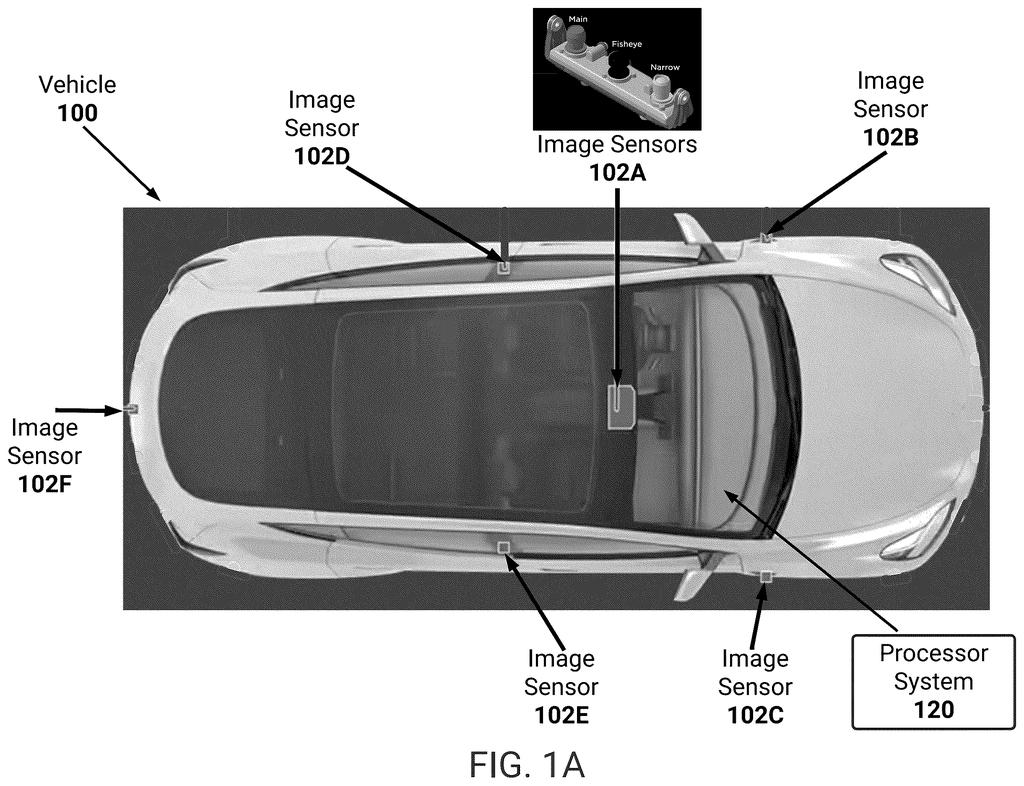
What Tesla's static-object memory system actually does
Every time a Tesla on Autopilot rolls through an intersection, its cameras are scanning the scene over and over. Most of that effort focuses on things that move: other cars, cyclists, pedestrians. Stationary objects, like a parked truck blocking a lane or a construction barrier, get seen and then, essentially, forgotten as the camera angle changes.
This patent describes a system that solves that by maintaining a persistent mental map of still objects. Instead of treating each camera frame as a fresh start, the car builds up its understanding of the environment across multiple moments in time, layering observations together into a single coherent picture. Think of it like your brain remembering where the furniture is in a dark room, even when you can't see it right now.
Critically, the system is designed to be selective about when it updates that map. It doesn't refresh constantly; it waits until the car's movement or the surrounding context crosses a meaningful threshold. That keeps the system from wasting computing power on redundant updates while still staying accurate when conditions genuinely change.
… determining, by the at least one processor, a threshold for updating the spatial representation, wherein the threshold varies based on a motion characteristic and a contextual characteristic of the environment …
Translation: The car decides when to refresh its map by looking at how fast it is moving and what is happening around it.
How the system decides when to refresh its picture of the world
The patent describes a method for maintaining a spatial representation of the environment around a vehicle. That's essentially a persistent, structured memory of the physical scene, built from camera and sensor data, that survives across multiple moments of observation rather than being discarded after each frame.
The core process has three main steps:
- Feature aggregation: the system collects visual features (the low-level signals a neural network extracts from camera images) across many successive observations, combining them into a richer description of each object than any single frame could provide.
- Adaptive threshold logic: the system calculates when the spatial map actually needs to be updated. That threshold shifts based on two inputs: a motion characteristic (how fast or in what direction the car is moving) and a contextual characteristic (what kind of environment surrounds it, a parking lot versus a highway, for example). The update only happens when the car's situation crosses that threshold, not on every tick of the clock.
- Image output: when an update is warranted, the system produces an image that depicts static objects within the stored spatial map, which downstream driving systems can then act on.
The practical effect is a self-driving perception stack that doesn't have to re-discover a parked delivery van every time it drives past at a slightly different angle. The van is already in the map, described with accumulated detail from multiple prior looks.
… vision-based machine learning model for aggregation of static objects and systems for autonomous driving …
Translation: An artificial intelligence system combines data to track non-moving objects so the car can drive itself.
What smarter object memory means for self-driving safety
For a passenger in a self-driving car, the difference between a system that remembers static objects and one that doesn't shows up in exactly the moments you'd least want a surprise. A car that forgets a construction barrier it saw two seconds ago when it drifted out of frame is a car that might act confused, brake unexpectedly, or plan a path that doesn't account for the obstacle. This patent's approach means the vehicle carries a richer, more stable understanding of its surroundings at all times.
The threshold-based update logic matters too, because perception systems in autonomous vehicles are enormously computationally expensive. A system that updates its world-model only when the car's motion or environment actually warrants it is one that can run more efficiently, leaving headroom for other processing tasks. For you as a rider, that translates to smoother, more confident behavior from the vehicle in complex real-world scenes.
Tesla's new filing is the 12th we've tracked since May in our self-driving sensing race, building on its earlier work like syncing camera and radar and reading cameras for blind spots.
Static objects are one of the harder things for a self-driving car to handle well. A stopped delivery truck, a shopping cart drifting toward a parking lane, a trash bin that rolled into the street: none of these move, so the car has to build a reliable picture of them by looking multiple times.
This patent describes a smarter way to do that. Instead of refreshing its mental map on a fixed schedule, the car decides when to update based on what it is doing and where it is, so it spends its attention more usefully.
For the person in the seat, that translates to fewer of those awkward moments where the car slows to a crawl or nudges uncertainly past something that has been sitting in plain sight for several seconds. The car arrives at the situation already knowing what is there.
There are more where this came from
We read every patent application Big Tech publishes and send you the ones worth knowing. Plain English, free, every week.
The drawings
22 drawing sheets from US 2026/0285363 A1 · click any drawing to enlarge


Want this weekly breakdown for a company we don't cover? Patentlyze Pro →
Be the first to weigh in