
Tesla Patents Plastic Car Parts That Absorb Chemical Fumes to Keep Cameras Clear
A thin, invisible film of chemical residue from your car's own interior plastic can blur the cameras your vehicle uses to see the road. Tesla's answer is to bake the fix directly into those plastic parts.
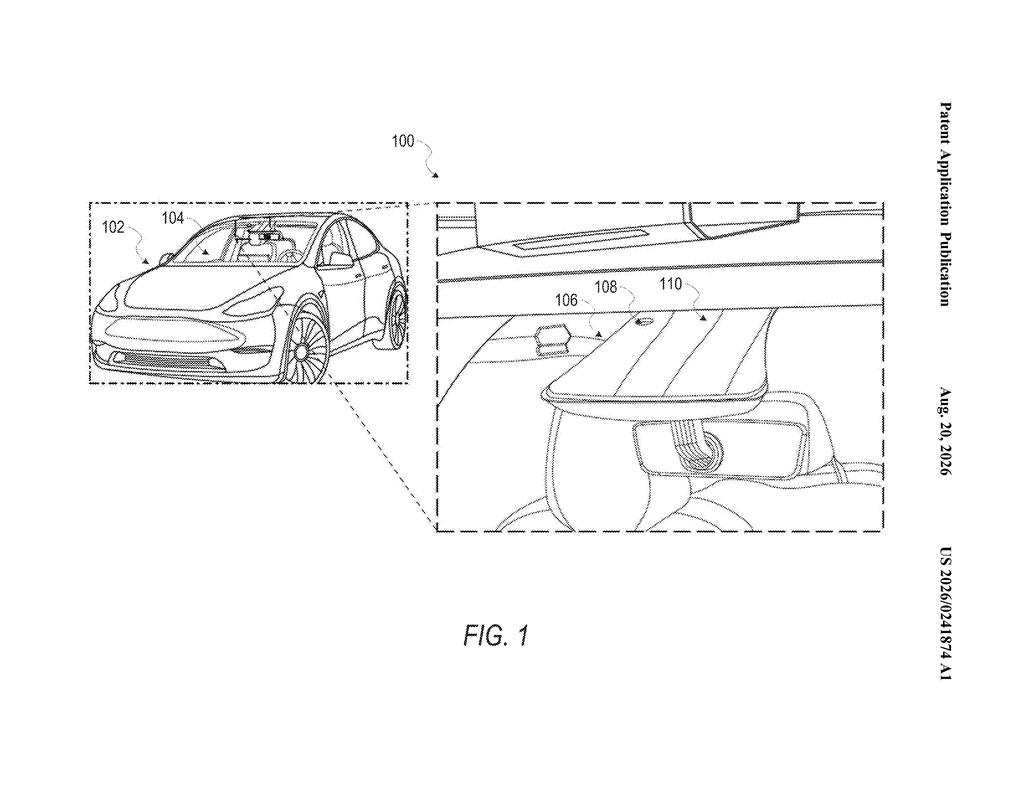
Why Tesla is baking air-purifying minerals into plastic trim
Plastics inside a car constantly release tiny traces of chemicals into the air, a process that happens slowly over years and is especially pronounced on warm days. Those chemicals can drift onto the inside of a windshield and leave a hazy film right in front of the cameras that power autopilot and other driver-assistance features.
Tesla's patent describes plastic components, think glare shields, mounting brackets, and lens hoods around the cameras, made from a material that traps those chemicals before they ever reach the glass. The plastic is mixed with a high concentration of a mineral called zeolite (the same general family of materials used in water filters and cat litter), which has a microscopic pore structure that locks chemical vapors inside itself.
The result, in theory, is that the area right in front of the camera stays cleaner for longer without any driver maintenance. The absorbing material is built into the plastic itself, so there are no filters to replace or spray bottles to reach for.
… a plastic component positioned proximate to the one or more sensors, wherein the plastic components comprise a resin material having microporous, crystalline aluminosilicate particles integrated therein.
Translation: The car parts near the cameras are made of a special plastic mixed with tiny, porous mineral crystals.
How zeolite-laced plastic intercepts fumes before they reach the lens
The system centers on specially formulated plastic components placed in the immediate vicinity of a vehicle's windshield-mounted sensors. Those sensors handle tasks like lane keeping, automatic emergency braking, and traffic-sign recognition, so optical clarity matters a great deal.
The plastic is made from polypropylene resin (a common, durable automotive plastic) loaded with roughly 70% by weight of microporous, crystalline aluminosilicate particles, the scientific name for zeolites. Zeolites are mineral structures riddled with uniformly sized pores at the nanometer scale. When a volatile organic compound (VOC) or semi-volatile organic compound (SVOC), the chemical vapors that off-gas from dashboards, adhesives, and interior trim, drifts past, the pores physically capture and hold those molecules before they can condense on the cold glass surface in front of the camera.
The specific components called out in the patent include:
- Glare shields that sit directly around the camera cluster
- Mounting brackets that hold the sensor assembly to the windshield
- Interior trim pieces in the same zone
- Lens hoods that frame the camera's field of view
By targeting these proximate components rather than the entire cabin, Tesla concentrates the absorption capacity exactly where the condensation problem is most likely to occur.
… the plastic components comprise polypropylene resin material having approximately 70% by weight microporous, crystalline aluminosilicate particles with crystalline structures and controlled pore sizes configured to trap volatile organic compounds (VOCs) and semi-volatile organic compounds (SVOCs).
Translation: These parts are mostly made of mineral powder designed to soak up chemical gases that would otherwise fog the camera lens.
What foggy cameras mean for driver-assistance reliability
Camera-based driver assistance relies on optical precision. A light haze that a human eye barely notices can reduce the effective range of an object-detection system or introduce false readings in bright light. Interior fogging from off-gassing plastics is a well-documented real-world phenomenon in automotive engineering, and it tends to get worse over the first few years of a vehicle's life as plastics cure.
For a company that has staked its autonomy roadmap on cameras as the primary sensor, keeping those cameras clean is not a minor housekeeping detail. This patent sits alongside other vehicle-sensor interesting tech patents that show automakers solving the physical-world problems that lab-bench autonomy testing often skips over. A fix embedded in the manufacturing process is more reliable than one that depends on owners cleaning the inside of their windshield on a schedule most people never follow.
Tesla's sixth filing we've tracked in our camera-only vision watchlist since May builds on earlier work like heated anti-glare glass and reading lane destinations.
Interior film buildup on windshields is one of those failure modes that surfaces in field data rather than in simulation, and a camera that drifts slightly out of spec because of chemical haze is far harder to diagnose than one that simply stops working. For a vehicle that depends on optical sensors to navigate safely, that slow, invisible degradation is a real safety cost, not a minor nuisance. Embedding VOC absorption directly into structural plastic components means the mitigation works continuously, requires no owner action, and adds no separate system to maintain or fail.
Get our take in your Top Stories
Liked this breakdown? Add Patentlyze as a preferred source on Google, and our plain-English take shows up more often in your Top Stories the next time Tesla patent news breaks.
There are more where this came from
We read every patent application Big Tech publishes and send you the ones worth knowing. Plain English, free, every week.
The drawings
1 drawing sheets from US 2026/0241874 A1 · click any drawing to enlarge

Want this weekly breakdown for a company we don't cover? Patentlyze Pro →
Be the first to weigh in