
IBM Patents a Real-Time Privilege Control System for Privileged Containers
Privileged containers are one of the most dangerous attack surfaces in cloud infrastructure — they can do almost anything to the host system if left unchecked. IBM's new patent describes a real-time gate that only lets containers exercise elevated powers when they need them, and yanks those powers the moment something looks wrong.
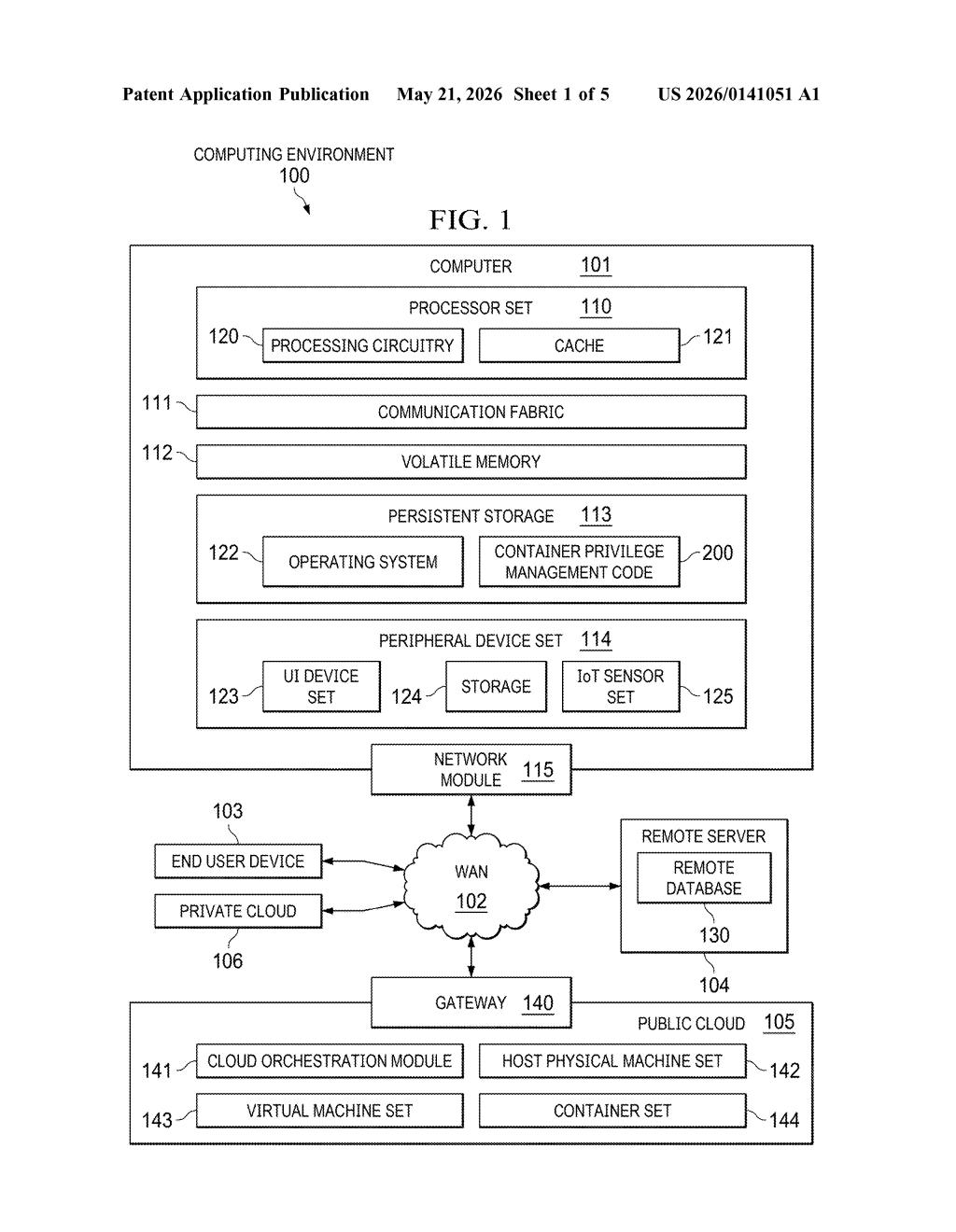
What IBM's container privilege gating actually does
Imagine giving a contractor a master key to your office building — but only for the exact room they need, only for the hours they're working, and with a security guard watching. The moment they try a door they weren't supposed to, the key stops working. That's roughly the idea here.
In cloud and enterprise software, containers are lightweight, isolated packages that run applications. A privileged container is one that's been given elevated access — think admin rights — to the underlying host system. That's sometimes necessary, but it's also a major security risk if abused.
IBM's patent describes a system that monitors container activity logs in real time, evaluates any request for elevated privileges against a set of approval rules, and grants or denies access on the fly. If the container starts doing something it wasn't supposed to — using more privilege than approved — the system detects it and revokes access immediately, sending an alert.
How the privilege request and revocation loop works
The patent describes a Container Privilege Management Process built around three main moving parts.
- Privilege Rule Management Module: Holds the approval rules — essentially a policy engine that defines what privileged operations a given container is allowed to request, under what conditions.
- Privilege Detection: Continuously analyzes container activity logs to detect when a privileged container is requesting an elevated operation privilege — catching the ask before it becomes an action.
- Privilege Control Module: Once a privilege is granted, this module keeps watching. If it detects privilege abuse or overreach (using more access than was approved, or using it in unexpected ways), it notifies the system to revoke that privilege immediately.
The core loop is: container requests privilege → request checked against rules → privilege granted or denied → operation monitored in real time → privilege revoked if abuse is detected. This is a just-in-time, least-privilege model (meaning containers only hold elevated rights for as long as they legitimately need them), applied dynamically rather than set statically at container startup.
The patent's claim language is broad — it covers the basic grant/deny/monitor loop — which is intentional for maximum coverage, though it's also fairly close to existing security orthodoxy in container runtime environments.
What this means for container security in the cloud
Privileged containers are a known weak point in Kubernetes and containerized cloud workloads. Most current approaches set container privilege levels at deployment time and leave them fixed — which means a compromised container holds its elevated rights indefinitely. A real-time revocation system meaningfully shrinks the window of exposure.
For IBM's cloud and hybrid infrastructure customers — particularly those running regulated workloads on IBM Cloud or Red Hat OpenShift — this kind of fine-grained runtime control is a genuine operational need. If this makes it into a product, you'd likely see it surfaced as a security policy feature in OpenShift or IBM's container security tooling.
This is solid, unsexy infrastructure security work — the kind of thing that doesn't make headlines but absolutely matters to enterprise security teams managing containerized workloads. The core idea (just-in-time privilege with real-time revocation) is well-established in security theory; IBM's patent attempts to formalize it as an implementable system. The broad claim language might face prior art scrutiny, but the monitoring-and-revocation loop is the genuinely useful piece.
There are more where this came from
We read every patent application Big Tech publishes and send you the ones worth knowing. Plain English, free, every week.
Want this weekly breakdown for a company we don't cover? Patentlyze Pro →