
IBM Patents a System That Hides Parts of a Virtual Space Based on Who You Are
Imagine walking into a virtual office and some rooms are simply invisible to you because your job title doesn't grant you clearance to see them. That's exactly what IBM is describing here.
How IBM's VR access control actually works
Picture a virtual replica of a hospital, a bank floor, or a government facility built in VR. Not everyone who enters that virtual space should be able to see everything in it. A doctor shouldn't see the CFO's financial records just by walking down a digital hallway, and a contractor shouldn't be able to look into a secure server room.
IBM's patent describes a way to tag every tiny chunk of a virtual 3D space with access rules tied to real-world roles and clearance levels. When you put on a headset and step into the environment, the system checks who you are and what you're allowed to see. If a section of the virtual world is off-limits for your role, it simply doesn't appear to you.
The idea borrows a well-established security principle called "least privilege," which means you only get access to exactly what you need and nothing more. IBM is applying that workplace IT concept directly to what your eyes can see inside a VR experience.
How voxels carry permission data in IBM's system
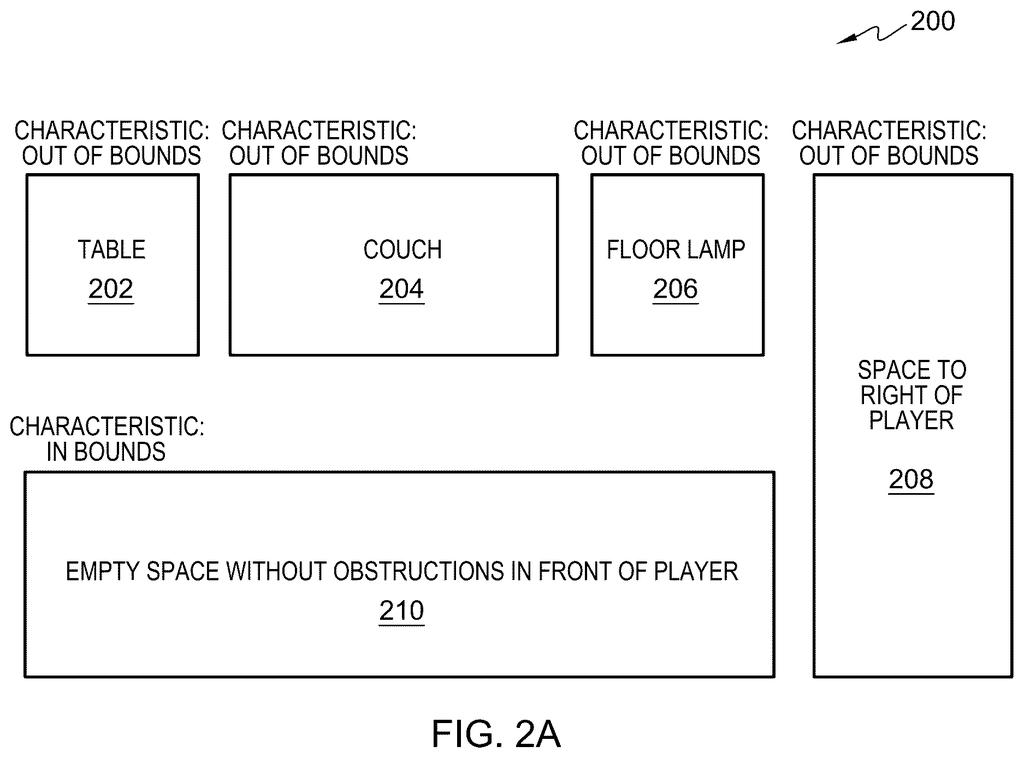
The patent centers on tagging 3D space using voxels (think of voxels as the 3D equivalent of pixels, tiny cube-shaped units that together form a virtual environment). Each voxel or group of voxels can be assigned characteristics that define what kind of content lives there and what permission level is needed to view it.
When a user enters the virtual environment, the system queries their role or access level, essentially asking: who is this person and what are they cleared to see? It then compares that answer against the viewing privileges attached to each voxel in the user's field of view.
If the user's credentials don't match the required privileges for a particular voxel, the system restricts the virtual display of that voxel. In plain terms, those parts of the environment go dark, become opaque, or are hidden entirely from that user's perspective.
The system is explicitly designed to satisfy regulatory requirements and enforce a "principle of least privilege" (a standard IT security concept meaning users get only the minimum access necessary to do their job). The patent frames this as applying familiar enterprise access-control rules to a fully spatial, immersive environment rather than to files or folders on a traditional computer.
What this means for VR in regulated industries
As companies experiment with VR for training, collaboration, and digital twins of physical facilities, they run into a real compliance problem: existing IT security tools don't naturally extend into 3D space. If a hospital builds a virtual version of its building for staff training, it needs to ensure that HIPAA rules about patient data visibility still apply, even inside a headset. IBM's approach is an attempt to solve that by treating viewable 3D space the same way traditional systems treat files and folders.
For regulated industries like finance, healthcare, defense, and critical infrastructure, this kind of granular spatial access control could be a requirement before VR collaboration tools get sign-off from compliance teams. The patent doesn't point to a specific product, but IBM has a long history of enterprise security tooling, and this sits squarely in that space.
This is a practical, unglamorous piece of enterprise security infrastructure, not a consumer VR feature. The underlying idea is straightforward: take role-based access control, which every large company already uses for files and databases, and make it work in three-dimensional space. It's not exciting, but it's the kind of boring prerequisite that has to exist before any serious regulated industry will touch VR collaboration tools.
There are more where this came from
We read every patent application Big Tech publishes and send you the ones worth knowing. Plain English, free, every week.
The drawings
5 drawing sheets from US 2026/0222414 A1 · click any drawing to enlarge


Want this weekly breakdown for a company we don't cover? Patentlyze Pro →
Be the first to weigh in