
Sony Files Patent to Keep Shared AI Training From Hearing the Same Lesson Twice
When thousands of devices help train one AI over a crowded wireless network, most of what they send is repeat information. Sony's filing picks the devices whose data differs most, so each upload adds something new.
What Sony's pick-the-different-devices idea does
Ever asked ten people who watched the same car crash to describe it, and heard the same story ten times? You learn almost nothing from the last nine. Sony thinks AI training can fall into the same trap.
Some AI is trained across many devices at once. Your phone, a street camera or a car each learns a bit from its own data, then sends only the lessons (not the raw photos or recordings) to a central station. The catch is that the airwaves are crowded, so only some devices get a turn each round.
Sony's filing says to pick the speakers carefully. If two cameras sit on the same corner and filmed at the same moment, only one needs to talk. The station favors devices that were far apart or recorded at different times, so every turn adds something new.
generate a global model parameter based on local model parameters of a group of distributed nodes, wherein the local model parameters are generated by the group of distributed nodes based on respective local training data thereof …
Translation: The system combines updates from different devices trained on their own data to create a master AI model.
How Sony's base station spreads out its picks
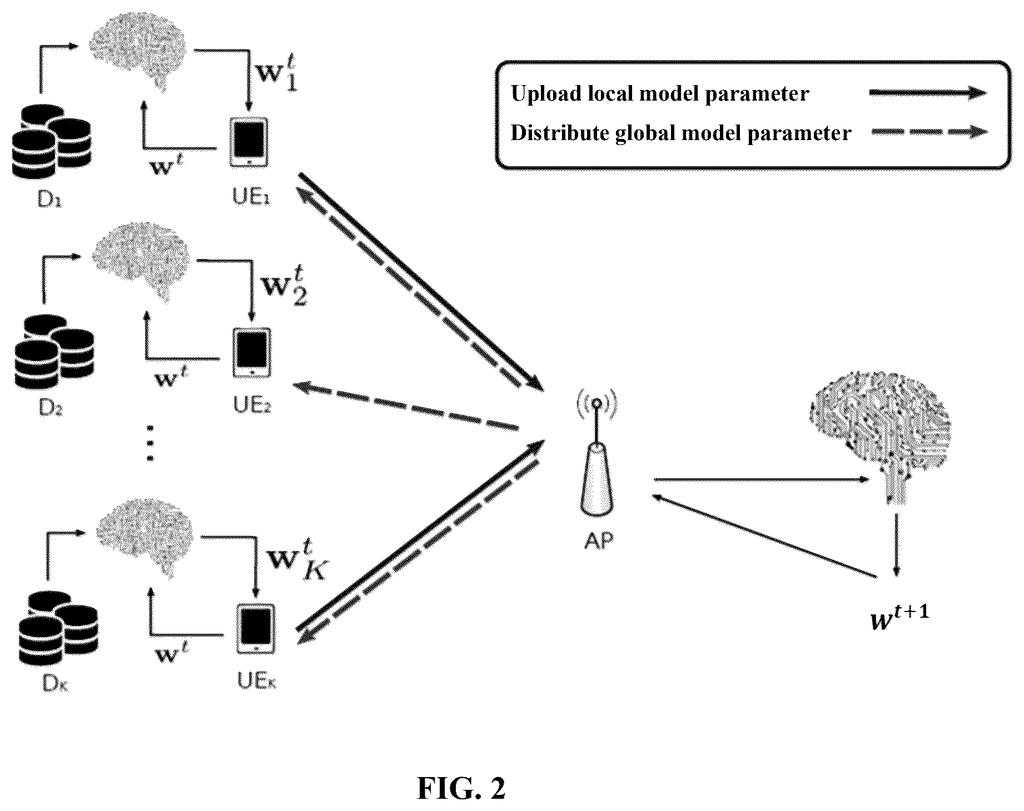
This is a method for federated learning, a way of training one shared AI model across many devices without collecting their private data in one place. Each device (a phone, a camera, a car) trains on its own data and uploads only the result, called a local model parameter. A central unit, such as a cell tower, blends those results into a global model parameter and sends it back to everyone.
Sony's addition is the choice of who uploads. Only a limited group can send each round, so the central unit picks devices whose data is least alike. The claims center on that choice, with distance as the lead example: chosen devices must sit farther apart than a set threshold. They also allow filtering by location, network quality (QoS, a measure of connection health), collection time, the model that generated the data, or the data source.
The filing describes two ways to run it:
- Centralized: each device reports details such as location and collection time with its upload request. The station picks one device per cycle, and each pick blocks nearby devices inside a circular "exclusive region" from being chosen.
- Distributed: devices check the rules themselves, then compete for airtime by listening before they transmit (carrier sensing). Devices with better connections can shorten their waiting time to win more often.
One example has cars at an intersection learning when to brake. In Sony's simulation, the picked group reached accuracy close to using every device.
determine a group of distributed nodes for generating a global model parameter among a plurality of distributed nodes, wherein the correlation between local training data of the group of distributed nodes meets a specific correlation requirement …
Translation: Sony picks which devices to include based on how similar their training data is to avoid redundancy.
Why Sony's shared-training patent saves airtime
If your phone, car or a nearby camera ever helps train a shared AI, it competes for limited wireless airtime with thousands of other devices. This filing is about spending that airtime well: fewer repeat updates, faster learning, and less network traffic wasted on near-copies of the same lesson.
Sony's description lists smartphones, car navigation devices and base stations as places the technique could run, and it walks through braking decisions at an intersection as an example. It is a network-efficiency idea, so you would never see it on a screen. The payoff would show up as AI that improves a little faster without extra strain on the network.
This is the 11th Sony filing we've tracked since July in our on-device AI privacy work, after earlier applications to blur faces before capture and limit upload data in AI training.
The trade is simple. Sony saves scarce airtime by silencing some devices every round, and pays by trusting a rough guess. Distance and timestamps are stand-ins for how alike two devices' data really is. Two cameras far apart can still film the same busy highway, and a lone camera nearby might see something rare and get skipped.
There is a second cost. To be chosen well, each device must tell the network where it is and when it collected its data, which sits oddly beside a technique built around privacy.
The filing's simulation says the picked group matches the accuracy of using every device, which is encouraging. Whether the trade pays off then depends on how jammed the airwaves are. When they are crowded, skipping near-duplicates looks like a sensible bargain.
Get our take in your Top Stories
Liked this breakdown? Add Patentlyze as a preferred source on Google, and our plain-English take shows up more often in your Top Stories the next time Sony patent news breaks.
There are more where this came from
We read every patent application Big Tech publishes and send you the ones worth knowing. Plain English, free, every week.
The drawings
13 drawing sheets from US 2026/0340510 A1 · click any drawing to enlarge


Show the other 5 sheets


Want this weekly breakdown for a company we don't cover? Patentlyze Pro →
Be the first to weigh in