
Sony Files Patent for a Camera That Scrambles Faces Before the Image Is Even Recorded
Most privacy cameras take a clear picture and then hide the faces afterward. Sony's patent scrambles the scene in the optics, so a clear picture never exists inside the camera to leak.
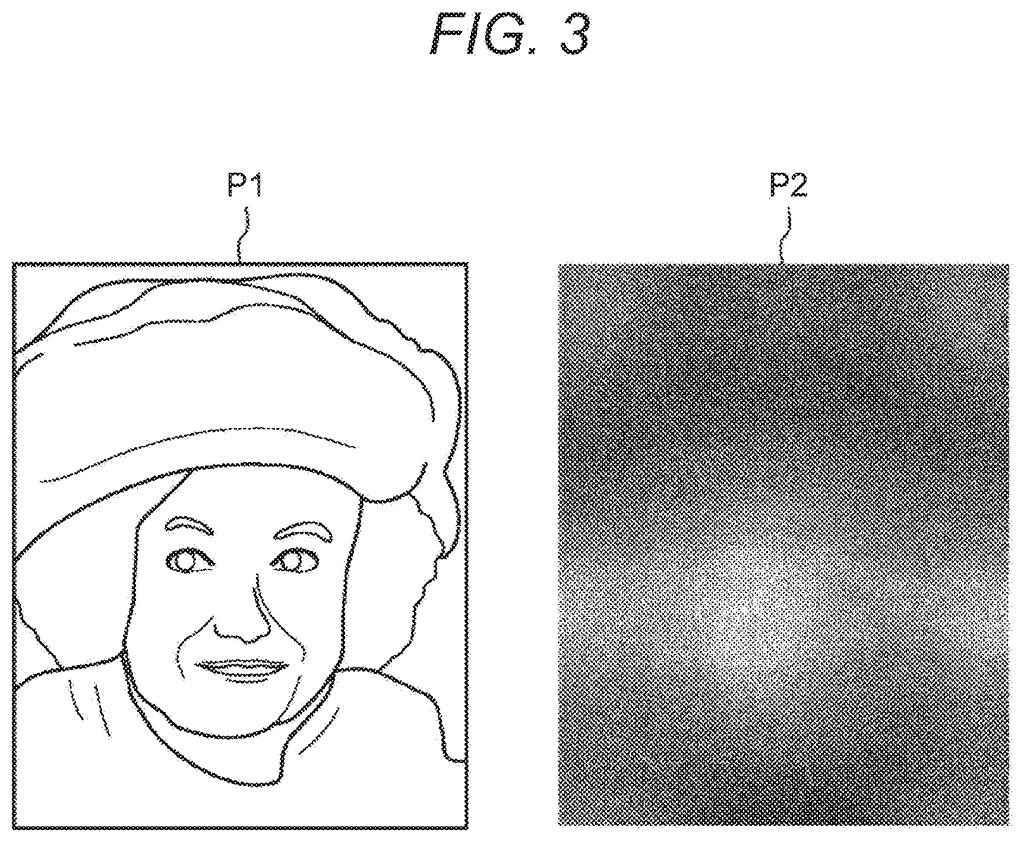
What Sony's privacy-first camera actually sees
A camera in a living room watches over an elderly parent all day. It needs to know whether someone has fallen, and it has no use for knowing whose face it is looking at. Most cameras still record a sharp picture first and hide identities afterward, so a clean copy exists inside the device where it could be pulled out.
Sony's patent flips that order. A special filter in front of the sensor scrambles the scene using the light itself, and the chip then records the result with very few shades of brightness, 4 bits or less. What comes out is a rough, distorted picture that is hard to pin on any one person.
Software can still read it well enough to guess things like whether someone is smiling, wearing glasses or walking a certain way. If the footage ever leaks, the people in it are much harder to recognize.
an optical filter that converts an image formed on a basis of incident light into a filter image by applying a filter effect set on a basis of a predetermined parameter …
Translation: A special filter alters incoming light using specific settings right as the picture is taken.
How the lens scrambles a face before the sensor
The patent describes a four-stage chain that changes the image before any program gets a clean copy:
- Optical filter: a physical layer in the light path that transforms the scene before it reaches the sensor.
- Imaging element: an ordinary sensor (for example, a CMOS chip) that records the filtered scene as an analog signal, a continuous electrical reading.
- A/D converter: turns that signal into digital numbers at a low bit depth (how many brightness levels each pixel can take). One claim sets it at 4 bits or less.
- Attribute estimation unit: a machine-learning model that guesses traits of the person from the result.
The filter is built on a Gabor filter, a math pattern that responds to edges and textures of a chosen size and angle. A textbook Gabor filter goes negative in places, and light can't be subtracted, so Sony adds 1 to its wave term to keep every value at zero or above. Four settings (wave spacing, spread, aspect ratio and phase) shape the effect.
The filter alone isn't enough. The filing says the average brightness of the person survives it and can still allow identification, so the low bit depth is there to remove that. The filter settings and bit depth are tuned together so the identification rate falls below a set value while attribute accuracy stays above another. The filing suggests machine learning to find the settings and says they can be stored per trait. Changing the filter's settings means swapping in a differently designed physical filter.
… make it difficult to perform the personal identification of the person based on the digital signal image, and to enable the attribute estimation unit to estimate the attribute.
Translation: The system hides individual identities while still tracking basic details like clothing or age.
Why privacy built into the camera hardware matters
If you have a camera in a living room, or you shop at a store that counts and studies its customers, the weak point today is the footage itself. A hacked or leaked clean image exposes everyone in it. Putting the scrambling in the optics means the sensor never produces a clear picture to steal, which is a firmer promise than a privacy toggle in an app.
The tradeoff is that this only suits jobs that don't need to know who someone is. Crime-prevention cameras often do need that, and the filing promises only that identification gets difficult, measured against a threshold. The listed traits also include race and gender, which some people will want to look at closely.
Sony's tenth filing we've tracked since July in our on-device AI privacy push watchlist follows its work on cutting upload data and training AI without raw data.
Getting this into a product takes new hardware. The privacy comes from a physical filter in the light path and a converter set to very few shades, so a camera already on a wall can't pick it up with a software update.
The parts are ordinary: a lens, a standard sensor, a converter and a program that reads the result. The hard work is tuning, because the filing says the settings change with each trait you want to read, and a new setting can mean swapping the physical filter.
That suits a single-job camera, such as one that counts shoppers or watches a room for falls. A do-everything camera is a longer road, and the claims only say identifying someone should be 'difficult', so the real test is how well it holds up against people trying hard to recognize a face.
Get our take in your Top Stories
Liked this breakdown? Add Patentlyze as a preferred source on Google, and our plain-English take shows up more often in your Top Stories the next time Sony patent news breaks.
There are more where this came from
We read every patent application Big Tech publishes and send you the ones worth knowing. Plain English, free, every week.
The drawings
6 drawing sheets from US 2026/0320959 A1 · click any drawing to enlarge


Want this weekly breakdown for a company we don't cover? Patentlyze Pro →
Be the first to weigh in