
Sony Files Patent to Cut the Data Phones Upload When Training Shared AI
Training a shared AI across thousands of devices means every device uploads a huge file over a slow connection. Sony's patent has neighbors compare notes first, so only the difference goes up.
What Sony's upload-saving AI training does
Today, when thousands of devices help train one shared AI, each one has to upload its entire trained model to a central server. Those models keep getting bigger, and the upload side of a wireless connection is usually the narrowest part of the trip. The result can be jams, delays and lost data.
Sony's patent has nearby devices compare notes first. One device passes its full model to a neighbor that learned something similar. The neighbor works out what is different and uploads only that. Because similar models overlap a lot, the difference is far smaller than the whole thing.
Your raw data, such as your photos, stays on your device throughout. Only the model's learned settings travel. The server then merges everything into one improved model, sends it back, and the cycle repeats.
… determine a model difference between the second artificial intelligence model and the first artificial intelligence model; and send the model difference to a federated learning server.
Translation: It figures out how two AI models differ and sends only that change up to the server.
How Sony's devices send only the differences
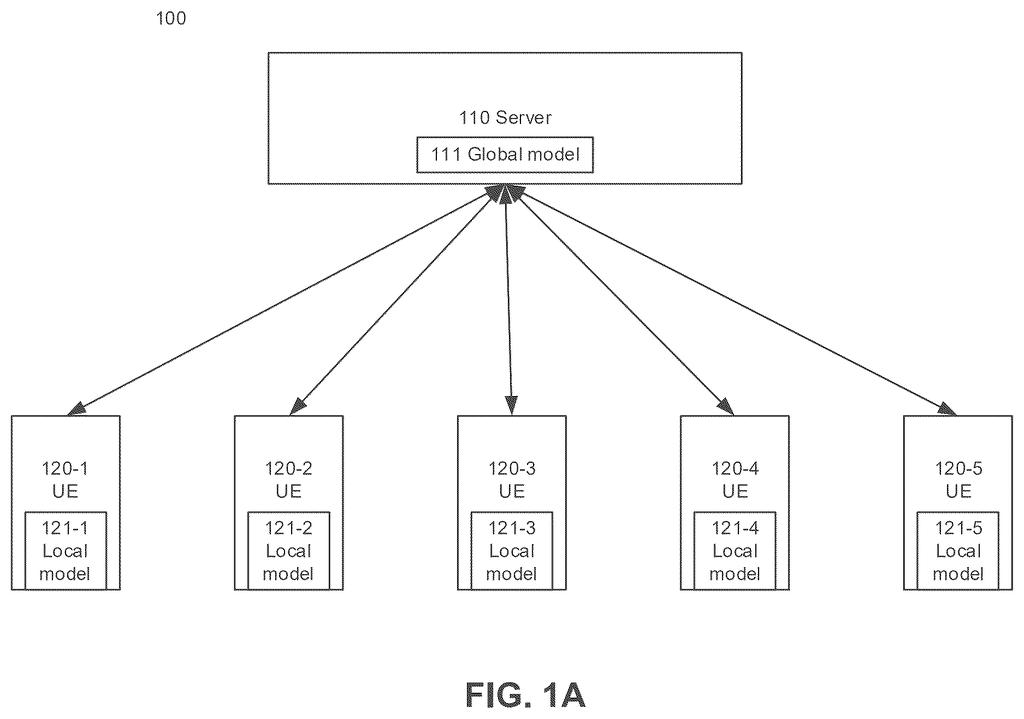
The patent covers federated learning, a setup where many devices each train an AI model on their own local data and send the results (not the data) to a central server, which blends them into one shared model. Sony's twist is in what gets sent.
A first device finishes training, then receives a second device's model over a direct device-to-device link (called a sidelink). It calculates a model difference, meaning how the numerical settings (the weights) inside the two models differ, and uploads only that. The server already holds the second device's full model, so it can rebuild the first model or merge the difference straight in.
The filing also describes several add-ons:
- Grouping: devices whose models are close together (a short model distance) join the same group, chosen by the server or by the devices themselves.
- Triggers: the difference is sent when a device's upload connection is weak, or when the models are similar enough to make the savings worthwhile.
- Group-specific radio resources: each group gets its own slice of the airwaves so groups do not interfere with each other.
- Earliest finisher: the group member that completes training first shares its model.
- Filtering: tiny differences below a threshold are left out to shrink the upload further.
After merging, the server sends the combined model back and the next training round begins.
Why lighter uploads matter for shared AI
Companies that want AI to learn from real usage without collecting your raw data run into a traffic problem: models are growing, and upload links are limited. If this approach works as described, it could mean less network congestion and faster training rounds, so shared models could improve sooner without clogging the connection.
Much of the design lives in the wireless layer: radio resources set aside per group, links between devices, and base station setup. That makes it as much a networking idea as an AI one. The filing lists smartphones, tablets, laptops, game devices, cameras and vehicle terminals as possible devices, though it names no Sony product. For you, any benefit would be indirect: AI features that learn from many users' devices while using less of the network.
Sony's ninth filing we've tracked in our on-device AI privacy watchlist since July builds on earlier work like training AI without raw data and checking surroundings before sending sensor data.
Every shortcut here costs something. Devices must swap models with a neighbor, do the comparison math, and wait on whichever device finished training first, all inside one training round's time limit. That is extra work and extra waiting for gadgets that may be running on a battery.
The savings also depend on the models being alike. Pair two devices that learned different things and the difference is nearly as large as the original, so the upload shrinks very little. The patent handles this by grouping similar devices and letting a device fall back to sending its full model if its neighbor does not respond. Dropping small differences to shrink the upload also loses a little detail, and the filing bets that will not hurt the final model.
Our read: the trade makes sense on a crowded network where uploads are the bottleneck, and the fallbacks show the engineers thought about failure. It is routine telecom plumbing, useful if it works and invisible to you when it does.
Get our take in your Top Stories
Liked this breakdown? Add Patentlyze as a preferred source on Google, and our plain-English take shows up more often in your Top Stories the next time Sony patent news breaks.
There are more where this came from
We read every patent application Big Tech publishes and send you the ones worth knowing. Plain English, free, every week.
The drawings
13 drawing sheets from US 2026/0311051 A1 · click any drawing to enlarge


Want this weekly breakdown for a company we don't cover? Patentlyze Pro →
Be the first to weigh in