
A New Apple Patent Teaches Wireless Chargers to Spot Stray Metal Before It Heats Up
Wireless chargers can accidentally heat a coin or key left on the pad. Apple's new patent describes a way for your charger and device to agree on a shared rulebook for catching that, then cut power when the numbers look wrong.
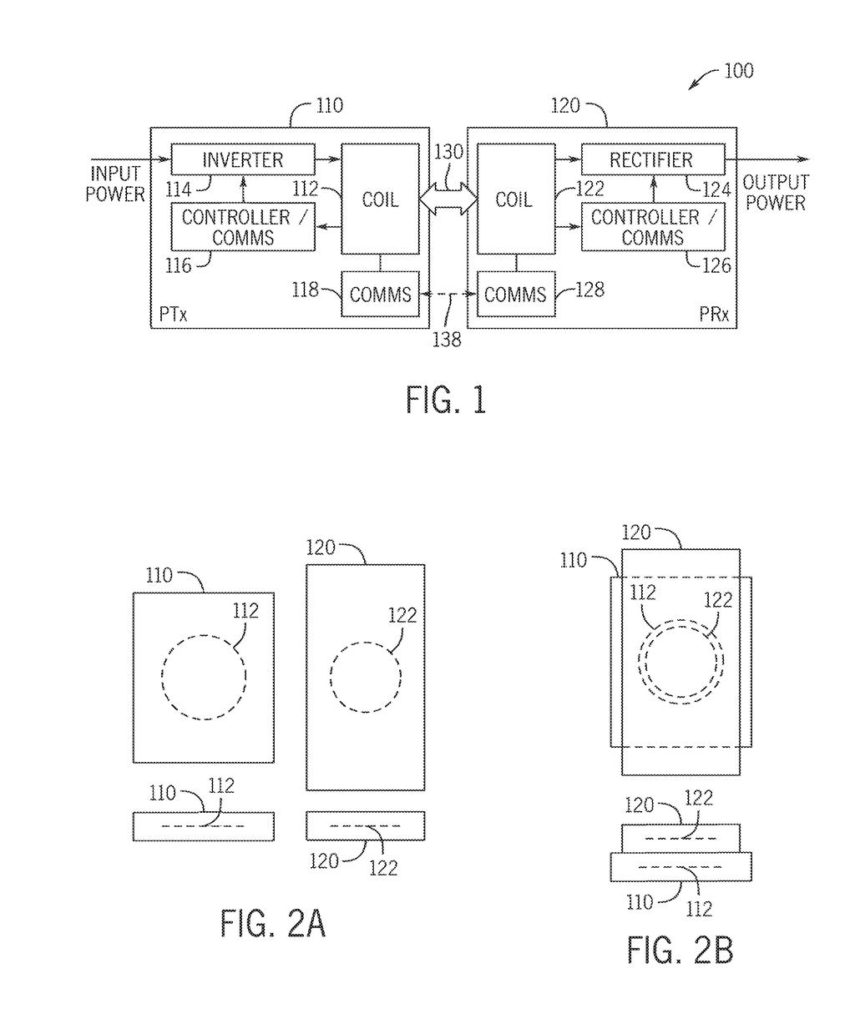
What Apple's charger-safety handshake does
Imagine you set your phone on a wireless charging pad, and a coin has slipped underneath it. The charger's magnetic field can heat that coin, and nobody notices until something gets hot. Chargers already try to catch this, but they need to know how much energy should disappear along the way.
Apple's filing describes a shared rulebook that the charger and your device agree on before charging starts. Each side shares a few numbers describing its own hardware, and the pair uses them to predict how much power should be lost as heat in normal use.
While charging, your device reports how much power it receives. If the charger sent far more than the rulebook predicts, something else is soaking up the difference, and the charger turns the power down or stops.
… determining a measured power loss associated with the wireless power transfer by comparing the indication of received power to a transmitted wireless power measured by the wireless power transmitter …
Translation: The charger tracks power loss by comparing how much energy it sent versus what the device reported getting.
How the charger and phone agree on a loss model
The patent centers on a power loss accounting profile, a package that defines a math model of the charging pair, the messages they exchange, and the timing and behavior rules they follow. Think of it as a named, numbered setting that both sides can select.
Here is the sequence the claims describe:
- The receiver (your phone or watch) asks to use a particular profile, and the transmitter (the charging pad) says yes or no.
- Both sides swap coefficients, which are numbers describing each device's physical traits, and these feed the model's equations.
- The receiver reports how much power it is getting.
- The transmitter subtracts that from the power it measured sending, then compares the gap to the loss the model predicts.
If the real loss exceeds the predicted loss by more than a set threshold, the transmitter infers a foreign object (such as metal) and reduces power or suspends charging.
The filing also spells out the messages in detail: profile selection, a capability message that says why a power limit applies, coefficient transfer, and power reports. Reports can include a confidence level, so the charger can ignore a shaky reading. If a profile is rejected, the devices can try another, or fall back to a basic one that allows lower power.
… determining that a foreign object is present if the measured power loss exceeds the predicted power loss by more than a threshold …
Translation: It flags stray metal when the missing energy crosses a certain limit.
Why faster wireless charging needs this check
If you charge a phone, watch, or earbuds on a pad, this is the safety check running behind the scenes. The filing says power loss accounting can be improved over time to allow charging at higher power levels, and profiles let newer methods work with older gear. Its example exchange negotiates 25W, so your next charger could push more power without giving up safety.
It also matters for compatibility. Profile-aware devices can still work with ones that are not, falling back to a standard mode. The filing suggests the messages could be built into an industry standard such as Qi, which would help chargers and phones from different makers work together.
This is the 24th Apple filing we've tracked in battery & power since May, a topic that also covers one on garbled wireless charging data and one on location tied to activity.
For you, the benefit shows up as nothing happening. Your phone sits on the pad, charges faster than before, and the stray key or coin underneath never gets dangerously warm. You would only notice if the charger paused to protect something.
The most useful detail is the fallback. If your charger and phone do not share the newest rulebook, they drop to a basic one and still charge, just at a lower power level. An older pad should not become useless with a newer phone.
This is routine engineering plumbing with a clear user payoff: safer and potentially quicker charging. It fixes a failure you would never want to meet.
Get our take in your Top Stories
Liked this breakdown? Add Patentlyze as a preferred source on Google, and our plain-English take shows up more often in your Top Stories the next time Apple patent news breaks.
There are more where this came from
We read every patent application Big Tech publishes and send you the ones worth knowing. Plain English, free, every week.
The drawings
11 drawing sheets from US 2026/0342141 A1 · click any drawing to enlarge


Show the other 3 sheets


Want this weekly breakdown for a company we don't cover? Patentlyze Pro →
Be the first to weigh in