
Tesla Patents a Wireless Charger That Ignores Temperature and Finds Real Metal
A coin or a soda can sitting on a wireless charging pad can damage the charger, catch fire, or wreck whatever's being charged. Tesla's new patent describes a smarter way to find those stray metal objects without crying wolf every time the temperature changes.
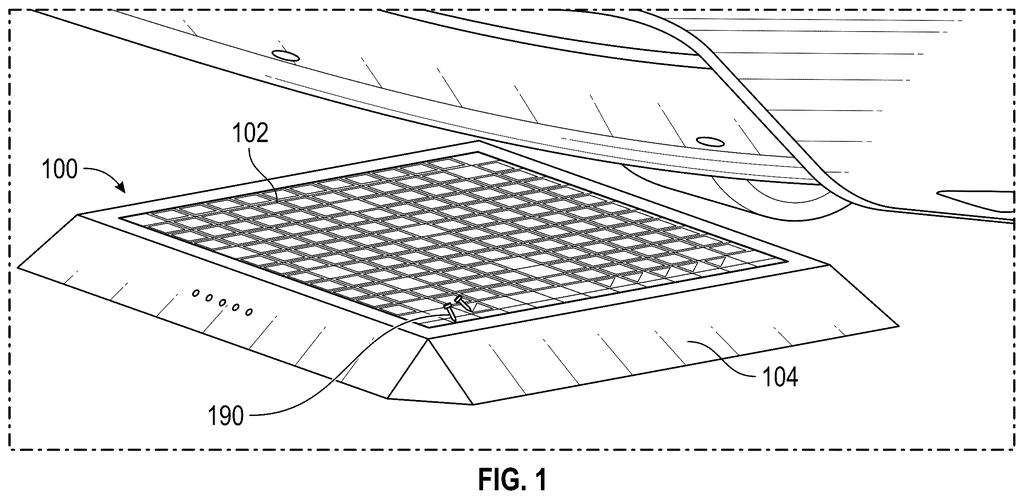
What Tesla's foreign-object charger detection actually does
Wireless charging works by sending an invisible electromagnetic field from a pad into your device. But that same field will also heat up any stray metal sitting on the pad, like a key, a coin, or a soda can. Left undetected, that can cause serious damage or even a fire.
Today's detection systems have a frustrating problem: they use sensors that are also sensitive to temperature swings. A hot summer day, a cold garage floor, or a warming pad can all make the sensor think there's a metal object when there isn't. The result is false alarms that interrupt charging.
Tesla's patent describes a method that measures two things at once, how much a charging coil resists electrical flow and how much it stores energy, and uses the combination to tell a real metal intruder apart from a simple temperature change. The goal is a wireless charging pad that stops only when it actually needs to.
… detect an object based on the first parameter indicating a decrease in inductance and the second parameter indicating an increase in resistance relative to when the object is not present.
Translation: It spots objects by watching for a drop in inductance paired with a jump in resistance.
How the coil reads resistance and inductance to spot metal
The system is built around components called resonant tanks (circuits that naturally oscillate at a specific electrical frequency, similar to how a tuning fork vibrates at one musical note). Each tank contains a coil, and a driver circuit pulses those coils across a range of frequencies centered near their natural resonant point.
When the system measures the coil's response, it tracks two values:
- Inductance (how well the coil stores energy in its magnetic field)
- Resistance (how much the coil fights the flow of electrical current)
A piece of metal placed on the pad disrupts the magnetic field in a very specific way: inductance drops and resistance rises at the same time. Temperature changes, by contrast, shift both values differently, usually moving them in the same direction or at a different ratio.
By watching for that paired signature, the processing circuit can confidently flag a metal object while ignoring thermally driven drift. The patent also describes analyzing shifts in the coil's peak output voltage across the frequency sweep, giving the system even more data points to separate real threats from environmental noise.
… distinguish between changes of frequencies and magnitudes caused by temperature and those caused by foreign objects to accurately detect the foreign objects.
Translation: It ignores weather changes to avoid false alarms while hunting for foreign metal.
What this means for safe EV wireless charging at scale
For consumer wireless chargers, false alarms are an annoyance. For an electric vehicle charging pad embedded in a parking spot or a garage floor, they are a bigger deal. A pad that shuts down every time temperatures fluctuate is one drivers learn to distrust, which defeats the promise of hands-free overnight charging.
More importantly, the safety risk is real. Metal objects heated by a stray electromagnetic field can reach dangerous temperatures quickly. A detection system that reliably works across a hot Phoenix driveway and a cold Minnesota winter is a genuine prerequisite for deploying wireless EV charging at any meaningful scale. Tesla's long bet on wireless EV charging makes this kind of foundational reliability work a necessary building block, not an optional refinement.
Tesla's second filing in Battery & power we've tracked since May follows a single-wire button sensing patent with a new application in the same space.
A metal object left on an energized wireless charging pad does not just sit there. At the power levels involved in charging a car, it heats rapidly, and that is a fire risk in a driveway, a garage, or a parking structure.
The core difficulty is that cold weather and a stray coin can look identical to a sensor reading a single electrical measurement, which means the system either cries wolf constantly or misses the thing it exists to catch.
Reading two electrical signatures at once, rather than one, gives the system enough information to tell a chilly morning from a dangerous obstruction. That distinction is what makes wireless EV charging safe enough to leave unattended, which is the only version of it most people will actually use.
There are more where this came from
We read every patent application Big Tech publishes and send you the ones worth knowing. Plain English, free, every week.
The drawings
5 drawing sheets from US 2026/0299157 A1 · click any drawing to enlarge


Want this weekly breakdown for a company we don't cover? Patentlyze Pro →
Be the first to weigh in