
Apple Patents Technology to Collect Your Location Only When Your Activity Calls for It
Your phone burns battery checking your location even when nothing important is happening. Apple's new patent describes a system that pays attention to what you're actually doing and only ramps up GPS checks when it makes sense.
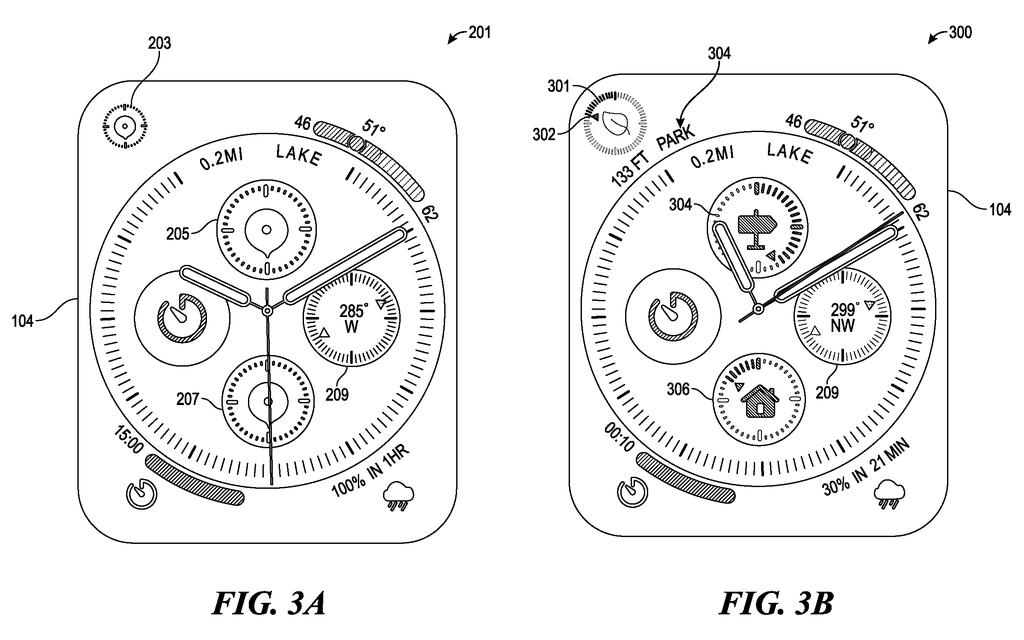
How Apple wants to cut GPS battery drain mid-trip
A navigation app pings your phone's GPS over and over, whether you're standing still at a red light or actively making a turn. That constant checking drains your battery, even when the information it collects isn't useful yet.
Apple's patent describes a smarter approach. Instead of asking for your location at a fixed, relentless rate, the device watches for context clues, like a tap on the screen or movement, before deciding how often to collect location data. It then gathers those location checks in the background during a window of time, without waking the main processor.
At the end of that window, the processor wakes up once, processes everything it collected, and updates your map or navigation display all at once. Your app gets the same result, but the phone does far less work to get there, which means more battery left for the rest of your day.
… detecting a trigger for requesting waypoint information at a frequency based at least in part on user context information, wherein the user context information comprises the interaction; sending waypoint information requests at the frequency during a time interval; …
Translation: The device figures out how often to check your location based on what you are currently doing.
How the system batches location requests and wakes the processor
The patent lays out a method for collecting waypoint information (location data captured at specific moments along a route) in a way that avoids constantly waking the main processor of a device.
Here is how the system works:
- The device receives an interaction, such as a screen tap, a button press, or a motion event, that signals the user is actively engaged.
- That interaction acts as a trigger, prompting the device to decide how often to request location data, based on user context information (what the user is doing, where they are, how they're moving).
- Location requests are sent at that determined frequency during a set time interval, handled by a low-power subsystem rather than the main application processor.
- At the end of the interval, the application processor (the main chip that runs apps) wakes up once, processes all the queued location data, and presents the updated waypoint information on screen.
The key insight is that the frequency of location polling is variable, not fixed. If your context suggests you need precise, frequent updates (say, you just tapped a turn-by-turn screen), the system obliges. If context suggests you're idle, it slows down. The main processor only has to do one burst of work instead of repeatedly waking and sleeping.
… waking an application processor to process the waypoint information requests and present waypoint information at a user interface of the electronic device.
Translation: It turns on the main processor only when needed to handle the gathered location data and show it to you.
What this means for navigation apps and battery life
Battery drain from location services is one of the most complained-about problems on smartphones, and navigation is one of the biggest offenders. A system that adjusts how often it pings for location based on what you're actually doing could meaningfully extend how long your phone lasts on a long drive or hike without plugging in.
Apple has been filing around location-aware power management for several years now, and this patent fits that pattern. For users, the practical payoff is simple: your maps app stays accurate, but your phone doesn't have to work as hard to keep it that way. That's a real improvement in everyday use, even if it's entirely invisible to you while it's happening.
Apple's 52nd filing we've tracked in our cell phone coverage since May follows work like tilt and hand controls and synced multi-camera images.
Location tracking destroys phone batteries, and the problem is worst for people who depend on navigation or delivery apps through a full workday. Every time a phone checks your position while you are sitting still or waiting at a light, it burns power for nothing.
Holding those checks in a bundle and only waking the main processor when there is a real batch to handle is a direct, proportionate answer to that specific waste. It does not change how phones figure out where they are; it just stops doing pointless work at pointless moments.
Whether it actually matters in daily life comes down to how accurately the phone reads what you are doing. Get that judgment right and people charge less often. Get it wrong and location updates arrive in awkward clumps. The idea fits the problem well; execution is what settles the question.
There are more where this came from
We read every patent application Big Tech publishes and send you the ones worth knowing. Plain English, free, every week.
The drawings
13 drawing sheets from US 2026/0298652 A1 · click any drawing to enlarge


Want this weekly breakdown for a company we don't cover? Patentlyze Pro →
Be the first to weigh in