
IBM Patents a System for Personalizing In-Vehicle Virtual Environments
IBM has filed a patent for generating personalized virtual environment visuals inside a vehicle — pulling in real-time vehicle data and a passenger's profile to shape what they see. It's a broad, early-stage claim in a space that automakers and XR companies are actively building toward.
What IBM's in-vehicle virtual environment system does
Imagine sitting in a car while a virtual world surrounds you — not just a generic screensaver, but one that responds to who you are and what the car is actually doing. That's the core idea in this IBM filing.
The system works in three steps: it collects data about the vehicle (think speed, route, environment), compares that data against a profile tied to you or other occupants, and then generates a virtual environment visualization tailored to that combination. So your car's display — or a future AR headset you're wearing as a passenger — could show a scene tuned to your preferences and your current ride.
Right now, the patent is quite abstract. It doesn't specify what kind of display is used, what the visuals actually look like, or how the user profile is built. It's staking out conceptual territory more than describing a finished product.
How vehicle data and user profiles drive the visuals
The patent describes a computer-implemented method with three core steps:
- Receive vehicular parameters — data points associated with the vehicle (the patent doesn't enumerate these explicitly, but the term typically covers things like speed, heading, location, sensor feeds, or cabin state)
- Analyze against a user profile — cross-reference that vehicle data with a profile tied to at least one occupant, allowing the system to personalize the output
- Generate a virtual environment visualization — produce a visual experience associated with the vehicle based on that analysis
The claim is intentionally broad. There's no specific mention of a display type (head-mounted, windshield projection, in-seat screen), no detail on how the user profile is constructed or stored, and no constraint on what "vehicular parameters" must include. This is a method claim — it covers the process, not a specific implementation.
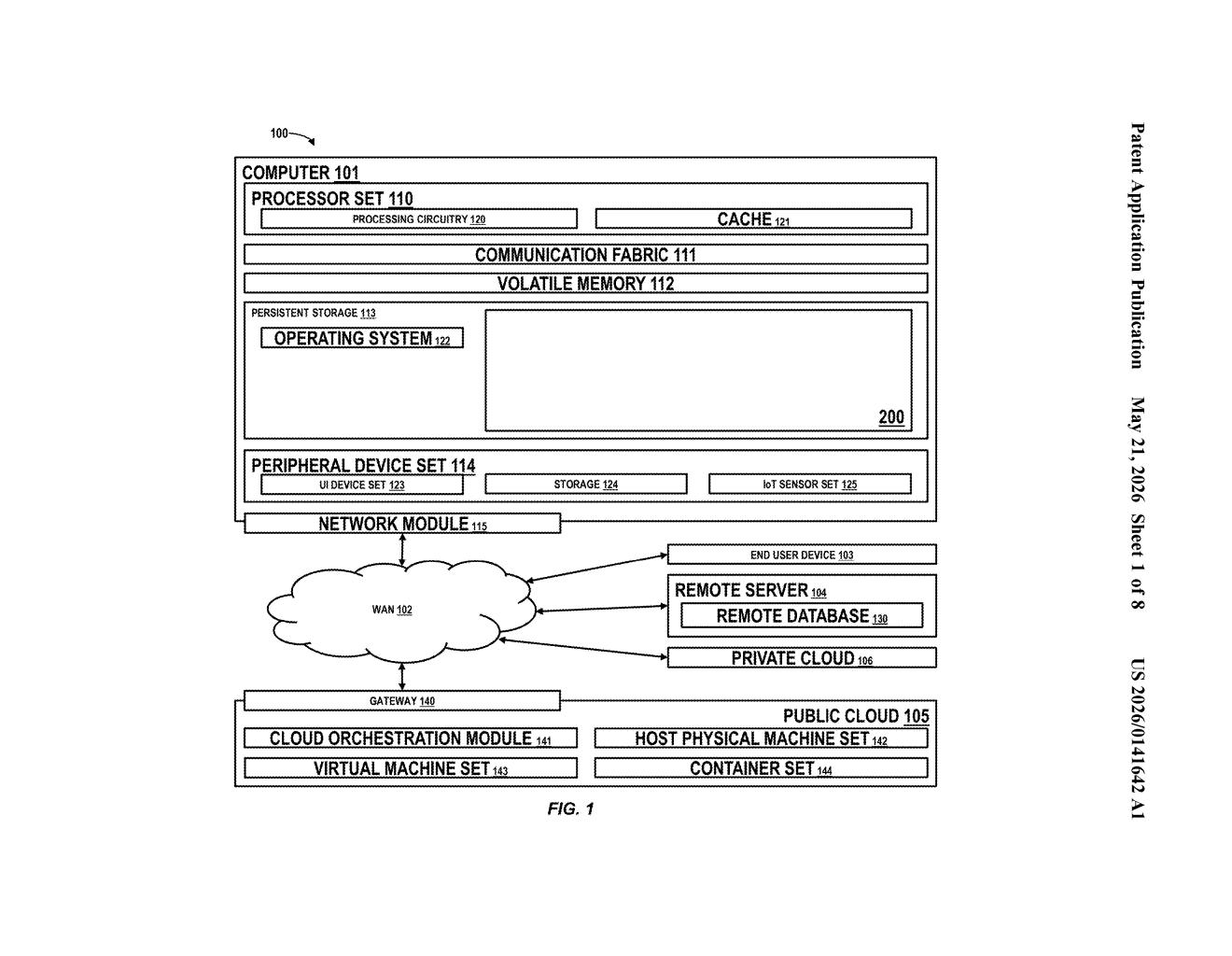
The system architecture described in the diagrams is a fairly standard computing stack: processor set, volatile memory, persistent storage, cache, and WAN connectivity. Nothing unusual there.
What this means for in-car AR and passenger experience
The broader context here is that cars are becoming entertainment and productivity platforms — especially as more driving becomes assisted or autonomous. A system that can dynamically adapt a passenger's visual environment based on vehicle context and personal preferences is a reasonable direction to explore. You could theoretically get a calming forest scene during a stressful commute while another occupant gets something entirely different.
That said, the claim as filed is so abstract that it reads more like a placeholder than a product blueprint. IBM is a prolific filer and often stakes out territory in emerging spaces well before implementation. Whether this leads anywhere concrete — or gets cited as prior art in someone else's more detailed work — remains to be seen.
This is a broad, thin patent that covers conceptual ground without much technical depth. The three-step method claim is so general that it describes what dozens of teams are already building in various forms. IBM is clearly flagging interest in the in-vehicle XR space, but this filing alone doesn't tell us much about what they're actually building or how.
There are more where this came from
We read every patent application Big Tech publishes and send you the ones worth knowing. Plain English, free, every week.
Want this weekly breakdown for a company we don't cover? Patentlyze Pro →