
A New Apple Patent Has a Headset Notice When It Doesn't Fit Your Head
Apple's headset would notice when you keep shoving it back up your nose, then tell you which strap or part to change. The patent treats your fidgeting as a sign the fit is wrong.
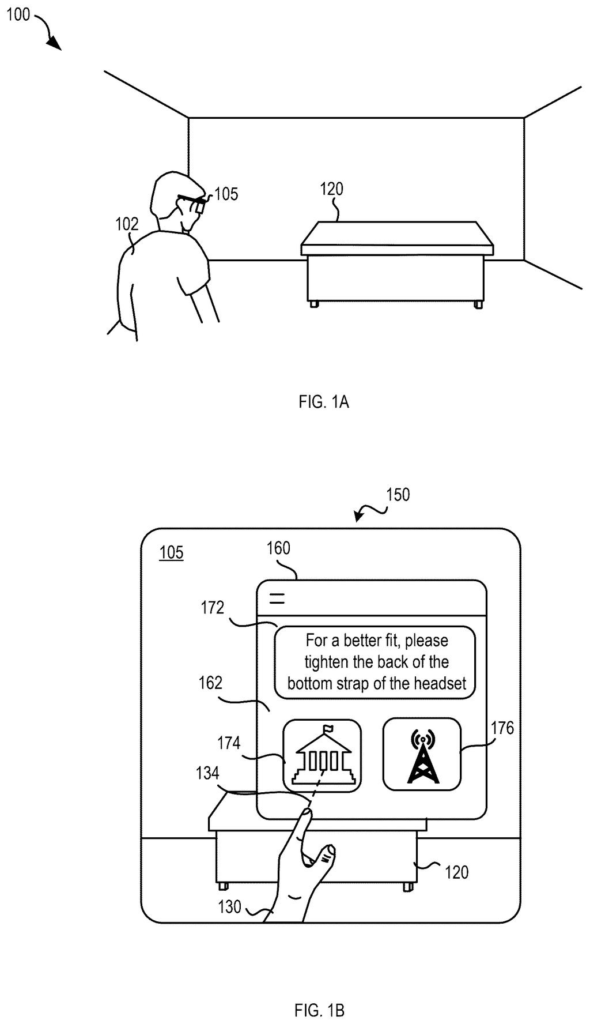
What Apple's headset fit-check actually does
Every time you put on a headset, you do the same little dance: pull the strap, push it up your nose, tilt it, pull it again. Most of us just live with a slightly off fit and blame the headset when the picture looks fuzzy or our face gets sore.
Apple's filing describes a headset that watches for that dance. Once it detects that you've put it on, it checks how firmly it touches your head, how much light leaks in, and where your eyes sit relative to the lenses. It also counts how often you reach up and adjust it.
If the numbers look off, the headset tells you your fit is poor and suggests a fix, like tightening the back strap or swapping to a different-sized light seal or nosepiece.
… comparing the one or more contact measures to one or more predetermined device fit parameters; determining the one or more contact measures do not satisfy the one or more predetermined device fit parameters; and responsive to the determination, providing, to the user, a notification indicating a quality of fit for the user.
Translation: The headset checks if your head matches its ideal shape and warns you if it does not fit right.
How the headset reads pressure, light and tugs
The patent covers a headset that judges its own fit using built-in sensors. Two separate ideas appear in the claims, and both end in a notification about your quality of fit.
The first idea is contact measurement. After the headset detects it has been placed on your head, sensors measure contact between your head and the device, including pressure at different spots (for example, only one side or the top touching). These readings, called contact measures, are compared to preset device fit parameters, meaning the values that count as a proper fit. If they fall short, you get a notice. The filing gives examples such as checking whether 6 of 10 pressure sensors register enough contact.
The second idea is counting adjustments. Motion sensors, cameras, microphones and touch sensors can spot when you tug the headset. The description says a microphone could even hear a strap dial or Velcro being opened. Each adjustment adds to a counter, and when the count passes a threshold, the headset flags a possible fit problem.
Other signals the filing describes include:
- Cameras measuring the distance from your eyes to the lenses and whether the headset sits too high or low
- Light sensors detecting too much light getting in
- Machine learning models (software trained on examples) that spot adjustments and fit problems
When a possible fitment issue is detected, a notification can be provided to the user that is directed at assisting the user in correcting the fitment issue.
Translation: If the device sits incorrectly, it alerts you with instructions on how to adjust it.
Why a bad fit matters for Apple's headsets
If you wear a headset for long stretches, comfort decides whether you keep using it. Apple's patent aims to turn the guesswork of fit into a plain message: tighten this strap, try a different light seal, or switch nosepieces. That could spare you from quitting on a headset that simply needed a different part.
It also fits how headsets are built. The filing notes that different models have different weights, sizes and parts such as light seals and bands, and fit matters for both comfort and for features like eye tracking. A headset that reads your fit could help buyers who never test sizes in a store. It also means the device is watching how you handle it, though the filing says training data would only come from users who opted in.
That makes this Apple's 113th filing we've tracked in our AR glasses watchlist since May, adding to work like flat pages as 3D rooms and sites wrapping you in 3D worlds.
The problem here is small in any one moment but real over time. A headset that sits wrong gives you a blurry picture, sore cheeks or a light leak, and most people respond by fiddling and eventually giving up. Apple's own filing admits that getting a proper fit is challenging, since the parts and sizes vary so much.
The fix is sized well to that problem. It doesn't try to redesign the headset, it just uses sensors the device already has to notice trouble and say something useful. Counting your tugs as a sign of discomfort is a smart, human detail.
The open question is how often the advice will be right. A headset that nags you wrongly about your strap will be as annoying as one that fits badly. Still, a fit coach built into the device is a sensible answer to a problem that costs real comfort and, probably, real returns.
Get our take in your Top Stories
Liked this breakdown? Add Patentlyze as a preferred source on Google, and our plain-English take shows up more often in your Top Stories the next time Apple patent news breaks.
There are more where this came from
We read every patent application Big Tech publishes and send you the ones worth knowing. Plain English, free, every week.
The drawings
9 drawing sheets from US 2026/0339432 A1 · click any drawing to enlarge


Show the other 1 sheets

Want this weekly breakdown for a company we don't cover? Patentlyze Pro →
Be the first to weigh in