
Google Files Patent for Training AI Chatbots to Work Ads Into Their Answers
Google has filed a patent application on teaching an AI chatbot to mention sponsored content inside its answers. The model is graded on both how happy you are with the reply and how likely people are to click the sponsored item.
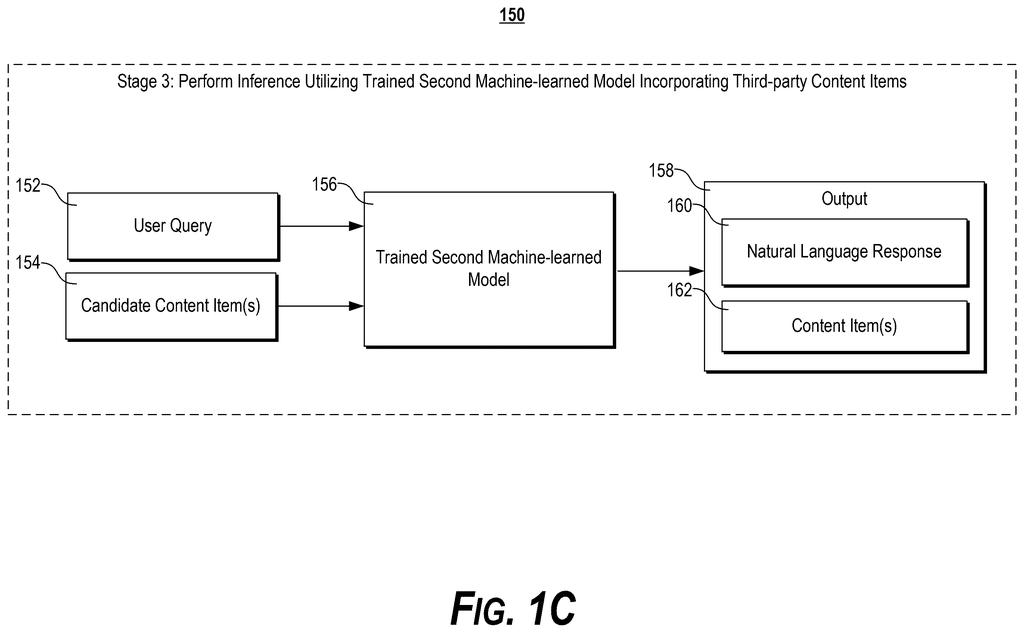
What Google's ad-in-the-answer AI training does
Every time you ask an AI assistant for a recommendation, someone has to decide whether the answer should mention anything paid. This Google patent application describes how to train a chatbot to make that call well, so a sponsored item (the filing's examples include ads) reads like part of the answer instead of a pop-up.
The training happens in two steps. First, human reviewers read answers that include third-party content and score them, and a scoring model learns to predict those scores. Then the model that actually talks to you is trained against that scorer, plus a prediction of how likely people are to interact with the sponsored item, such as clicking it.
The aim is to keep either side from taking over. Chase only your satisfaction and the sponsored content might vanish. Chase only ad performance and your answers could get poorly fitted and disruptive.
The present disclosure relates to a two-stage training process for machine-learned models, particularly large language models (LLMs), to balance user satisfaction and third-party content presentation.
Translation: Google wants AI chatbots to balance helpful answers with sponsored ads.
How Google's two stages balance ratings and clicks
In stage one, Google trains a reward model, a scoring program that predicts how satisfied a person would be with an answer. It learns through RLHF (reinforcement learning from human feedback): human raters score several answers to the same question, each containing a third-party item such as an ad. The answers are varied with temperature sampling (adding a little randomness), and training repeats until the model's scores match the raters'.
In stage two, the model that actually writes replies is trained with a loss function (a formula that measures how badly it did, so it can adjust). That formula blends:
- The reward model's predicted satisfaction score
- Predicted clicks or revenue from the sponsored item
- Optionally, whether the answer is factually correct
The mix can be tuned. One version weights ad performance highest but gives zero reward if satisfaction falls under a minimum bar. Another maximizes satisfaction while keeping ad performance above a floor.
Sponsored candidates can come from live bidding, with payment only for items that appear in the reply. The claims also allow AI feedback or written principles (constitutional AI) in place of human raters.
training a reward model using reinforcement learning from human feedback (RLHF) to predict user satisfaction metric associated with a first output comprising a third-party content item …
Translation: Humans train a scoring system to see if users like answers that contain ads.
What this means for AI assistants and search
If you use an AI assistant or an AI search box, this gives you a look at how paid mentions could be built into the answer you read, instead of sitting in a separate box. The filing names AI assistants, chatbots and search engines as places the trained model could run. It also describes training on thumbs-up and thumbs-down feedback, so your reactions could feed into the balance.
For Google, the stakes are how to earn money from conversational answers without losing your trust. The filing says optimizing only for happiness might eliminate sponsored content, while pasting it on top produces disruptive placements. Training the model to weigh both is its proposed middle path.
Google's 87th filing we've tracked in AI assistant and agent patents since May follows a chatbot that draws inline images and a TV assistant that maps apps.
The problem here is real, and for Google it is big. A chatbot gives you one answer instead of a page of ten links, so there is no obvious spot for a sponsored result, and anyone paying for attention has to be woven into the reply itself.
The filing's fix is a tuning dial. Human reviewers score how relevant and natural the sponsored item feels, and the final model is rewarded for keeping those scores up while also earning clicks. The filing even lets the balance shift by use case or by user, which tells you Google expects to keep adjusting it.
The open question is who decides what "satisfied" means. A small group of raters is a thin stand-in for millions of people, and one described version puts ad performance first and treats satisfaction as a minimum bar to clear. On paper the approach fits the size of the problem, but a patent cannot tell you where that bar would sit.
Get our take in your Top Stories
Liked this breakdown? Add Patentlyze as a preferred source on Google, and our plain-English take shows up more often in your Top Stories the next time Google patent news breaks.
There are more where this came from
We read every patent application Big Tech publishes and send you the ones worth knowing. Plain English, free, every week.
The drawings
14 drawing sheets from US 2026/0350464 A1 · click any drawing to enlarge


Show the other 6 sheets


Want this weekly breakdown for a company we don't cover? Patentlyze Pro →
Be the first to weigh in