
Qualcomm Patents a System to Authenticate 5G Network Broadcasts Before Your Device Trusts Them
Your phone trusts a lot of what cell towers tell it — maybe too much. Qualcomm's latest patent proposes a way for devices to cryptographically verify that system-level network broadcasts haven't been faked or tampered with before acting on them.
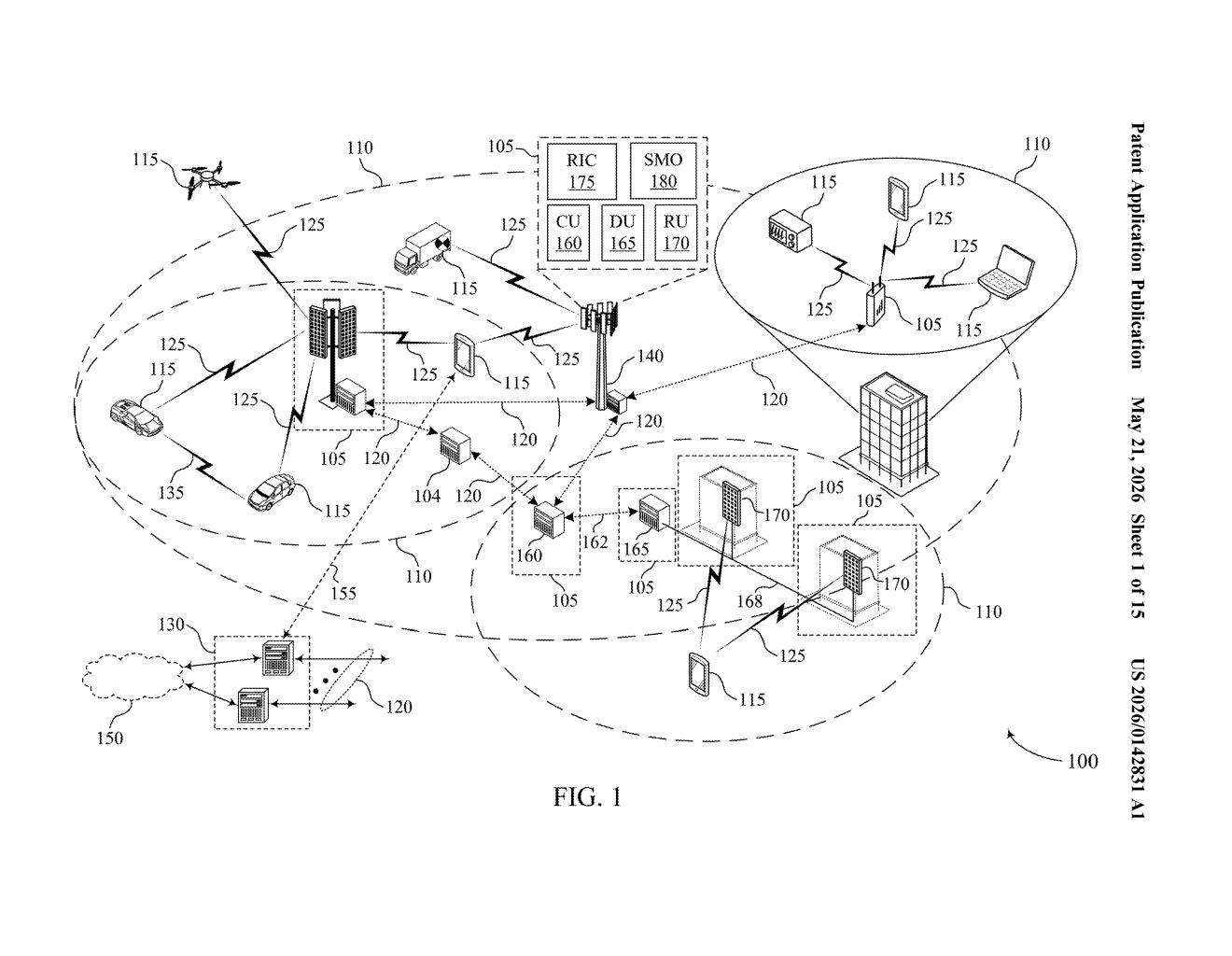
How Qualcomm stops fake cell towers from fooling your phone
Imagine a criminal sets up a fake cell tower in a crowded area. Your phone connects, and the tower starts feeding it false instructions — which network to use, how to behave, what frequencies to tune to. Your phone has no idea it's being lied to. This is a real category of attack, and it works partly because phones have historically just trusted those broadcasts.
Qualcomm's patent describes a way to fix that. When a network sends out one of these broadcast messages (called a System Information Block, or SIB), it now includes a kind of digital fingerprint — a short code computed from the message's contents. Your phone independently computes its own fingerprint from the message it received and checks whether the two match.
If they match, the message is legit and your phone processes it normally. If they don't, the message gets discarded — silently, before it can cause any harm. It's essentially a handshake that proves the message came from a real, authorized source.
How the MAC hash check works at the physical layer
The patent covers a method for authenticating System Information Blocks (SIBs) — the broadcast messages that cell towers send to all nearby devices to configure how they connect to the network. These messages tell your phone things like which frequencies to use, what the network's identity is, and how to register. They're transmitted openly to all devices, which historically has made them a weak point.
The fix is a Message Authentication Code (MAC) — a cryptographic hash appended to the end of each SIB. When your device receives the SIB at the physical layer (the lowest level of the radio stack, before any higher-level processing happens), it:
- Strips the last set of bytes off the message, which contain the transmitted MAC
- Runs a hash algorithm (the patent references AES-based approaches) over the remaining SIB content to compute its own MAC
- Compares the two MACs — if they match, the SIB passes; if not, it's discarded
The check happens before the ASN.1 decode step — meaning before the modem's higher-level software even sees the message. That's a meaningful architectural choice: it limits the attack surface by rejecting bad messages as early as possible. The patent also describes a path for handling encrypted SIBs, where an initialization vector (IV) is stripped and used for AES decryption before the final decode step.
What this means for fake base station attacks on 5G
Fake base station attacks — sometimes called IMSI catchers or stingrays — have been a known threat for over a decade. While 5G introduced improvements over older standards, unauthenticated broadcast messages remained a gap. A system that verifies SIBs before processing them would make it significantly harder for a rogue tower to inject false network configuration data into a device.
For you as a user, this is mostly invisible security infrastructure — you'd never notice it working. But for enterprise customers, government deployments, and anyone operating in high-risk environments, cryptographic SIB verification is a meaningful step up. If this approach makes it into commercial modem firmware, it would add a layer of defense that currently doesn't exist at scale in deployed 5G networks.
This is unglamorous but genuinely useful security work. Authenticating network broadcast messages at the physical layer — before the modem's higher-level stack ever touches them — is a clean architectural approach to a real and underappreciated vulnerability. It's not a flashy AI play, but the kind of foundational hardening that makes 5G infrastructure more trustworthy in practice.
There are more where this came from
We read every patent application Big Tech publishes and send you the ones worth knowing. Plain English, free, every week.
Want this weekly breakdown for a company we don't cover? Patentlyze Pro →