
AI Agent Networks Gain Self-Diagnosing Capabilities in New Patent
When one AI agent in a chain fails because it's missing critical information, Microsoft's new system figures out why — and quietly updates that agent so it won't fail the same way again.
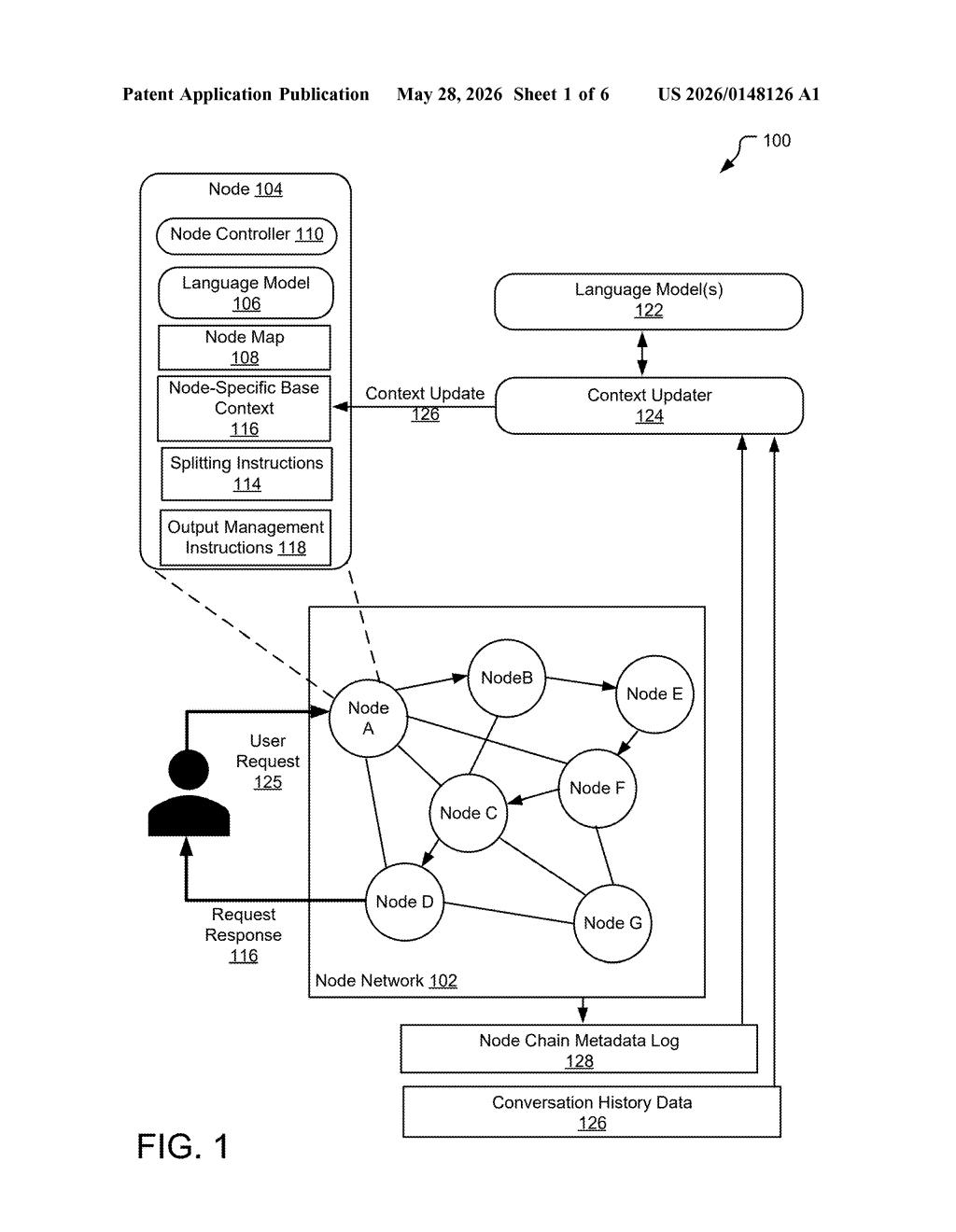
How Microsoft's self-healing AI node system works
Imagine you've set up a team of AI assistants, each handling a different part of a workflow — one pulls data, one formats reports, one sends summaries. Now imagine one of them hits a wall because it just didn't have the right context to do its job. Normally, a human would have to step in, diagnose the problem, and manually fix it. That's the gap this patent is trying to close.
Microsoft's system is built around a network of AI nodes — individual agents, each with their own instructions and memory. When something goes wrong (an 'exception'), a separate component called a context-updater digs through the chain's activity logs to figure out exactly what information was missing and which node should have had it.
The key move: the system then automatically updates that node's instructions for next time — no user input required. It's essentially giving your AI pipeline the ability to learn from its own failures and quietly patch itself between runs.
How the context-updater traces exceptions back to root causes
The patent describes a node network — a chain of generative AI models that process a user request sequentially or collaboratively. Each node holds a node-specific base context: a set of standing instructions that shapes how it behaves when handling inputs. Think of it as each agent's persistent memory of what it's supposed to know and do.
When a node raises an exception (fails to complete a task or surfaces an error), the context-updater kicks in. It analyzes the metadata generated by the entire chain — logs, intermediate outputs, conversation history — and uses a generative model to produce a root cause descriptor. This descriptor identifies information that was missing from the chain entirely at the time of failure, not just what the failing node lacked.
The system then:
- Identifies which node in the chain was the responsible party — the one that should supply that information going forward
- Updates that node's base context autonomously, embedding the missing information so future requests succeed
- Does all of this without requiring a human to intervene or re-configure anything
The architecture is designed for multi-agent LLM pipelines — the kind increasingly used in enterprise automation, coding assistants, and agentic AI workflows — where failures can cascade across a chain of specialized models.
What self-patching AI agents mean for enterprise automation
Multi-agent AI systems are increasingly the architecture of choice for complex enterprise tasks — but they're notoriously brittle. When one agent in a chain fails, the whole pipeline can stall, and debugging which node lacked which context is tedious manual work. Microsoft's self-updating approach directly attacks that fragility by closing the loop: the system observes its own failures and rewrites the relevant agent's instructions before you even notice something went wrong.
For Microsoft's Copilot and Azure AI Foundry ecosystems, where businesses are building agentic workflows on top of Azure OpenAI models, this kind of autonomous self-repair could meaningfully reduce the operational overhead of running production AI pipelines. If it works as described, you'd spend less time babysitting your agents and more time extending them.
This is a genuinely useful systems-level patent, not a capability moonshot. The hard, unsexy problem in multi-agent AI right now isn't intelligence — it's reliability, and this filing takes a concrete architectural swing at it. The root-cause analysis loop is the interesting part: using a generative model to analyze its own chain's failure metadata is a recursive trick that could get unwieldy fast, but if it holds up, it's a real operational win for anyone running agentic pipelines at scale.
There are more where this came from
We read every patent application Big Tech publishes and send you the ones worth knowing. Plain English, free, every week.
Want this weekly breakdown for a company we don't cover? Patentlyze Pro →