
Tesla Patents a Parallel 2D Matrix Processor for Accelerated AI Image Math
Tesla is patenting the math engine at the heart of neural network image processing — a two-dimensional matrix processor designed to run massive numbers of multiply-accumulate operations at the same time, in lockstep.
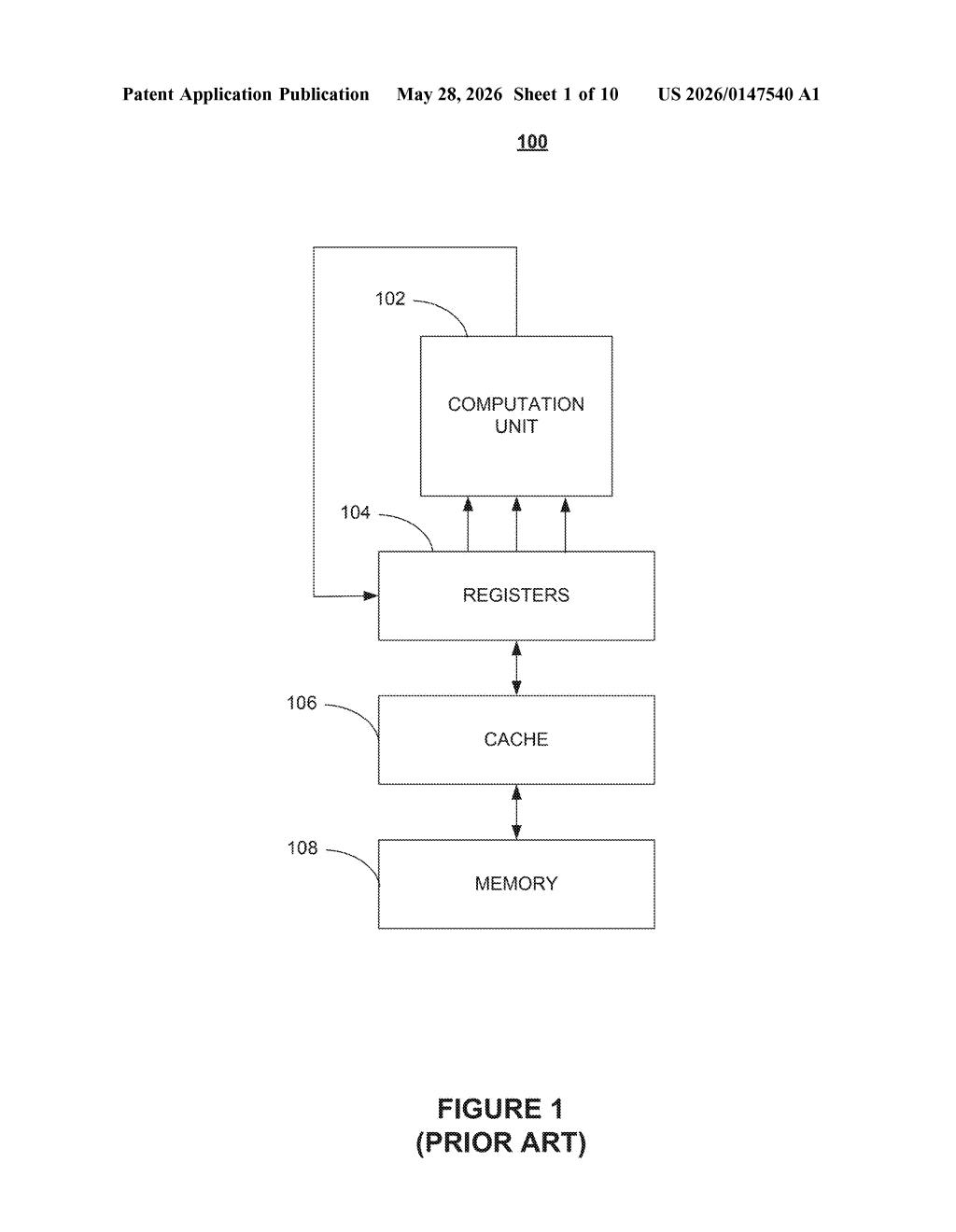
What Tesla's matrix engine actually does to images
Imagine every frame your car's camera captures needs to be analyzed almost instantly — spotting a pedestrian, reading a lane line, flagging a stopped vehicle. That analysis is basically a huge pile of multiplication problems, and doing them one at a time is far too slow.
Tesla's patent describes a chip architecture built to tackle that pile in parallel. Instead of processing image data sequentially, the design lays out a two-dimensional grid of small computing units, each handling its own slice of the math at the same time.
Each unit in the grid carries its own arithmetic logic unit (the part that does the actual math), plus two registers — one to hold the current result and a "shadow" register to stage the next batch of data. A shared clock keeps everything synchronized, so image pixels and their associated weights get multiplied in unison across the whole grid.
How the 2D subcircuit grid crunches convolutions
The core idea is convolution acceleration — the specific type of math that convolutional neural networks (CNNs) use to detect features in images. A convolution slides a small grid of numbers (called a kernel or filter) across an image and multiplies each pixel value by the corresponding weight, then sums the results. Do that millions of times per frame, across many filters, and you have a serious compute problem.
Tesla's solution is a two-dimensional matrix processor made up of subcircuits arranged in a grid. Each subcircuit contains:
- An ALU (Arithmetic Logic Unit) — the tiny calculator that does one multiply-add operation
- An output register — holds the result of the current computation
- A shadow register — pre-loads the next set of data so the ALU never has to wait
The shadow register trick is particularly notable. It's a classic double-buffering approach: while the ALU is crunching one batch of numbers, the shadow register is quietly receiving the next batch. When the clock ticks, roles swap instantly — zero idle time.
The entire grid runs off a synchronized clock, meaning image data and weight values are fed in and multiplied across all subcircuits simultaneously. This is what enables the "large number of mathematical operations in parallel" the abstract promises.
What this means for Tesla's in-house AI chip ambitions
Tesla designs its own AI inference chips — the Full Self-Driving (FSD) chip and its successor the D1 (used in Dojo, their training supercomputer). Patents like this one offer a window into the low-level architectural decisions behind those chips. A clocked, 2D matrix processor with shadow registers is exactly the kind of silicon-level detail that determines how fast a neural network can process camera frames on a moving vehicle.
Beyond cars, Tesla has said it intends to sell AI compute capacity externally. If their matrix engine achieves better throughput-per-watt than off-the-shelf GPU solutions, that matters for both the cost of running FSD and any future data center product. The inventors — Peter Bannon, Kevin Hurd, and Emil Talpes — are veterans of Tesla's chip team with deep roots in Apple's silicon group, lending credibility to the seriousness of this design.
This is unglamorous but genuinely important foundational work. Matrix processors are the beating heart of every AI inference chip, and the specific choices Tesla makes here — 2D layout, shadow registers, synchronous clocking — directly determine the performance ceiling of their neural nets at the edge. The pedigree of the inventors (ex-Apple silicon architects) suggests this isn't exploratory research; it's production-track chip engineering.
There are more where this came from
We read every patent application Big Tech publishes and send you the ones worth knowing. Plain English, free, every week.
Want this weekly breakdown for a company we don't cover? Patentlyze Pro →