
Haptic Buttons That Calibrate Themselves Could Replace Traditional Car Controls
Tesla has patented a haptic control system where the same motor that gives you tactile feedback can also turn around and test itself — using the car's own sensors to verify it's still working correctly.
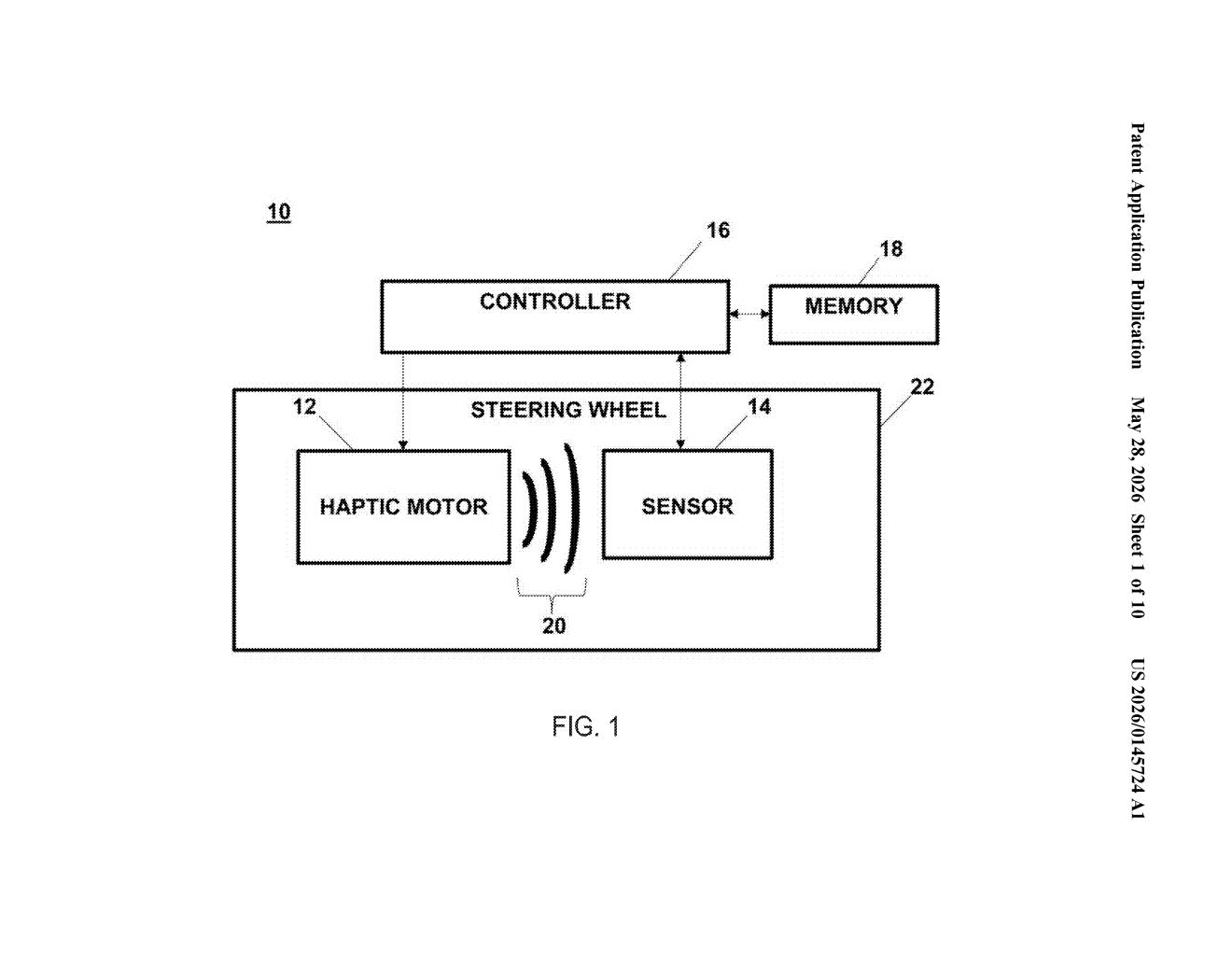
What Tesla's self-testing haptic switchpack actually does
Imagine the buttons in your car slowly going numb over time — the little vibration that confirms you pressed something gets weaker, or drifts off-rhythm, and you'd never know until it just stops feeling right. That's a real problem as haptic hardware ages.
Tesla's patent describes a switchpack — a control panel, think of a steering wheel button cluster or a center console pad — where the haptic motor has a second job. In normal use, it buzzes to give you feedback when you press something. But in a calibration mode, it flips the script: the motor fires deliberately and the sensors on the same panel listen to the vibration, measuring whether the motor is still performing as expected.
This means the system can catch degradation automatically, without a technician plugging anything in. The car essentially checks its own sense of touch on a schedule, keeping the haptic experience consistent over the vehicle's lifetime.
How the motor vibrates the sensor to check itself
The patent describes a dual-mode haptic motor embedded in a vehicle switchpack. In Mode 1 (normal operation), the motor provides tactile feedback to the driver or passenger — a buzz or pulse confirming a button press or swipe gesture. Meanwhile, force sensors on the same panel read inputs from the user's finger.
In Mode 2 (calibration), the roles reverse. The motor generates a known vibration pattern deliberately, and those same force sensors are now tasked with measuring that vibration rather than reading finger pressure. Think of it like a speaker playing a test tone so a microphone can check the room's acoustics — except the speaker and microphone are millimeters apart on the same hardware panel.
The key insight is reusing existing sensing hardware for diagnostic purposes:
- No additional calibration sensors are needed
- The system can self-test without external equipment or a service visit
- Drift in motor output — caused by wear, temperature, or aging — can be detected and potentially compensated for in software
The patent is filed under USPC 701/41, which covers vehicle control systems, suggesting this is positioned squarely as an automotive application rather than a general consumer electronics approach.
What this means for Tesla's touchless vehicle controls
Tesla has been pushing its vehicles toward increasingly touch- and haptic-dependent interfaces, replacing physical switches with surfaces that feel like buttons without mechanically being buttons. If those haptic responses degrade silently, the driving experience erodes in a way that's hard to diagnose. A self-calibrating system means haptic quality can be maintained over a vehicle's multi-year lifespan without relying on owner complaints or scheduled service checks.
More broadly, this is the kind of unglamorous but important infrastructure work that determines whether touch-based vehicle controls actually hold up in the real world. If Tesla is building this into future switchpacks, it suggests they're serious about haptic interfaces as a long-term input strategy — not just a current-generation design choice.
This is a smart, quietly practical patent. It doesn't reinvent haptics — it just makes existing haptic hardware more reliable over time by turning sensors into self-diagnostic tools. For a company betting heavily on touch-based controls in its vehicles, getting calibration right is genuinely important work, even if it'll never show up in a product announcement.
There are more where this came from
We read every patent application Big Tech publishes and send you the ones worth knowing. Plain English, free, every week.
Want this weekly breakdown for a company we don't cover? Patentlyze Pro →