
Qualcomm Patents a Way for Cars to Decide When to Trust Other Vehicles' Safety Signals
Cars are starting to talk to each other, broadcasting their positions and movements over wireless networks. But what happens when those broadcasts can't be independently verified? Qualcomm's new patent tackles exactly that problem.
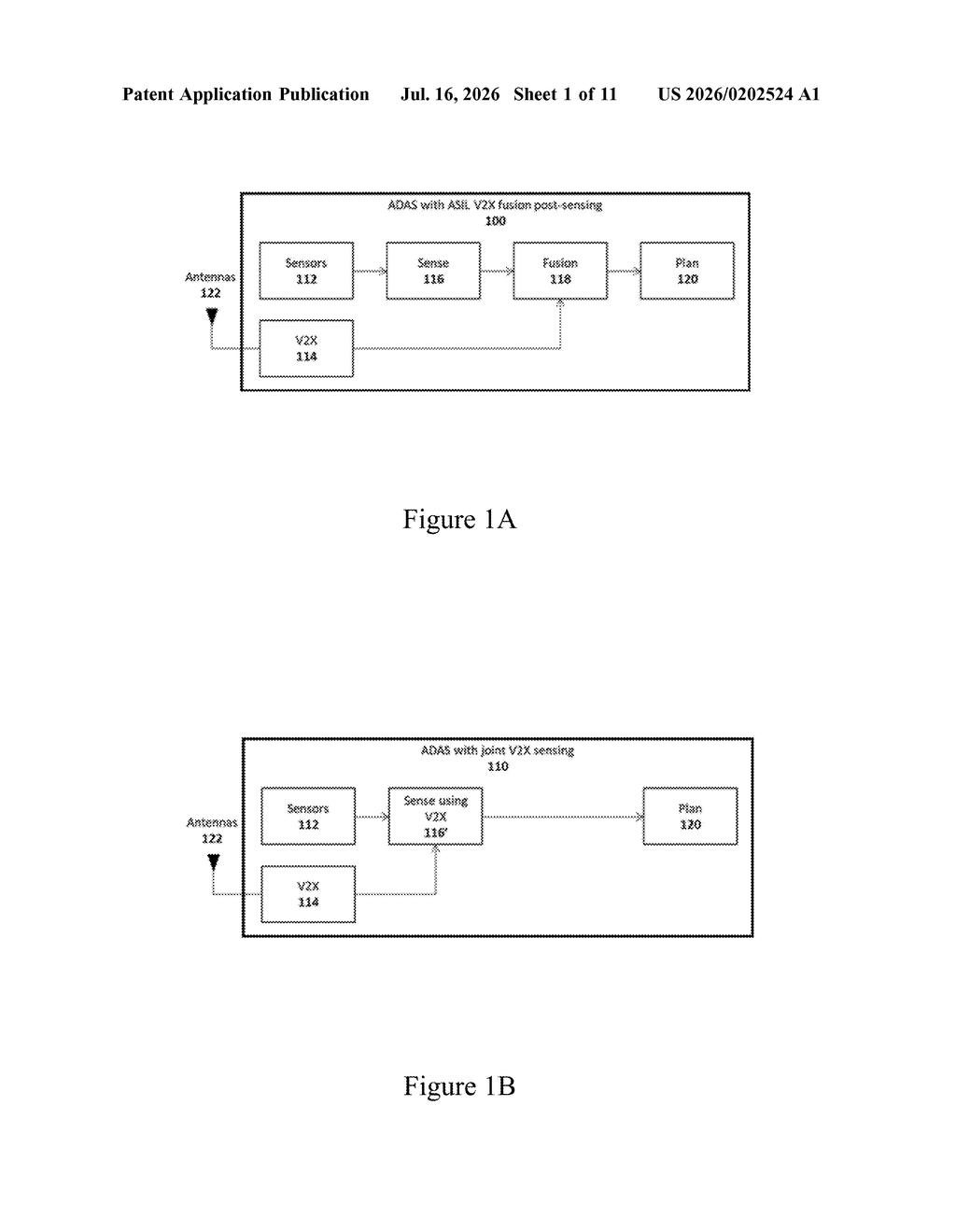
How Qualcomm's vehicle trust system actually works
Imagine a car ahead of you disappears behind a blind corner or gets blocked by a large truck. Your car's cameras and radar lose sight of it. But that car is still broadcasting its location and speed wirelessly to anyone nearby. Should your car's safety system trust that broadcast?
Qualcomm's patent describes a system for answering that question carefully. While your car can still see another vehicle directly, it compares the wireless broadcast from that vehicle against what its own sensors actually detect. If the two match closely enough, over a long enough period, the broadcast earns a kind of "trusted" status.
Once that trust is established, the safety system can keep relying on the wireless broadcast for a short window even after your sensors lose direct sight of the other car. It's a bit like how you might trust a friend's directions once they've proven reliable, even when you can't personally verify every turn.
How the system cross-checks V2X data against onboard sensors
The patent describes a system built around Vehicle-to-Everything (V2X) communication, a wireless technology that lets cars, traffic lights, and road infrastructure share real-time data with each other.
Here's the core process:
- A car receives V2X broadcasts from a nearby vehicle, containing that vehicle's claimed position, speed, and heading.
- The receiving car's own sensors (cameras, radar, lidar) independently track the same nearby vehicle and generate their own measurements.
- The system continuously calculates the deviation (the gap or mismatch) between the two data sources. If they stay close enough for a defined period, the V2X data is marked as safety-qualified.
- When the nearby vehicle becomes invisible to sensors (blocked by a building or another vehicle), the safety-qualified status is maintained for an additional time window, allowing the system to keep using the wireless data with confidence.
The patent also addresses a middle ground: a moderate deviation state, where the two data sources aren't perfectly aligned but haven't diverged enough to fully distrust the broadcast. In that case, the qualified status is preserved rather than dropped immediately, preventing the system from reacting too aggressively to brief sensor glitches.
What this means for self-driving safety systems
Modern collision-avoidance and self-driving systems are only as good as what they can currently sense. V2X data has the potential to extend a car's effective awareness around corners and through obstructions, but only if the receiving car can reasonably verify it isn't acting on corrupt or spoofed broadcasts.
This patent addresses a real gap: V2X broadcasts are easy to receive but hard to independently verify. By anchoring trust in a prior period of sensor-confirmed agreement, Qualcomm's approach gives safety systems a principled way to keep working through brief sensor blackouts without blindly accepting every wireless signal they receive. For the companies building next-generation driver-assistance systems, that kind of verified trust layer is a missing piece.
This is unglamorous but important infrastructure work. The headline feature of V2X has always been the promise of cars seeing around corners, but that promise breaks down fast if safety systems can't distinguish reliable broadcasts from unreliable ones. Qualcomm's approach here is methodical and credible, and it fits squarely into the company's long-term push to be the silicon and software backbone of connected vehicles.
There are more where this came from
We read every patent application Big Tech publishes and send you the ones worth knowing. Plain English, free, every week.
Want this weekly breakdown for a company we don't cover? Patentlyze Pro →
Be the first to weigh in