
Meta Patents a Flexible Facial Interface That Molds to Your Face
Getting a VR headset to seal comfortably against wildly different face shapes is one of the oldest problems in the industry. Meta thinks the answer is a two-layer facial interface — one part rigid, one part flexible — that can conform to your specific face without compromising the display position.
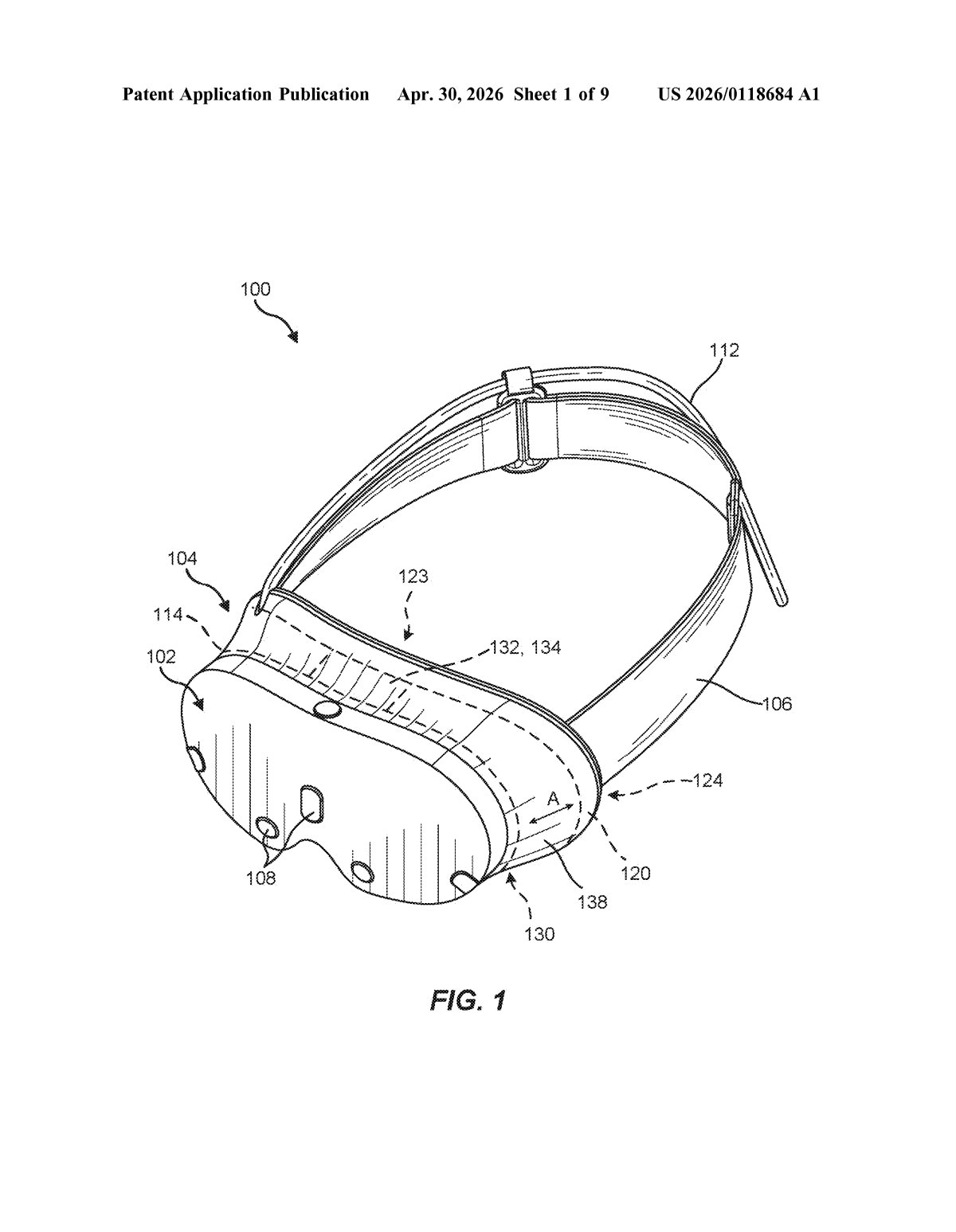
How Meta's face-molding VR interface actually works
Imagine putting on a pair of ski goggles that gently adjust to the exact contours of your face the moment you press them on. That's roughly what Meta is going for here. Most VR headsets use a fixed foam gasket that works okay for some faces and poorly for others — causing light leakage, pressure points, or an unstable image.
Meta's patent describes a facial interface split into two distinct parts: a rigid inner frame that holds the display exactly where it needs to be in front of your eyes, and a flexible outer frame that can shift and bend to follow the unique geometry of your cheekbones, nose, and forehead. Critically, the outer edge of the flexible part can move independently from the rigid display frame — so adapting to your face doesn't knock the screen out of alignment.
The practical upside is a headset that seals better against more face shapes without requiring a drawer full of interchangeable gasket sizes.
How the rigid frame and flex layer move independently
The patent describes a facial interface assembly made up of two cooperating components with different mechanical roles.
The rigid support frame element has one job: hold the display at a precise, stable distance and angle in front of the user's eyes. Optical performance in VR depends heavily on keeping the lenses at the right position relative to your pupils (a measurement called eye relief), so this layer can't flex or shift.
The flexible facial interface frame element wraps around the rigid frame and does the face-conforming work. Its outer periphery — the edge that actually contacts your skin — is designed to move independently of the rigid frame's outer edge. That decoupling is the key insight: the face-contact surface can deform and adapt to your cheekbones or nose bridge without transmitting mechanical stress back to the display mount.
The architecture essentially treats display stability and facial fit as separate engineering problems solved by separate physical layers, rather than forcing a single rigid or semi-rigid gasket to do both jobs at once. The patent covers the overall assembly design and the independent-movement relationship between the two frame peripheries.
What this means for VR headset comfort and fit
Facial fit is a genuine pain point for VR adoption. A headset that leaks light around the edges, digs into your cheekbones, or needs constant readjustment breaks immersion and discourages long sessions. Meta selling Quest headsets at consumer scale means fit problems affect millions of people with genuinely diverse face shapes — it's not a niche concern.
If this design makes it into a shipping product, you'd potentially get better light seal and comfort without needing to buy separate foam inserts or third-party face gaskets. It also hints at Meta thinking seriously about the ergonomic gap between its current hardware and the all-day wearability that mixed-reality glasses would require.
This is unglamorous but genuinely important work. Facial interface design is one of those problems that doesn't make headlines but quietly determines whether millions of people actually enjoy wearing a headset. The two-layer decoupling approach is a clean mechanical solution, and the fact that Meta filed this with eight inventors suggests it's a real engineering effort, not a defensive placeholder.
There are more where this came from
We read every patent application Big Tech publishes and send you the ones worth knowing. Plain English, free, every week.
Want this weekly breakdown for a company we don't cover? Patentlyze Pro →